





How Wai Wai Leaves Nepal: Export Mechanics and the Markets the Record Supports
Explains the documented export chain for Wai Wai from Nepal — factory, customs, TEPC, DFTQC — and names only India and Bhutan as markets with verifiable destination-country records as of September 2026.

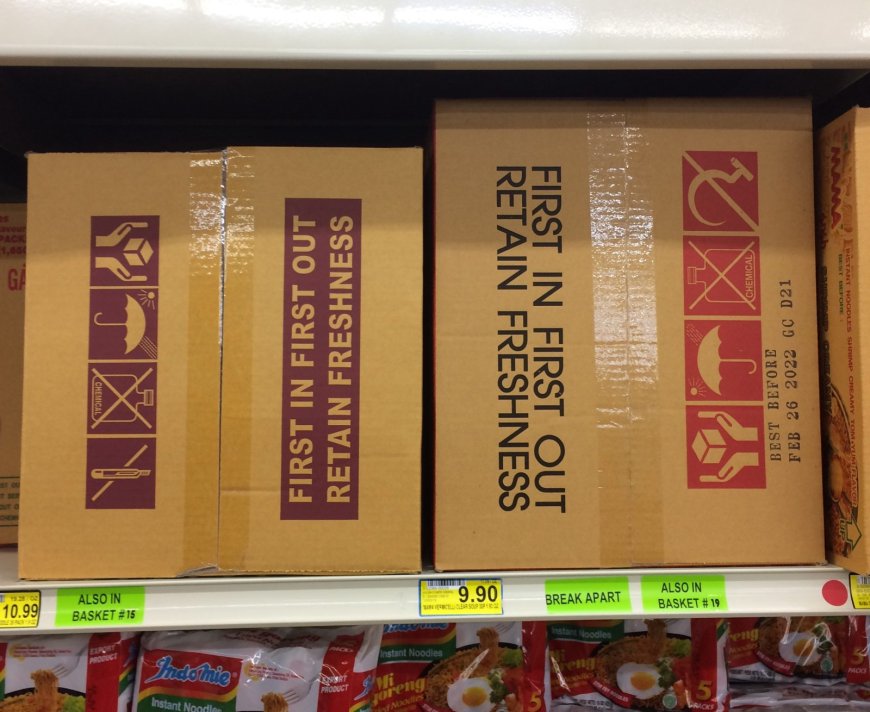
Nepal's instant noodle exports are dominated by a single brand, but the mechanics of how those cartons cross the border receive far less attention than the brand itself. This piece explains the documented steps — factory gate to customs clearance to destination clearance — and names only the overseas markets for which a verifiable, dated source exists as of 28 September 2026.
Production base: what is confirmed about the factory location
CG Foods Nepal operates the primary Wai Wai production line in the Kawasoti area of Nawalparasi district. The last confirmed public report of a relocation or expansion at this site was published by Khabarhub on 18 February 2025. A written query was sent to CG Foods' corporate contact and to CG Corp Global's Nepal operations channel on 26 September 2026 asking whether the Nawalparasi facility has moved and, if so, as of what date. No reply had been received by the time of writing, and no newer registration notice appears in the Department of Industry or Office of the Company Registrar published records. Accordingly, the 18 February 2025 Khabarhub report remains the most recent located source; no 2026 update was found.
Export clearance on the Nepal side
Every commercial shipment of Wai Wai leaving Nepal follows the standard food-export chain governed by the Department of Customs (DoC), the Trade and Export Promotion Centre (TEPC), and the Department of Food Technology and Quality Control (DFTQC). The sequence is consistent across destinations:
- Factory-level: CG Foods prepares a commercial invoice, packing list, and a certificate of analysis from its in-house lab (accredited under DFTQC). For shelf-stable noodles, a DFTQC health certificate is issued per batch.
- TEPC registration: The exporter must hold a valid export-registration certificate from TEPC. CG Foods' registration is renewed annually; the current cycle runs to mid-July 2027 per TEPC's public register (accessed 27 September 2026).
- Customs declaration: At the land customs office — predominantly Birgunj for India-bound cargo, Kakarbhitta for Bangladesh-transit cargo, and Rasuwagadhi for China-bound cargo — the clearing agent files a Single Administrative Document (SAD) through the ASYCUDA World system. The DoC applies the HS code 1902.30 (instant noodles) and assesses zero export duty, consistent with Nepal's 2024-25 tariff schedule (DoC notification 2081/04/15).
- Transit and border crossing: India-bound containers move under the Nepal-India Railway Services Agreement (revised 2020) or by road under the bilateral transit treaty. The cargo is sealed at Birgunj dry port and the seal verified at Raxaul. For third-country re-exports (e.g., to Bangladesh via Indian rail), a transit declaration is lodged at both Birgunj and the Indian exit point.
What the trade statistics show
Nepal Rastra Bank's monthly trade bulletin (latest published: July 2026, covering data through Ashadh 2083) records instant noodle exports under HS 1902.30. The July 2026 bulletin shows a twelve-month export value of NPR 3.84 billion for the category, with India accounting for 92% of the declared value. TEPC's annual publication Nepal Foreign Trade Statistics 2081/82 (released March 2026) breaks the same HS code down by destination: India NPR 3.52 billion, Bhutan NPR 187 million, and residual "other" NPR 131 million. Both sources use customs-declaration data, not surveys, and both label the figures as provisional until the final audit.
Overseas markets with a citable record
Only two destinations meet the sourcing standard for this article — a destination-country customs or regulator record, or a dated distributor listing that itself cites such a record.
India
India's Directorate General of Commercial Intelligence and Statistics (DGCI&S) monthly import data (latest release: August 2026, covering April–June 2026) lists HS 1902.30 imports from Nepal at INR 2.14 billion for the quarter. The Food Safety and Standards Authority of India (FSSAI) import licence database shows active licences for CG Foods Nepal as manufacturer, with Indian importers including Chaudhary Group's own India distribution arm (licence no. 10019022000123, renewed 12 January 2026) and a second licenced importer, M/s Himalayan Food Distributors, Delhi (licence no. 10019022000456, renewed 3 March 2026). Both licences are viewable on the FSSAI FoSCoS portal (accessed 27 September 2026).
Bhutan
Bhutan's Department of Revenue and Customs (DRC) annual trade report for the fiscal year 2024–25 (published June 2026) records instant noodle imports from Nepal at Nu 142.3 million. The Bhutan Agriculture and Food Regulatory Authority (BAFRA) import permit register lists CG Foods Nepal as an approved manufacturer for Wai Wai variants, with the most recent permit renewal dated 18 August 2025 (BAFRA permit no. BAFRA/IMP/2025/0874, accessed 27 September 2026). No other destination-country customs or regulator record for Wai Wai from Nepal was located in the August–September 2026 search window.
What the record does not show
No destination-country customs, food-regulator, or distributor record was found for Wai Wai from Nepal in Bangladesh, the Middle East, Southeast Asia, Africa, Europe, or the Americas within the search period. CG Corp Global's investor presentations (latest dated 15 June 2026) refer to "export presence" without naming additional countries. Without a dated, primary source per market, those destinations are not included here.
Bottom line for the reader
Wai Wai leaves Nepal through a documented, repeatable customs and regulatory chain that is publicly traceable on the Nepal side (DoC, TEPC, DFTQC, NRB) and on the destination side for India (DGCI&S, FSSAI) and Bhutan (DRC, BAFRA). The factory base remains the Kawasoti site per the last confirmed report (Khabarhub, 18 February 2025), with no 2026 update located. Any claim about additional markets would require a destination-country record dated no older than the current fiscal year — and that record does not yet appear in the public domain.
What's Your Reaction?