
Best Time to Visit Nepal: A Season-by-Season Guide to Weather, Trekking and Travel (2026 Update)
October to November is the best time to visit Nepal for clear skies and stable trekking weather, with March and April the strong second choice. A season-by-season guide to weather, treks, permits and 2026 conditions.

Last updated: 27 September 2026
If you want the short answer, it is autumn. October and November bring Nepal its clearest skies, its most settled trekking weather and its biggest crowds. March and April are the strong second choice: warmer at altitude, greener hillsides, and the national flower, lali gurans, flowering lower down. Everything below is the reasoning behind those two sentences.
How Nepal's seasons work
Travel here is shaped by the monsoon more than by the calendar. Rain generally arrives around June and clears through September, leaving a long dry stretch from roughly October to May. That stretch splits into a clear, cool autumn, a cold winter and a warm, hazy spring. Where you are matters as much as when, because the rain-shadow country north of the Himalaya behaves quite differently from the middle hills.
| Season | Months | What to expect |
|---|---|---|
| Autumn | Oct–Nov | Clearest skies, stable weather, peak season |
| Winter | Dec–Feb | Cold and bright, snow on high passes |
| Spring | Mar–Apr | Warm, rhododendron, hazy afternoons |
| Pre-monsoon | May | Hot and hazy, cloud building |
| Monsoon | Jun–Sep | Rain, landslide risk, quiet trails |
Month-by-month weather and trekking conditions
Nepal weather in October and November
The classic window. Skies are at their clearest, trails are dry, and mountain views are about as dependable as they get. Nights turn properly cold above 3,000 m by late November. Book lodges, guides and domestic flights early, because this is when everyone else wants the same trails.
Winter: December to February
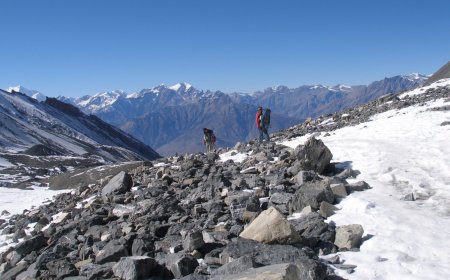
Cold, bright and quiet. Lower and mid-elevation walking stays comfortable, while high passes and Everest base camp trips are freezing, with snow and the occasional blocked trail. Fewer people, softer room rates, shorter days.
Nepal weather in March and April
Spring warms quickly below 3,000 m and the rhododendron forests flower, which is the whole appeal of a spring rhododendron trek in the Annapurna, Langtang and lower Khumbu areas. Expect haze, afternoon cloud and unsettled snow higher up.
May
The build-up to the rains: hot valleys, hazy views, cloud arriving most afternoons. Still workable in the high rain-shadow areas.
Nepal monsoon travel: June to September
Wet, green and empty. Landslide risk affects some hill roads, lower trails get muddy, and mountain flights are often delayed. Treks in Upper Mustang, Dolpo and parts of Manang usually stay dry because they sit in the rain shadow.
Trekking by region: when to go
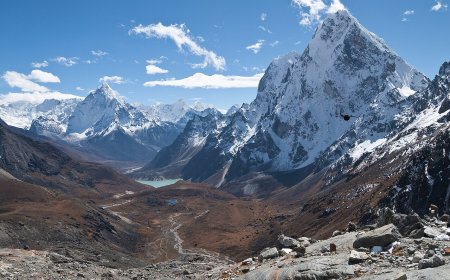
- Everest / Khumbu: October–November first, March–May second. Winter is possible but very cold.
- Annapurna (Base Camp, Circuit, Poon Hill): October–November best, March–April close behind.
- Langtang: October–November and March–April.
- Manaslu: autumn preferred; a restricted-area trek needing extra permits arranged through a licensed agency.
- Upper Mustang: rain-shadow country, so viable in the monsoon, though spring and autumn are still the pick.
- Dolpo: short windows, roughly late spring and autumn; also restricted.
Travelling in the monsoon: what still works
The monsoon is not a write-off, it is a different trip. Rain-shadow regions, Kathmandu Valley sightseeing, and short low-altitude walks between showers all remain possible. What you lose is reliability: roads, flights and mountain views all become less predictable.
Festivals and timing
Dashain and Tihar usually fall in October or early November and are Nepal's biggest holidays. Domestic transport and hotels fill up and prices climb, so plan around them rather than through them. Holi arrives in March, Buddha Jayanti in May. These follow the lunar calendar, so check a current Nepali calendar instead of assuming a date.
Practical planning: permits, flights, altitude, packing
Most treks need a TIMS card plus a park or conservation permit such as ACAP or the Sagarmatha National Park entry. Restricted areas need additional permits arranged through a licensed agency. Fees and requirements change, so confirm the current position with the Nepal Tourism Board before you pay anyone.
Mountain flights into Lukla, Jomsom and similar airstrips are weather-dependent; build a buffer day or two into your itinerary and check aviation notices with CAAN. On altitude, ascend gradually, sleep low, and descend if symptoms worsen. Pack layers, a down jacket, waterproofs for shoulder seasons and serious sun protection.
Safety and current conditions
Road, bridge and trail access in Nepal can change within days, and this page is a planning guide, not a live status source. Check the Department of Hydrology and Meteorology for weather and flood bulletins and NDRRMA for disaster and road information, then verify locally before you travel. Your own embassy or foreign ministry advisory is worth reading too.
What is uncertain in 2026
Section reviewed 27 September 2026. This is operational information only, and reporting on some items is still being updated.
Across 2026 there have been reported disruptions to sections of highway and to some border crossings, and the situation has shifted repeatedly through the year. Because status can change between the day we check and the day you travel, we do not list route-by-route conditions here. Instead, confirm the current position directly with the official sources named above, with the Nepal Tourism Board for trekking and permit questions, and with your embassy. This section is re-verified before each trekking season and at least every 90 days; once reported disruptions are resolved it will be relabelled as an archive note.
Sources and last updated
Last updated 27 September 2026. Seasonal guidance is based on long-standing patterns rather than any single year. Official information: DHM (dhm.gov.np), NDRRMA (ndrrma.gov.np), Nepal Tourism Board (welcomenepal.com), CAAN (caanepal.gov.np). Please check links resolve, as government pages occasionally move.
What's Your Reaction?