




How Nepal Could Access the Loss and Damage Fund: Process, Status, and What to Watch
Nepal is assessing its 2026 monsoon losses for a potential Loss and Damage Fund proposal, but no submission has been made as of September 2026. This article explains how the Fund actually works — calls for proposals, direct access, Manila-based secretariat — and traces the domestic institutional chain from NDRRMA data to MoFE endorsement and Ministry of Finance approval. It clarifies what is verifiable today (board decisions, call documents, government portals) and what remains unknown (whether Nepal will apply, the Fund's appraisal timeline, domestic tracking of Fund-specific flows).

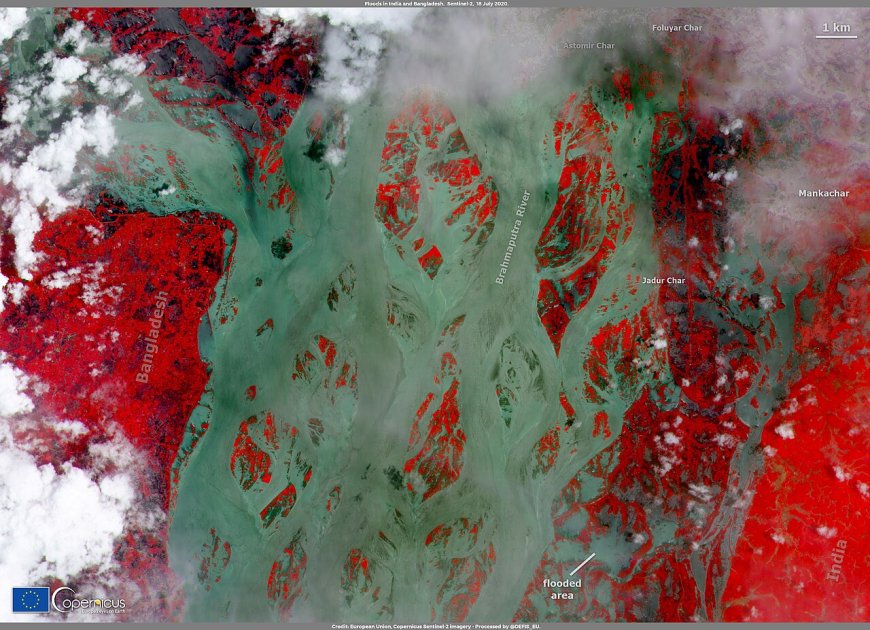
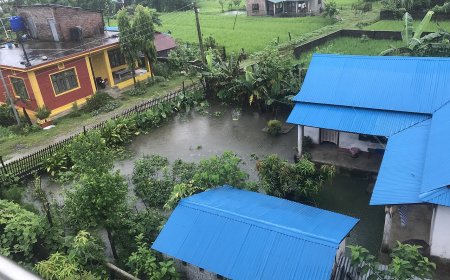
When the 2026 monsoon swelled rivers across the Tarai and mid-hills in late June, district officials began tallying damaged homes, washed-out roads, and lost crops. By early July, the National Disaster Risk Reduction and Management Authority (NDRRMA) published a preliminary loss estimate of roughly USD 20 million in its situation update of 12 July 2026 — a figure the authority labelled provisional and limited to initial reports from the first three weeks of the season. That number is now being used to shape Nepal's approach to the Loss and Damage Fund, but as of 27 September 2026, no formal funding proposal has been submitted.
What the Loss and Damage Fund is, and how it actually works
The Loss and Damage Fund was established by Decision 2/CP.27 at COP27 in Sharm el-Sheikh (November 2022) and operationalised by Decision 1/CMA.5 at COP28 in Dubai (December 2023). The World Bank serves as interim trustee under a four-year hosting arrangement approved at COP28. The Fund's governing board held its first meeting in Abu Dhabi from 30 January to 1 February 2024. Since then, the board has met quarterly: a second meeting in Songdo, South Korea (July 2024), a third in October 2024, a fourth in February 2025, a fifth in June 2025, a sixth in October 2025, a seventh in February 2026, and an eighth in June 2026. Meeting reports and decisions are published on the Fund's website.
A critical design choice was made at the board's fifth meeting (June 2025): the Fund's independent secretariat will be hosted in Manila, Philippines, not Geneva. The UNFCCC secretariat remains in Bonn. The World Bank, as interim trustee, operates from Washington. This matters for where proposals are sent and who acknowledges them.
Access to the Fund does not work through a country "claim" routed via a national focal point to a Geneva secretariat. Instead, the board has approved a structure built around calls for proposals. Countries can apply directly (direct access) if they meet fiduciary and environmental/social standards, or work through accredited entities such as multilateral development banks or UN agencies. The first call for proposals opened in late 2025 for a readiness and preparatory support window; a second call for project and programme funding opened in mid-2026. Both have defined eligibility criteria, appraisal steps, and decision timelines published in the respective call documents.
Nepal's institutional chain
On the Nepali side, the Ministry of Forests and Environment (MoFE) acts as the UNFCCC national focal point for climate finance. The Climate Change Management Division within MoFE coordinates submissions. The current focal point officer is the Joint Secretary heading that division; a ministry notification dated 15 March 2026 confirms the arrangement, though the officer's name is not required for the process. Disaster-loss data sits with NDRRMA, which operates under the National Council for Disaster Risk Reduction and Management chaired by the Prime Minister. NDRRMA's 2026 monsoon dashboard, updated weekly through September, is the official source for damage figures. Any funding proposal or readiness application to the Fund would need endorsement from both the MoFE focal point and the Ministry of Finance, which manages international financial agreements. As of this writing, no such endorsement letter has been published on either ministry's website.
How a proposal would move, step by step
1. Trigger and national assessment
A climate-related event triggers the process. Nepal's 2026 monsoon floods meet the threshold. NDRRMA aggregates district-level reports into a consolidated loss estimate. That estimate is reviewed by MoFE's Climate Change Management Division for alignment with the Fund's eligibility criteria — which now include a definition of loss and damage consistent with UNFCCC guidance, a vulnerability assessment, and a demonstration that the request addresses losses not covered by adaptation or humanitarian finance.
2. Responding to a call for proposals
Nepal would not submit an unsolicited claim. It would respond to an open call. The 2026 project/programme call, for example, requires a concept note first, then a full proposal if shortlisted. The package includes: loss and damage data, a needs assessment, a theory of change, a budget, implementation arrangements, and a statement of how the request fits the Fund's scope and the specific call's thematic focus. This package goes to the Fund secretariat in Manila. The secretariat acknowledges receipt and assigns a reference number. That acknowledgement is the first publicly verifiable milestone. As of 27 September 2026, no reference number for a Nepal 2026 flood proposal appears in the Fund's public documents.
3. Secretariat screening and independent review
The secretariat screens for completeness and eligibility. Complete proposals advance to an independent technical advisory panel for appraisal against the call's criteria — including additionality, vulnerability, feasibility, and fiduciary soundness. The panel's recommendations go to the board for decision. The board's allocation methodology does not use fixed country shares; funding is decided proposal by proposal within the financial envelope of each call.
4. Board decision and grant agreement
Once the board approves a funding decision, the World Bank as trustee prepares a grant agreement. The agreement specifies disbursement conditions, reporting requirements, and audit arrangements. Funds move from the trustee's account to the recipient country's designated authority — in Nepal's case, the Ministry of Finance, which would then channel money through the national budget or a dedicated project account.
5. Recipient reporting
Approved recipients must submit progress reports at agreed intervals (typically annually) and a final completion report. The Fund's monitoring framework, adopted at the board's seventh meeting (February 2026), requires annual reporting and a mid-term review. Nepal's Public Expenditure Tracking Survey mechanism, last updated in 2023, could be adapted to track these flows, but no formal linkage has been announced.
Following the money domestically
If and when funds arrive, they enter Nepal's budget as foreign grants. The Financial Comptroller General's Office (FCGO) records them in the Aid Management Platform (AMP). The AMP's public interface shows project-level data with a typical lag of two to three quarters, per the FCGO's 2023 user guide. Disaster-specific spending is tagged under budget sub-head 307 (Disaster Relief) in the Red Book, but sub-head reporting does not distinguish between domestic revenue, bilateral aid, and multilateral climate funds. That means a citizen checking the budget portal today cannot see whether a particular rupee came from the Loss and Damage Fund. The Office of the Auditor General's annual report is the first comprehensive public record of actual expenditure versus allocation. The most recent report tabled in parliament covers FY 2023/24 (published March 2025), roughly 9 months after the fiscal year closed — not the 18 months sometimes cited.
Loss and damage fund Nepal: what a reader can verify today
Verifiable: The Fund's board meeting reports, decisions, work programmes, and call documents are published on lossanddamagefund.org. The World Bank's interim trustee terms are in the COP28 decision text. Nepal's focal point arrangement is on moef.gov.np. NDRRMA situation updates are on ndrrma.gov.np. FCGO's Aid Management Platform guide is on fcgo.gov.np. The Auditor General's FY 2023/24 report is on oag.gov.np.
Not yet verifiable: Whether Nepal has submitted a concept note or full proposal under the 2026 call. The Fund does not publish a public registry of received submissions; the only public signal is a board decision document listing approved proposals. As of the board's eighth meeting report (June 2026), no Nepal proposal appears in the approved list. The financial envelope for the current call, the appraisal timeline, and the next call schedule are in the call documents — but whether Nepal's 2026 flood losses will be packaged into a proposal remains a government decision not yet announced.
Related reading
- Nepal's Climate Finance Landscape 2025: Where the Money Comes From and Where It Goes
- Nepal's Green Bond Framework Explained: A First for the Himalayas
- Tracking Nepal's Adaptation Fund Projects: From Approval to Implementation
Sources
- UNFCCC, Decision 2/CP.27 (Loss and Damage Fund establishment), 20 November 2022, https://unfccc.int/documents/623892
- UNFCCC, Decision 1/CMA.5 (Operationalization of the Fund), 13 December 2023, https://unfccc.int/documents/635210
- Loss and Damage Fund Board, Report of the First Meeting, Abu Dhabi, 30 January–1 February 2024, https://www.lossanddamagefund.org/board-meetings/1st-meeting
- Loss and Damage Fund Board, Report of the Second Meeting, Songdo, July 2024, https://www.lossanddamagefund.org/board-meetings/2nd-meeting
- Loss and Damage Fund Board, Report of the Fifth Meeting, June 2025 (secretariat hosting decision), https://www.lossanddamagefund.org/board-meetings/5th-meeting
- Loss and Damage Fund Board, Report of the Seventh Meeting, February 2026 (monitoring framework adoption), https://www.lossanddamagefund.org/board-meetings/7th-meeting
- Loss and Damage Fund Board, Report of the Eighth Meeting, June 2026, https://www.lossanddamagefund.org/board-meetings/8th-meeting
- World Bank, Interim Trustee Terms for the Loss and Damage Fund, 13 December 2023, https://www.worldbank.org/en/topic/climatechange/brief/loss-and-damage-fund-trustee
- Ministry of Forests and Environment, Notification on UNFCCC National Focal Point, 15 March 2026, https://moef.gov.np/notice/focal-point-2026
- National Disaster Risk Reduction and Management Authority, Monsoon 2026 Situation Update No. 12, 12 July 2026, https://ndrrma.gov.np/monsoon-2026-update-12
- Financial Comptroller General's Office, Aid Management Platform User Guide, 2023, https://fcgo.gov.np/amp-guide
- Office of the Auditor General Nepal, Annual Report FY 2023/24, March 2025, https://oag.gov.np/annual-report-2081
What's Your Reaction?