





Shey Phoksundo Trek in November: Date Gates, Turn-Around Rules, and the Juphal Bottleneck
A late-autumn guide to the Shey Phoksundo trek built around three date gates, a fixed turn-around rule for pass days, a four-rung evacuation ladder, and the Juphal flight bottleneck. Includes corrected permit routing for the national park entry and an honest note that the satellite-messenger weather apps many guides still recommend are no longer usable.

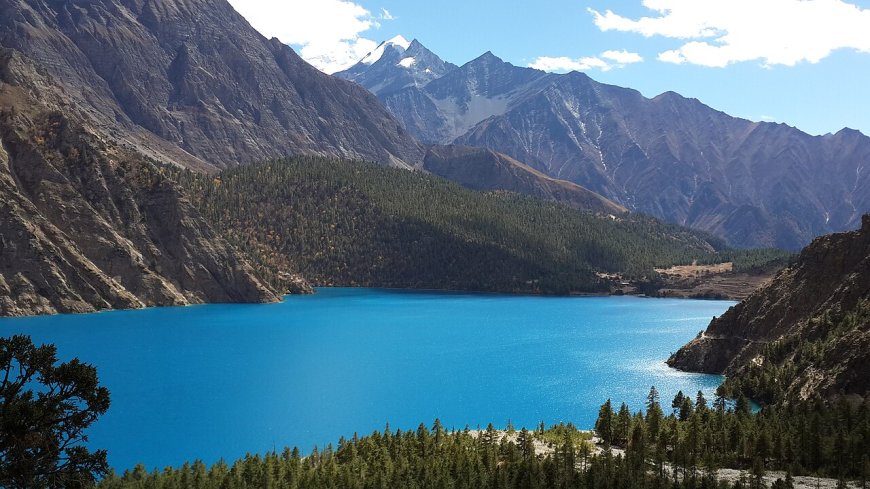
The trans-Himalayan strip that holds Shey Phoksundo and the wider Dolpo region does not follow the monsoon calendar that governs most of Nepal. The main range blocks the summer moisture, so upper Dolpo stays dry from June through September, while lower Dolpo — Dunai and the approach to the park — still catches real monsoon rain. The operational window for high-pass travel shifts later, when the westerlies start pushing cold fronts across the Tibetan plateau. That shift, not the monsoon retreat, sets the timeline for anyone moving through the high passes in late autumn.
Reading the calendar: three decision gates
Treating late October to mid-November as one block is the first error. The last week of October still offers long daylight and stable mornings. By the second week of November the sun drops behind the Kanjiroba ridgeline early in the afternoon at 5,000 m, and the overnight freeze hardens fresh snow into a slick crust that does not soften until mid-morning. A pragmatic go/no-go ladder uses three fixed dates as decision gates, not as suggestions.
Gate 1 — 25 October
If the long-range outlook shows a deepening trough over western Tibet with a surface low forming near Purang, the high passes (Kang La and similar cols on the Upper Dolpo circuit) will likely see wind-driven snow within 48 hours. The call at this gate is binary: proceed only if the mid-level pattern — the 500 hPa chart, essentially the steering flow at about 5.5 km — shows a ridge holding for at least five days. Otherwise, stage the group at Ringmo or Dunai and treat the next week as buffer. Most trekkers will not have synoptic charts on the trail; a satellite messenger with a weather subscription, plus an app that caches forecast data offline, lets you pull the same signal (see the forecast section below). Lodge owners in Ringmo and Dho Tarap also track these patterns closely. Ask them.
Gate 2 — 5 November
Usable daylight in the Phoksundo valley bottom falls away as the high ridges cut off the low sun. From this date the turn-around rule locks in: on any pass day the team is on the descent side of the highest remaining col by 11 a.m. local time. If the group has not cleared the col by then, they descend the same side they climbed.
Gate 3 — 15 November
The late-autumn weather window effectively closes. Seasonal snow often lingers on passes above 5,000 m by this date, and the snowline on shaded aspects can drop to around 4,500 m after storms. The Juphal airstrip — already the schedule's single point of failure — begins recording morning frost that delays the first flight by two to three hours. Any group still above the tree line after this gate is operating without margin. Overnight lows at exposed camps above 4,500 m can fall to -15 °C or lower.
The turn-around rule in practice
A fixed turn-around time removes the most dangerous variable on a late-season pass: hope. When the altimeter reads 5,100 m and the wind picks up, the temptation to push another thirty minutes is strong. A stated hour kills that argument before it starts.
Set it the evening before, not on the morning. The leader works backwards from the 11 a.m. col deadline using the slowest member's measured pace from that day, then adds a margin for snow or a headwind. If the slowest person took 45 minutes over the last 200 m of vertical gain, the turn-around moves earlier by that margin and then some. Write the time on the group's shared note or slate at dinner, repeat it at breakfast, and pick one or two physical checkpoints below the col — a stream crossing, a cairn, the top of a fixed snow slope. Reaching a checkpoint late means turning there rather than gambling on the summit. Nobody renegotiates at altitude, and the guide's decision is not put to a vote.
Evacuation escalation ladder
When weather or injury forces a decision, the ladder has four rungs. Each rung is triggered by daylight remaining and conditions at the pickup point, not by the severity label someone assigns to the incident.
1. Self-evacuation
If the team can walk to a lower valley before dark, they do so. The guide carries the casualty's pack; the group moves at the pace of the slowest. No external assets are called.
2. Guide or agency extraction
If self-evacuation fails because the route is blocked or the casualty cannot walk, the guide triggers the agency's pre-arranged horse or porter relay from the nearest settlement. This rung works only while daylight allows safe loading and the trail is passable.
3. Insurer pre-authorisation
When the casualty cannot be moved by ground, the guide contacts the trekker's insurer through the agency's satellite link. Many insurers require pre-authorisation before tasking a helicopter; check your policy wording and confirm the process with your agency before departure. Without that code, some operators will not launch, though agencies sometimes front the cost and recover it later.
4. Helicopter request
With code in hand, the agency requests a flight. The decision hinges on two factors: daylight remaining at the pickup coordinates and the weather at the landing zone — cloud base, visibility, wind. If the pilot reports marginal conditions, the request is held until first light the next morning. No pressure is applied to the crew.
The Juphal bottleneck
Every Shey Phoksundo trek that uses Juphal as its exit lives or dies by the morning flight. A single Twin Otter or Dornier 228, carrying fewer than twenty passengers, serves the strip, and the backlog from one day of cancellations can stretch to three. Groups that build a two-night buffer at Dunai after crossing the last pass absorb the delay without crisis. Groups that schedule their international departure the day after the expected Juphal flight are gambling with a deck stacked against them. Operators rotate aircraft through the strip; confirm the day-before status with your agency rather than relying on a timetable you found online.
Permits: which Dolpo are you doing?
Lower Dolpo — Dunai to Ringmo and Phoksundo Lake — is not a restricted area. You need a TIMS card and the Shey Phoksundo National Park entry permit. Shey Phoksundo is a national park administered by the Department of National Parks and Wildlife Conservation, so the entry permit is issued in Kathmandu or at the park checkpoint at Suligad. Your agency will usually handle it.
Upper Dolpo — anything beyond Ringmo, including the high-pass circuit to Shey Gompa, Saldang and the Crystal Mountain traverse — requires a Restricted Area Permit. The long-standing rate is USD 500 per person for the first 10 days and USD 50 per day thereafter, arranged through a registered Nepali trekking agency, with a minimum of two trekkers on the same itinerary. Rates get revised, so confirm the current figure with your agency and ask for a written breakdown of their service fee before you commit.
Getting a forecast on the trail
You will not have 500 hPa charts in your pocket, and the toolkit has moved on. Two pairings that older guides still recommend are dead: Garmin retired its Earthmate app in favour of the Garmin Messenger app, and Dark Sky — which plenty of Zoleo users once paired with their device — shut down at the end of 2022, taking its forecast API with it. Follow instructions written around either one and you will be installing nothing that works. Check the device maker's own site for the app and weather subscription it currently supports before you fly, because this corner of the market churns every couple of years.
Then add an offline-capable app that lets you cache forecast grids for your coordinates while you still have a connection. Windy and Meteoblue both do this. And use the oldest tool available: lodge owners in Ringmo, Dho Tarap and Saldang watch the same westerly troughs you do, just without the jargon. Ask each evening what the wind is doing up high tomorrow.
Gear the date gates imply
If you are crossing passes after 25 October you need a four-season sleeping bag, a closed-cell foam pad plus an inflatable, microspikes or lightweight crampons for the icy descent crust, a down suit or heavy expedition parka, and mitts with liner gloves. Sunscreen and glacier glasses are not negotiable — UV at 5,000 m in November is still fierce. A pee bottle saves a midnight walk in the open. Batteries fade fast in serious cold; keep spares inside your sleeping bag.
Who to contact
- Restricted area permits: Department of Immigration, Kathmandu. Your agency handles this.
- National park entry permit: Department of National Parks and Wildlife Conservation, Kathmandu, or the Suligad checkpoint on the trail.
- Flight status: your agency's operations desk — they talk to the airlines serving Juphal daily.
- Weather: lodge managers in Ringmo and Dho Tarap; your satellite messenger's weather subscription.
- Emergency: agency satellite phone, then the insurer's medical desk, then helicopter coordination through the operator.
Closing practical takeaway
- Respect the three gates: 25 Oct for the go/no-go, 5 Nov for the 11 a.m. turn-around, 15 Nov as the window closing.
- Build a two-night Dunai buffer after the last pass. Juphal flights are the bottleneck, not the trekking.
- Know which Dolpo you are trekking: lower is open, upper is restricted, and the permit rules differ sharply.
- Verify your satellite messenger's current app and weather subscription before departure — do not trust old blog posts, including older versions of this one.
- Pack for seriously cold nights and icy pass descents. Microspikes are not optional after 5 Nov.
- Read your insurance policy's helicopter clause before you leave Kathmandu.
What's Your Reaction?