





Japan Certificate of Eligibility for Nepali Students: What the CoE Does Before Your Visa
The CoE is issued inside Japan by the ISA, filed by your school rather than you, valid three months, and free to apply for. Here's where it sits before the Kathmandu visa step.

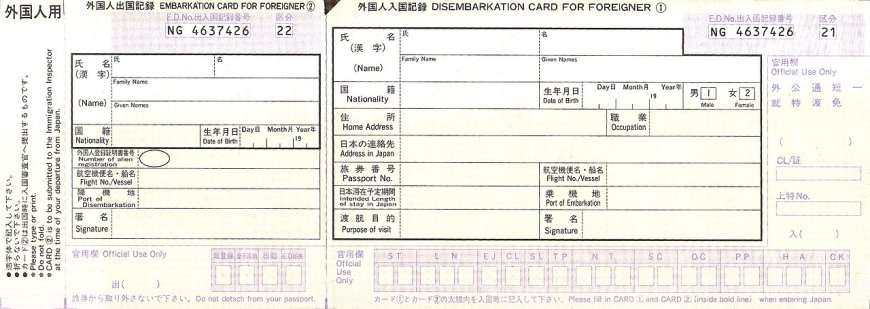
Every Nepali student heading to Japan trips over the same three letters long before anyone says the word "visa". The CoE shows up in school emails, in the document checklist, in the question a cousin asks across the dinner table. What rarely gets explained properly is what the thing actually is, who files it, and where it sits in the queue.
What the Japan Certificate of Eligibility actually is
It's an immigration document, and it's issued inside Japan. Since April 2019 the body issuing it has been the Immigration Services Agency of Japan (ISA), which sits under the Ministry of Justice. The ISA publishes a page on the Student status of residence. That page, not a Facebook group, is the version to trust when something here looks out of date.
The certificate's job is narrow. It means immigration has already looked at your circumstances and accepted that you qualify for the status of residence called "Student". That's all it means. It is not permission to enter the country, and holding one does not put you on a plane. Entry permission comes from the visa, and the visa comes from the embassy.
One number is worth knowing without hunting for it. A Japan Certificate of Eligibility is valid for three months from the date of issue, and your visa application has to fall inside that window. Miss it and the certificate lapses, which means the application gets rebuilt from the beginning.
Your school files it, not you
This is the part that confuses people most. The application goes in from inside Japan, submitted by the institution that admitted you, whether that's a language school, a senmon gakko (specialized training college) or a university. It's filed at the regional immigration bureau, usually by the school or by someone acting on its behalf. You are not the applicant. You're the supplier of paperwork.
And the application itself costs you nothing. The ISA charges no fee for a Certificate of Eligibility. Schools often add an administrative fee of their own, and agents charge for their time, so ask what's included rather than assuming. But the government fee on the CoE is zero.
Your job is handing over what the school asks for, in the form it asks for, the first time round. What schools typically request from a Nepali applicant: a completed application form in their format, passport copy, photographs to their stated specification, academic certificates and transcripts, proof of Japanese language study where required, and financial documents. Each school adds its own items and its own deadlines. Read the list they send you rather than a checklist from a friend who applied somewhere else.
Where the CoE sits in the sequence
The order matters. Get it wrong and you lose months.
First comes admission, confirmed in writing. Then the school applies for your CoE. Then the certificate is issued and the original is sent to you. Only after that do you apply for the student visa at the Embassy of Japan in Kathmandu, using the CoE original along with the embassy's own forms, photographs and supporting papers. Once the visa is in your passport you travel.
Your residence card is issued at the airport on arrival at major ports such as Narita, Haneda, Chubu and Kansai. Land somewhere smaller and it gets posted to your registered address later, so sort out your address with your school early.
The embassy decides too, and it keeps the original
Two things surprise people at this stage. The first is that the embassy makes its own independent decision. A CoE makes a student visa application straightforward, but it is not a guarantee, and nobody at the school can promise you the visa. The second is that the original CoE has to be presented with the application and is not returned to you. Scan it, photograph it, keep a photocopy. You will want the details later for your residence card, for a part-time work permission application, for a scholarship form.
If the CoE comes late, or doesn't come
Late is more common than refused. If the certificate arrives after your intake has already started, the school will normally move you to the next one, and depending on how much time has passed you may need a fresh application rather than a reissued certificate. Ask early, not in the week classes begin.
A refusal is different. The ISA gives reasons to the school rather than directly to you, so your first call is to your admissions office: what was the stated ground, and can it be fixed? Weak financial documentation is a common one, and it can usually be answered with better evidence at the next intake. Some grounds carry a waiting period. Either way, don't resubmit identical papers and hope.
Proof of funds: what's tested, and which numbers come from where
Behind all the bank letters sits one question. Can this person cover tuition and living costs for the period of study without working illegally once they arrive?
The evidence schools usually want is a combination: a balance certificate; statements covering a stretch of months, not one flattering day; an explanation of where the money came from, such as salary, business income, a property sale or an existing remittance pattern; income or tax documents for the sponsor; a scholarship award letter if one applies; and proof of the relationship between you and whoever is paying.
I'm not quoting a required amount, because schools publish their own expected figure and it differs between institutions. Ask yours in writing. What can be said without a number is that timing matters more than the total. A balance certificate issued the same week as the application, drawn from an account that sat near empty a month earlier, reads as staged money. Admissions staff have seen that pattern a hundred times.
On the other numbers: your tuition and first-year costs come from the school's own fee schedule and your offer letter, and no blog figure beats them. The visa fee is set by the embassy in yen and collected at the counter in rupees; the Kathmandu embassy's current fee page is the only version that counts. Living-cost estimates come from the school's own material, useful for planning and nothing more. Processing time comes from the ISA and, for the visa step, the embassy.
Timing, and why undated processing claims are worthless
If someone tells you the CoE takes a certain number of weeks, the only useful follow-up is: when were you told that, and by whom? Intakes cluster around the same calendar windows, so the queue at the regional bureaus lengthens and shortens depending on the month. Ask your school what turnaround they currently expect for your intake, and check the ISA's published guidance on the day you sit down to plan.
Small errors that cost a whole intake
Name spelling that drifts between passport, bank documents and admission letter. Photocopies submitted where originals were required. Translations without the accompanying certificate. A financial sponsor whose relationship to you is never documented. None of it is dramatic. All of it can push you to the following intake.
What this piece doesn't cover
Choosing between a language school and a direct university route, JLPT levels and how they shape school choice, MEXT and other scholarships, and whether to use an agent all sit in our separate guide to the wider Japan study decision. This one is only about the CoE and the documents that feed it.
What's Your Reaction?