








Udhauli Parva 2026: Sakela, Chasok Tangnam and the Kirat Autumn Festival
Udhauli is the autumn half of a Kirat observance pair, known as Sakela among Rai communities and Chasok Tangnam among Limbu. A plain guide to the names, the seasonal logic and why the date shifts.

Ask three people from the eastern hills what the autumn full moon means and you may get three different names for it. That is not confusion. It is the ordinary state of a festival kept by several Kirat communities, each with its own language, its own ritual calendar and its own way of marking the same turn of the year.
Udhauli is the autumn half of a pair. Its counterpart, Ubhauli, comes in spring. The two are usually explained together, because the pair tracks a year organised around where people and livestock are and what the fields are doing.
The two halves of the year
The names point at direction. Ubhauli is conventionally glossed as the upward movement and Udhauli as the downward one, and the gloss makes sense once you picture the middle hills: herds and herders heading up to higher grazing through the warmer months, then coming back down as the monsoon ends and the harvest comes in.
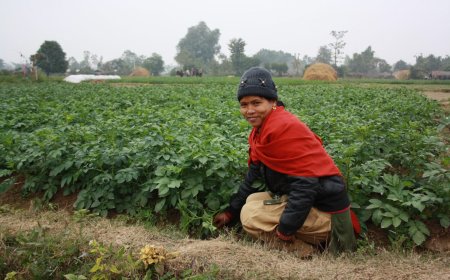
That is why Udhauli is often described as a harvest-side observance, a moment of thanks once the grain is safely in. The description is common enough to be fair. It is also where local accounts begin to diverge. Some families treat it mainly as an agricultural thanksgiving. Others put the weight on the communal and ancestral side: the gathering, the dance, the remembering of people who are gone.
One observance, several names
Sakela is the name most often heard in Rai communities. Chasok Tangnam is the Limbu name. Sunuwar communities have their own usage as well.
What these names are not is translations of each other. Describing Sakela as "the Rai word for Chasok Tangnam" folds two distinct traditions into a single entry, and the people who keep them generally do not do that. The names belong to different languages and different ritual lineages, and the ceremonies attached to them are not identical in form or emphasis.
The workable way to hold all of it: Udhauli names a season and a shared turn of the year. The names underneath it belong to particular communities, and each one carries its own detail.
What the observance actually looks like
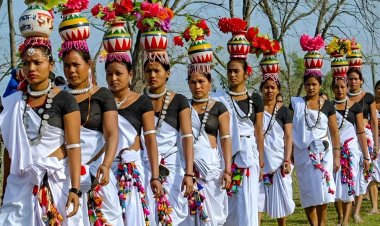
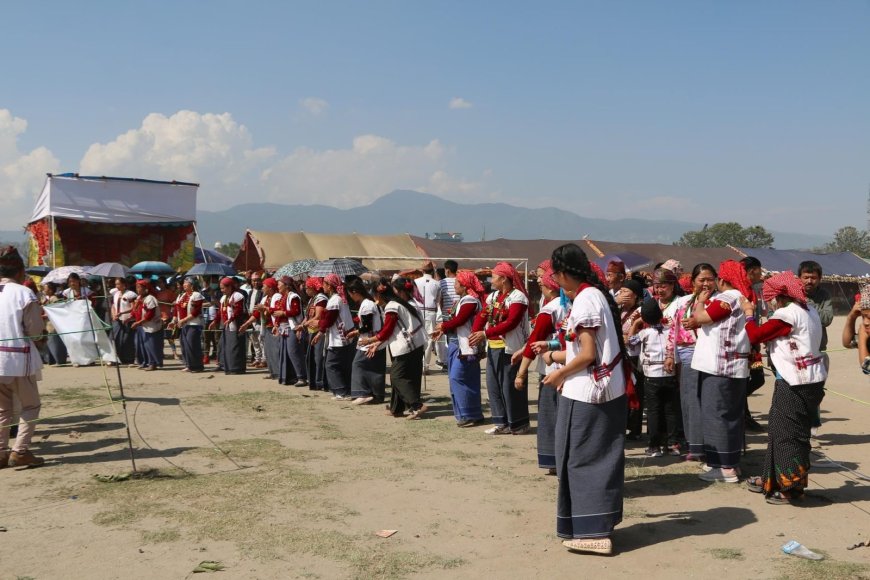
The part outsiders see first is the dance. Groups gather at a customary open ground, form a circle, and move to drumming that sets the pace. The dance is the thing people came to do rather than a show staged for visitors, and the circle is open to those who know the steps.
Offerings generally come before the dancing. What is offered, and to whom, varies from place to place. So does the title of the person who leads the ritual; it differs between communities and between languages, and it is not something to reconstruct from the outside.
There is a practical point buried in this. An observance this decentralised has no single authoritative script. Villages keep their own versions. Families keep their own. Where two accounts disagree about what happens first, both are usually right about somewhere.
Why the date moves
Udhauli is reckoned by the lunar month, which is why it shifts against the Gregorian calendar instead of sitting still. Anyone lining up dates across a decade is watching a lunar reckoning drift against a solar one. That drift is not an error; it is how the calendar works.
For any given year, the dependable move is to check with the community organising the observance where you are, rather than working forward from last year's date.
Common questions
How is the date of Udhauli fixed?
By the lunar month rather than the Gregorian calendar, which is why the date shifts from year to year.
Is Sakela the same festival as Chasok Tangnam?
They are not translations of one another. The names come from different communities and different languages, and the observances attached to them are not identical.
Do all Kirat communities observe Udhauli the same way?
No. The observance is decentralised, and villages and families each keep their own version of it.
None of this makes Udhauli hard to follow. It makes it plural, which is a different thing. The festival is easiest to approach the way the communities themselves approach it: one name at a time, with the local version in front.
What's Your Reaction?