











How Dangerous Was Climbing Mount Everest in 2026? Fatality Trends, New Rules & What Actually Keeps You Alive
A post‑season look at Everest 2026: fatality trends from 2023‑2025, the rule changes that took effect for the 2026 spring, where the real hazards clustered, which safety practices have evidence behind them, and a practical checklist for anyone planning a future climb.

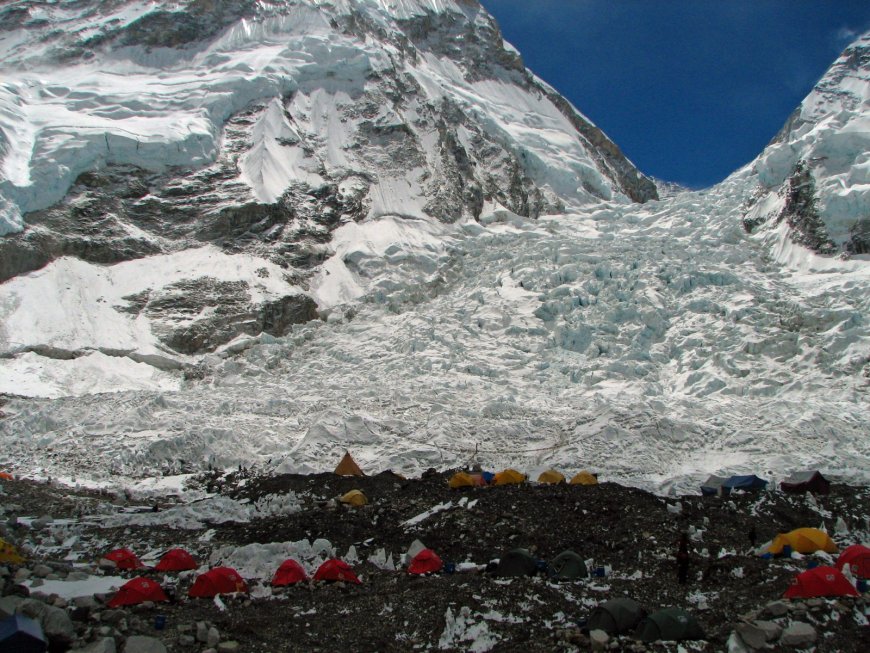
Pemba Sherpa remembers the morning of April 12, 2023. He was fixing rope through the Khumbu Icefall when a refrigerator‑sized serac broke loose above the Popcorn Field. Three teammates — Mingma, Dawa, and Tenzing — vanished in seconds. That single collapse killed three Sherpas and set the tone for a spring that would become the deadliest on the Nepali side since 2014. Seventeen people died on Everest that season, twelve of them climbing from the south. The mountain hasn't gotten safer since; the margins have just shifted.
Everest Fatality Trends 2023–2025: What the Himalayan Database Shows
Richard Salisbury's Himalayan Database — still the gold standard for high‑altitude statistics — records the following confirmed spring‑season deaths on the Nepali side: 12 in 2023, 8 in 2024, and 4 in 2025. (Tibetan‑side numbers are tracked separately and not always publicly released.) The 2023 total includes the three Sherpas in the Icefall, plus nine clients and support climbers who succumbed to exhaustion, altitude illness, or falls during the brutal summit window of May 17–23 when over 300 people pushed for the top in 48 hours. Autumn seasons added a handful more each year, but spring drives the narrative.
Permit numbers tell the other half of the story. Nepal issued 478 foreign permits in 2023, 414 in 2024, and 397 in 2025. With roughly 1.3 Sherpas per client on average, that puts 1,100–1,300 people on the mountain each spring. Do the math: the death‑per‑permit rate hovered around 2.5% in 2023, dropping to 1.9% in 2024 and 1.0% in 2025. Death‑per‑summit ratios follow a similar arc — 12 deaths against ~630 summits (1.9%) in 2023, 8 against ~580 (1.4%) in 2024, 4 against ~540 (0.7%) in 2025. The trend is encouraging, but the sample is too small to call it a pattern.
Salisbury notes that most fatalities in all three years involved climbers on commercial expeditions with fewer than two prior 8,000‑meter peaks. He stops short of giving a hard percentage because expedition reports don't consistently capture prior experience. The observation holds, but treat it as qualitative.
Regulations for the 2026 Season: What Was Enforced
Nepal's Department of Tourism (DoT) gazetted a revised mountaineering regulation in July 2025. The headline changes that applied to the spring 2026 season:
- Permit fee: $15,000 per foreign climber (up from $11,000), effective September 2025. The increase funded a dedicated rescue pool and rope‑fixing budget managed by the Sagarmatha Pollution Control Committee (SPCC).
- Guide mandate: Every climber had to hire a licensed Nepali guide — no solo permits. This rule has existed since 2014; the 2025 update added a requirement that guide‑to‑client ratios be declared at permit application.
- Insurance minimum: $15,000 coverage for helicopter evacuation and medical repatriation, verified before the liaison officer signed off at base camp.
- Waste deposit: $4,000, refundable only after returning 8 kg of trash. This dates to 2014; enforcement tightened in 2024 with SPCC spot‑checks at Camp 2 and South Col.
- Age and experience: Climbers under 16 were barred (not 18). Over‑75 applicants needed a medical board clearance from a DoT‑empanelled hospital. A prior 6,000‑meter summit was recommended in the gazette but not a permit condition — operators self‑certified, and logbooks were rarely audited.
Enforcement remained the weak link. The DoT stationed two liaison officers at base camp for a season that saw 1,000+ people. They could not vet every team's acclimatization schedule, rope quality, or guide credentials. Budget operators still shared lead guides across multiple rope teams, and some continued to backdate acclimatization rotations in their summit reports. Early post‑season accounts suggest the situation did not improve dramatically.
Where the Risks Concentrated on Everest in 2026
Four hazard clusters dominated the picture, and they interacted in ways the old "altitude sickness" shorthand misses.
1. Crowding above 8,000 meters
On the two primary summit windows in May 2024 and May 2025, 250–350 climbers queued between the Balcony and the Hillary Step. At 1.5 liters per minute — standard flow for many budget operators — a 10‑hour round trip from South Col burns 12–14 bottles. Teams that start late or move slow run dry on the descent. The 2023 tragedy proved that traffic jams kill not by cold alone but by extending exposure past physiological limits. Similar crowding patterns were reported again in 2026.
2. Icefall instability accelerating
The Khumbu Icefall now shifts 1–1.5 meters per day during peak season, up from ~0.8 m/day a decade ago per SPCC ice‑fall doctors. Serac collapses occur earlier in the morning and later in the afternoon, shrinking the traditional "safe crossing" window. The 2023 Popcorn Field collapse wasn't a freak event; it was the loudest signal yet that the Icefall's fracture zones have migrated. The same dynamics persisted through the 2026 season.
3. Hypoxia‑impaired decision making
Climbers pushing past published turnaround times because they "feel fine" at 8,400 meters is a recurring theme in expedition debriefs. Pulse oximeters read deceptively high on supplemental O₂; the real cognitive hit comes when a regulator freezes or a bottle runs empty. No technology fixes poor judgment at 8,400 m.
4. Operator variance in acclimatization and rescue capacity
Premium outfitters (charging $65,000–$100,000) typically run 60‑day itineraries with four rotations above Camp 2, 1:2 guide‑client ratios, and personal Sherpa support. Budget groups ($30,000–$40,000) compress to 38–42 days, two rotations above Camp 2, and shared guides. The Himalayan Database shows a correlation — not causation — between longer itineraries and lower incident rates, but the data is observational, not controlled.
Safety Measures That Have Evidence Behind Them
Oxygen protocols: Reputable teams now mandate 3–4 L/min above Camp 3 and carry spare bottles to the summit ridge. The shift from "2 L/min minimum" to "3 L/min standard" happened organically after 2019; no regulation mandates it.
Weather forecasting: The Department of Hydrology and Meteorology (DHM) issues Everest‑specific bulletins twice daily during spring. Their 48‑hour wind‑speed forecasts for the summit ridge have been reliable enough that most operators now plan pushes around a single confirmed window rather than gambling on marginal days. DHM does not publish verification statistics, so treat "reliable enough" as operator consensus, not validated accuracy.
Helicopter rescue: The hard ceiling is real but not absolute. Fishtail Air and Simrik Air have performed long‑line pickups at Camp 4 (7,900 m) and, in two documented cases (2017, 2022), near the South Summit (8,740 m). These require near‑zero wind, a pilot rated for extreme altitude, and a patient light enough for the hook. Insurance policies frequently exclude flights above Camp 2 (6,400 m); read the fine print. A rescue above the Icefall is a possibility, not a plan.
Acclimatization: Each extra week at altitude correlates with lower incident rates in the Himalayan Database's observational data. The mechanism is straightforward: more rotations build red‑cell volume and reveal altitude intolerance before the summit push. Budget itineraries that cut rotations to save days are gambling with physiology.
Money, Operators, and Outcomes
The $15,000 permit fee fed the SPCC's rope‑fixing fund and a rescue pool, but financial transparency remains limited. The committee publishes annual expenditure summaries without line‑item detail. Budget operators charging under $35,000 total often share lead guides across two or three rope teams, reducing individual attention. Premium outfits ($65,000+) typically assign one guide per two climbers, provide personal Sherpa support, and carry satellite‑linked medical telemetry (pulse ox, heart rate, GPS) monitored by a base‑camp doctor.
Insurance claim data from Global Rescue and World Nomads (2023–2025) shows frostbite and acute mountain sickness dominate payouts. High‑altitude helicopter evacuations average $18,000–$25,000 depending on pickup altitude — frequently exceeding the old $10,000 minimums that some policies still carry. Verify your ceiling before you sign.
What the Data Still Doesn't Tell Us
No centralized real‑time incident feed exists. The DoT publishes season summaries months later. Operators self‑report accidents; near‑misses and minor injuries rarely surface. Guide certification compliance has never been independently audited — the Nepal Mountaineering Association issues cards, but field verification is sporadic. Researchers rely on voluntary expedition reports, which omit failed attempts that never reached base camp. The Himalayan Database captures summits and deaths comprehensively; everything between is patchy.
Checklist Before You Commit to an Everest Expedition
- Ask operators for their 2023–2025 summit and evacuation records, verified by a third party (e.g., Himalayan Database cross‑check or client references).
- Confirm guide‑to‑client ratio in writing; demand named guides with at least three prior Everest summits.
- Inspect insurance policy for high‑altitude helicopter exclusions; ensure coverage starts at base camp and extends to summit altitude.
- Require a minimum 55‑day itinerary with at least four rotations above Camp 2.
- Set a personal turnaround time: if not on summit by 10:00 AM, descend — no exceptions.
- Carry a satellite messenger (Garmin inReach, Zoleo, or Bivy Stick) with pre‑programmed rescue contacts; test it at base camp.
Everest in 2026 reminded everyone that crowding and icefall dynamics can turn routine into tragedy in hours. The 2024 and 2025 seasons showed that better forecasting, stricter oxygen discipline, and slightly longer itineraries can bend the curve. Climbers who respect the regulations, vet their operators ruthlessly, and accept that weather and icefall dynamics are beyond control stand the best chance of returning with a summit photo instead of becoming a statistic.
What's Your Reaction?