



Dhanusha District Profile: Janakpur, Local Units and Mithila Culture
A qualitative profile of Dhanusha district in Nepal's Madhesh Province: its boundaries, Janakpur as headquarters, how local government is structured, and the Mithila culture and festivals that shape the area.

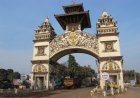
Dhanusha is one of the districts of Madhesh Province, spread across the flat, heavily farmed plain of Nepal's eastern Terai. Its headquarters is Janakpur, a temple city that carries far more cultural weight than its size alone would suggest. For Nepalis who live outside the Terai, Janakpur is often the first thing they can name in this part of the country, and for many Hindus on both sides of the border it is a place worth travelling to.
This profile is deliberately descriptive. Population tables, land area, ward counts and similar figures are left out rather than guessed at, because those numbers need an official source behind them. What follows is about the place itself, its culture and how the district is run.
Where Dhanusha sits
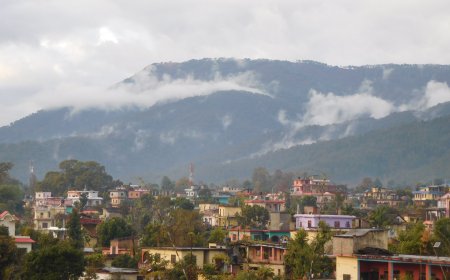
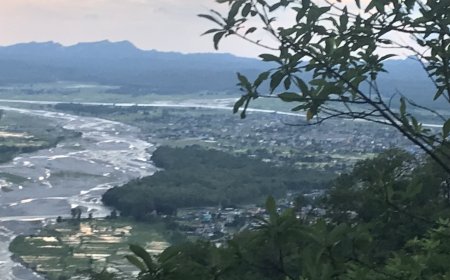
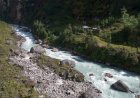
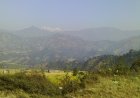
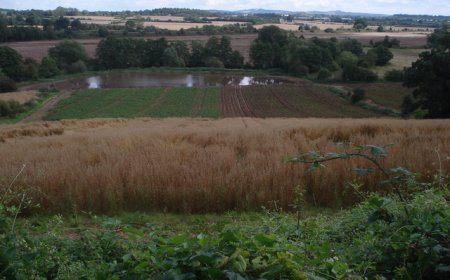
The district covers level ground that slopes gently down from the Chure foothills in the north toward the Indian border in the south. Most of it is farmland: small plots, irrigation channels, scattered settlements and market towns strung along the roads. Head north and the land begins to lift into wooded hills, and the character changes quickly from open paddy fields to hill-edge forest and gravel streams.
Dhanusha is bounded by Siraha to the east, Mahottari to the west, Sindhuli to the north and the international border with Bihar, India, to the south.
Summers are hard here. The pre-monsoon weeks bring dry heat and dust, then the monsoon settles in with humidity and standing water in the fields. By late autumn the air clears, mornings turn misty, and the plain becomes genuinely pleasant for a few months.
Janakpur, the district headquarters
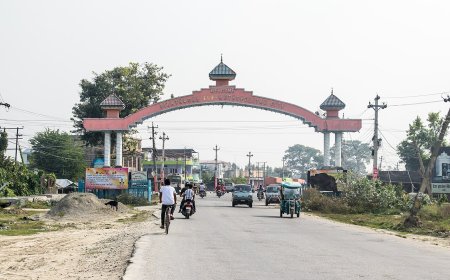
Janakpur is where district offices sit, where people come for paperwork and hospital treatment, and where the district's political and cultural life concentrates. It is also the district's main urban centre, and its economy leans heavily on pilgrims, students, traders and the steady flow of visitors from across the border.
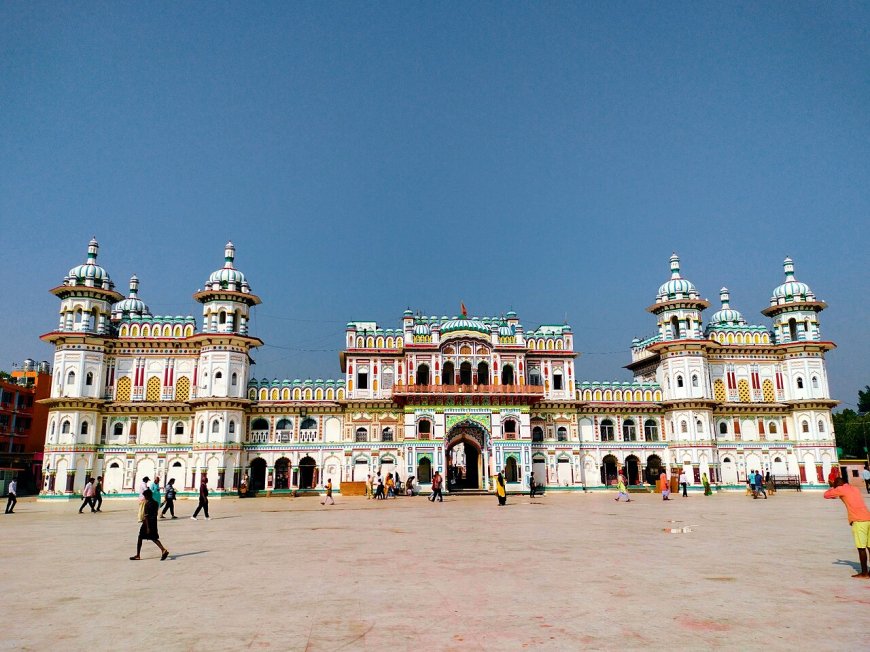
At the centre of the city is Janaki Mandir, a large, brightly painted temple dedicated to Sita. The temple and the sacred pond beside it anchor the old part of town, where narrow lanes fill with shops, food stalls and pilgrims during festival season. The wider city has grown well beyond that core, with newer neighbourhoods, colleges and a domestic airport on its edge.
How the district is administered
Since Nepal's shift to federalism, Dhanusha has been governed through a District Coordination Committee that links the district's municipalities and rural municipalities. These local units are the level of government most people actually deal with: they issue local registrations, run basic services, manage local roads and markets, and are divided into wards for day-to-day administration. Each unit has an elected mayor or chair along with ward representatives.
The practical result is that a resident of Janakpur and a resident of a rural municipality elsewhere in Dhanusha deal with different local offices for the same kind of work.
Mithila culture and the festival year
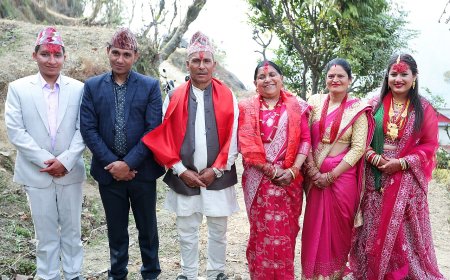
Dhanusha is the centre of Mithila culture in Nepal. Maithili is the everyday language of most households, while Nepali carries administration, national media and much of formal education. The two sit side by side rather than competing, and many residents move between them without thinking about it.
The district's best-known art form comes out of that culture. Mithila painting began as wall art made by women for weddings and festivals, filling mud-plastered walls with fish, parrots, lotuses, bamboo groves and the sun. It has since moved onto paper and canvas as a source of household income, and it is now one of the most recognisable folk-art traditions in South Asia.
Vivah Panchami
Each year in November or early December, Janakpur marks Vivah Panchami, the symbolic wedding of Ram and Sita, with processions and crowds around Janaki Mandir. The city fills with pilgrims and the festival is the biggest event on the local calendar.
Dhanushadham
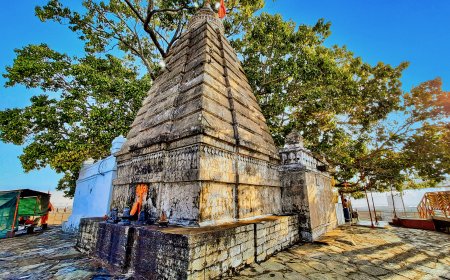
Elsewhere in the district, local tradition holds that Dhanushadham is where a fragment of the bow broken by Ram fell. The site is treated as a place of religious importance and draws visitors, especially around festival time. It is worth saying plainly that this is a living tradition rather than a settled historical record.
How people make a living
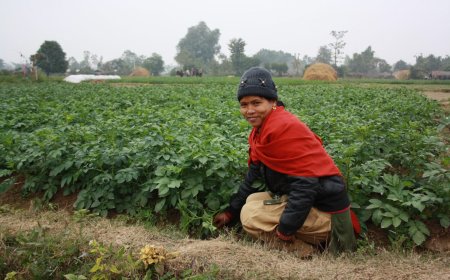
Farming remains the backbone of the district. Most holdings are small, growing paddy in the monsoon and wheat, pulses and vegetables in the cooler months, often with a few cattle or goats alongside. Pond and tank fish farming is common across the Terai and gives many households a second income.
Labour migration shapes almost every family in some way. Men and women travel to India for seasonal work or further abroad on longer contracts, and the money sent home covers school fees, house repairs and medical bills. Alongside this, small-scale trade with the border towns of Bihar is part of daily life: shopping trips, wholesale buying and the movement of produce in both directions.
Getting there and when to go
Janakpur is reached by road from other Terai towns and from Kathmandu, and the district has a domestic airport; carriers and schedules change, so confirm details before booking. For most visitors the comfortable window is late October through February, when the heat eases and the harvest season is under way. Vivah Panchami draws the biggest crowds. April and May are hot and dusty, and the monsoon months are humid and slow, though the countryside is at its greenest.
Frequently asked questions
Where is Dhanusha district?
In Madhesh Province, in Nepal's eastern Terai. Janakpur is the district headquarters.
What is Janakpur known for?
Janaki Mandir, the Vivah Panchami festival, Mithila art and the Maithili language.
Is Janakpur the same as Dhanusha?
No. Janakpur is a city within Dhanusha district, which also contains other municipalities and rural municipalities.
What language is spoken in Dhanusha?
Maithili is widely spoken, with Nepali used in administration and education.
Last updated: 27 November 2026.
What's Your Reaction?