

Indra Jatra (Yenya) in Kathmandu: How the Eight Days Unfold, and How to Move Around Basantapur
Yenya, better known as Indra Jatra, runs for eight days around Basantapur Durbar Square in Kathmandu. This guide follows the sequence in order: the lingo pole going up, the butter lamps for the year's dead, the three chariot days of Kumari Jatra, the white Bhairav mask at Indra Chowk, the Kumari's tika to the President of Nepal, and the pole coming back down.

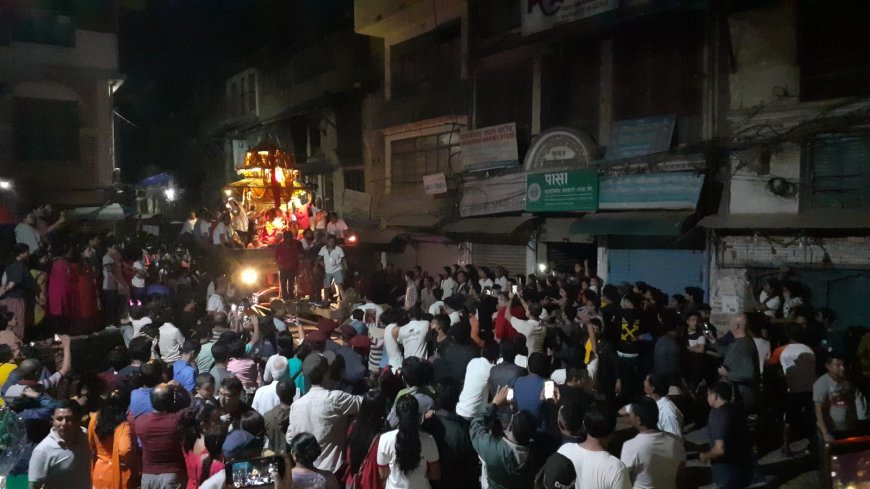
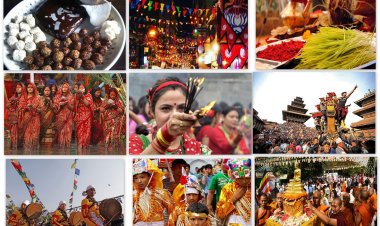
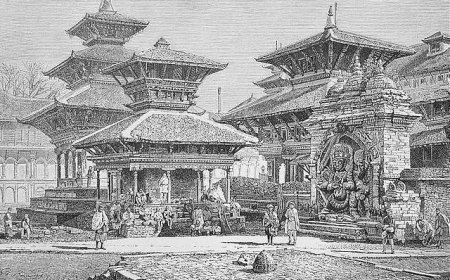
Yenya is what Newars call it. Everyone else, including the traffic police and the newspapers, calls it Indra Jatra. For eight days the old city around Basantapur Durbar Square in Kathmandu slows down, packs out and fills with chariots, masked dancers, butter lamps and rope. It makes much more sense if you treat it as a sequence rather than one big day, because that is what it is. A pole goes up at the start. The chariots roll through the lanes in the middle. The Kumari gives tika to the President of Nepal near the end. The pole comes down, and that is that.
On the calendar, Yenya runs from Bhadra Shukla Dwadashi to Asoj Krishna Chaturthi. Those two tithis are where the eight days come from: four days of the bright fortnight up to Purnima, then four more of the dark fortnight through to Chaturthi. Because the Nepali calendar is lunisolar, and Bhadra and Asoj sit somewhere between mid-August and mid-October on the Gregorian one, those eight days land on different Gregorian dates every year. Confirm the current year's dates, procession order and traffic arrangements with Guthi Sansthan, Kathmandu Metropolitan City or the relevant ward office before you plan around the festival. Do not build a timetable out of a description like this one.
The eight days of Indra Jatra, in order
Here is the shape of the week, without dates attached to it.
The lingo goes up. The Yosin, usually just called the lingo, is a long wooden pole hoisted upright at Basantapur in front of the old palace. Until it stands, the festival has not begun. Crowds turn out for the raising, and it is one of the few moments of Yenya that needs no explanation at all for a first-time visitor: a very large pole, a lot of shouting, and a square full of people watching it happen.
Lamps, early in the week. Households that lost a member during the past year light butter lamps in memory of the dead and make the offerings that go with it. This happens in lanes and courtyards rather than in the middle of the square, which makes it easy to walk right past. Ask around if you want to find where a particular family is lighting. It is one thread of a much wider cycle of Newar festivals in the Kathmandu Valley that most visitors never hear about.
Then the chariots. Three heavy wooden chariots get hauled through the historic core by teams of volunteers pulling on ropes: the Kumari's, Ganesh's and Bhairav's. This is Kumari Jatra, and it runs across three days with a different route each day, all of it through the old quarters rather than along main roads. Maru, Chikanmugal, Kilagal, Indra Chowk and the lanes between them are the general territory. The pace is set by the crowd as much as by the organisers, which is why the disruption is felt hard in the lanes and barely at all on the arterial streets a few hundred metres away.
The white Bhairav mask at Indra Chowk. While the chariots are making their rounds, a large white Bhairav mask is on display at Indra Chowk and the junction turns into one of the busiest spots in the city. How the display is handled, and what gets offered in front of it, follows local practice rather than a published programme, so expect it to look somewhat different from the last account you read. Including this one.
Tika day. On the last of the three chariot days, the Kumari gives tika to the President of Nepal. This one is a state occasion rather than a neighbourhood one: protocol, security, a set arrangement of seats, a crowd held back. Where exactly the ceremony is staged at Basantapur and how the square is divided up have not been identical every year, so check the current arrangement before deciding where to stand. It is also not the moment to be wandering casually across the square. Watch from where you are told to watch from.
And the pole comes down. The lingo is lowered and carried off, and the festival ends with it. If you are in Kathmandu for only part of Yenya and want to see a clean ending rather than a beginning, this is the one to aim for.
Running alongside the chariots are the masked and costumed figures that give Yenya much of its character. Troupes of dancers move through the streets, and among the better known are Pulukisi, the white elephant associated with Kilagal, and the masked Dagin. Their appearances follow tradition, but the line-up can vary from year to year, so treat any list of who appears where, this one included, as approximate.
Getting in and out of Basantapur
During the festival the square is a walking place. Vehicles are pushed out of the core and sent around it, marshals manage the flow, and the diversions get redrawn as needed, so they shift from year to year and sometimes from evening to evening. The broad shape stays the same: foot access works, vehicle access does not.
The easiest approaches on foot are from New Road, from Asan, and along the Jhochhen, or Freak Street, side. All three drop you into the lane network where the festival actually happens. If you are arriving by taxi or a ride-hailing app, expect to be let out well short of the square and to walk the last stretch, and expect to pay for the time spent sitting in traffic. Evenings are the busiest and the slowest. Mornings are calmer, though not much of the festival is running yet.
For the current year's restrictions and diversions, go to the source. The Kathmandu Valley Traffic Police Office publishes festival notices, and they also go out through its social pages and get carried by the local papers. Anything written in advance, this piece included, is a shape rather than a timetable.
Bhadra and Asoj sit at the tail of the monsoon, so rain is a real possibility rather than an exception. The stone paving around the Durbar Square and in the surrounding lanes turns slick, drainage is uneven, and the smaller gullies hold water. Shoes with grip are worth more than an umbrella, and a phone light helps once it is dark.
A few words you'll hear
Yenya is the Newar name for the festival. It comes from Yen, the Nepal Bhasa name for Kathmandu itself, so Yenya means roughly of Yen, the city's own festival. Yen is the place. Yenya is the event held in it.
Lingo, or Yosin, is the pole raised at Basantapur at the start and taken down at the end.
Kumari is the living goddess of Kathmandu, and her chariot procession is what gives the festival its crowds.
Kumari Jatra is the chariot procession itself, three days of it, and it is the part most people mean when they say they are going to Indra Jatra.
Tika is the blessing mark placed on the forehead, here given by the Kumari to the President of Nepal.
Pulukisi is the white elephant figure, danced by a troupe associated with Kilagal, and one of the best known of the masked acts.
Dagin is another of the masked figures that appear during the week, and like the others its route and timing follow local custom rather than a printed schedule.
Guthi is the trust system behind a great deal of the valley's ritual life, and Guthi Sansthan is the government office that administers it.
Terminology shifts between neighbourhoods, so do not be surprised if the person next to you calls the same thing by a different name. It usually means the same ritual, just from a different lane.
However you come at it, Indra Jatra is one of the few weeks in the year when the older logic of Kathmandu is plainly visible: processions that follow lanes instead of roads, a ritual calendar that ignores the Gregorian one, and a square that briefly belongs to people on foot. Go on foot, go early or accept the crush, and check the current arrangements before you set out.
What's Your Reaction?