

Kukur Tihar 2026: Nepal's Festival of Dogs Explained
Kukur Tihar is the second day of Nepal's five-day Tihar festival, when dogs are given tika, garlands and food as messengers of Yamaraj. This guide explains where the day sits in the Tihar sequence, the Vedic roots of Yama's four-eyed dogs, the 7 November 2026 date used by published panchangs, and how to observe the day respectfully.

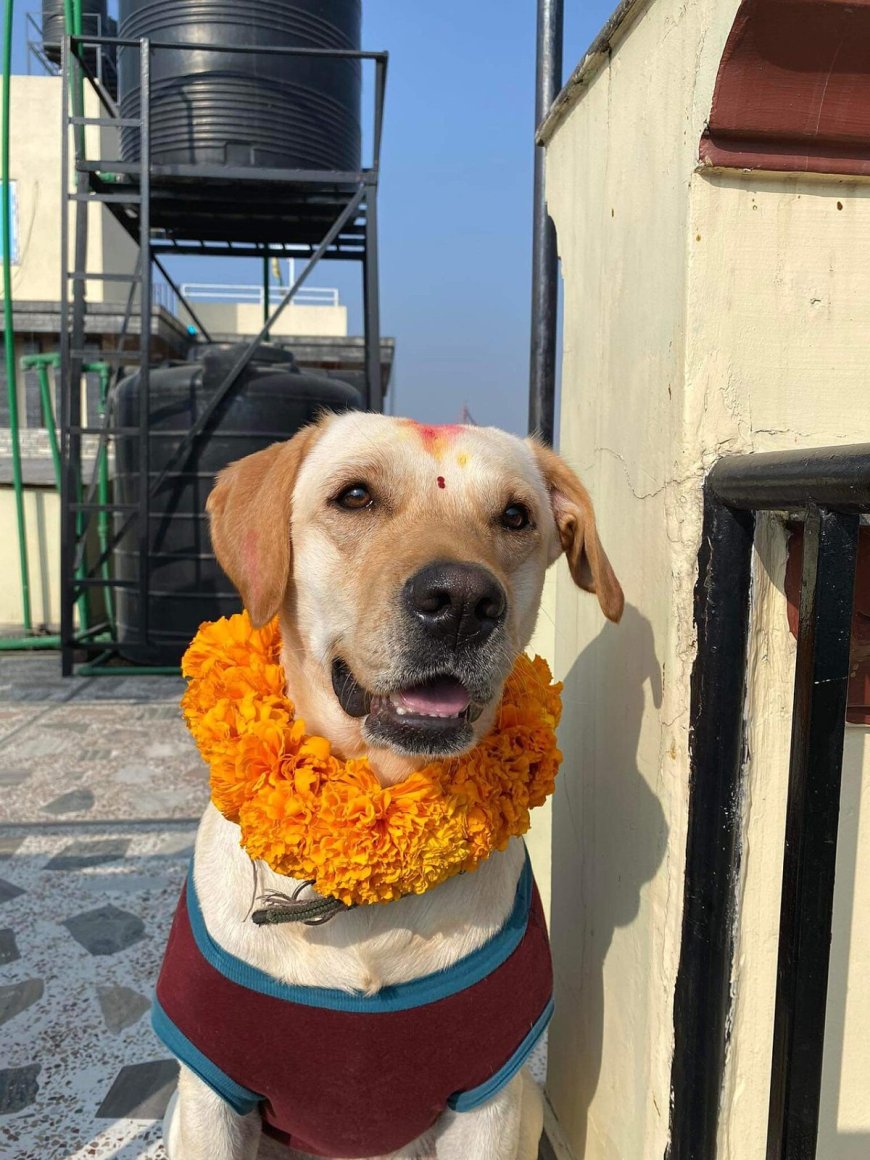
Kukur Tihar is the day Nepal sets aside for dogs. They get a red tika on the forehead, a marigold garland round the neck, and a plate of food that is often better than what the humans are eating. It is one day inside a five-day festival, and it is entirely about an animal most societies treat as ordinary.
If you have ever wondered why a whole country stops to thank its dogs, the answer sits in the middle of Nepali religious life. Dogs are regarded as messengers of Yamaraj, the god of death, and Kukur Tihar is the day that role is honoured.
Where Kukur Tihar sits in Tihar
Tihar runs for five days, and each day belongs to a different relationship. Kag Tihar comes first, when crows are fed. Kukur Tihar follows on the second day. The third is Gai Tihar in the morning and Laxmi Puja in the evening, both falling on Kartik Amavasya, the new moon: the cow is honoured early, the goddess of wealth welcomed after dark. The fourth day is Govardhan Puja, which Newar households keep as Mha Puja, the worship of the self and the start of Nepal Sambat, the Newar new year. Bhai Tika closes the sequence on the fifth day, when brothers and sisters exchange tika.
Kukur Tihar itself falls on Kartik Krishna Chaturdashi, the fourteenth tithi of the waning fortnight. That is a lunar reckoning rather than a fixed slot on a solar calendar, which is why the date drifts by a couple of weeks from one year to the next.
The 2026 date
Published panchangs place Kukur Tihar on 7 November 2026, with Laxmi Puja the following day, 8 November. Tihar's five days fall in early November. Anyone planning travel or a gathering should still check a current Nepali patro close to the time, since tithi-based dates are settled by live panchang and can differ slightly between published calendars.
What happens on the day
The ritual is simple, and it is repeated in almost the same form across the country. A dog is marked with sindoor on the forehead, given a garland, and offered food: milk, eggs, meat, rice, sel roti, or whatever the household has set aside. Families with pets dress them up and take photographs. Strays are not left out, and that is part of the point. The day applies to any dog within reach, not only the ones with owners.
Why dogs, and why Yamaraj
Hindu textual tradition gives Yama two four-eyed dogs who watch the road to his realm and carry word between the worlds. The oldest layer of that tradition is Vedic, where the pair belong to Sarama and are named Shyama and Shabala. Later tellings sometimes swap in other names, Sharvara among them, so the naming is not fixed across texts. The four-eyed dog as guardian of the road to the afterlife is the steady image, and it explains the logic of the day: people feed and honour the animals believed to carry word of human beings and to guide souls onward.
Dogs also turn up alongside deities in Hindu iconography. In some Shaiva traditions a dog is associated with Bhairava. That is a textual and artistic association rather than a rule for every household, and families vary in how consciously they invoke it on Kukur Tihar.
Tihar, Yamapanchak, Dipawali
The five-day sequence is often called Yamapanchak, the five days connected with Yamaraj, and in Nepali usage the festival is commonly called Dipawali or Deepawali as well. Tihar overlaps in timing with Diwali as celebrated across the border in India, but the two are not the same observance. Tihar's five-day structure and Bhai Tika are specific to Nepali practice, which is why the Nepali name is worth keeping.
Worship, not a pet parade
The day has an official side too. Police and army dogs receive tika at their kennels, in much the same form as a household ritual. It shows how far the observance reaches: working animals, family pets and street dogs all count.
Kukur Tihar is worship, and the people performing it are not running an attraction. Every year animal welfare groups ask people not to force nervous or unhandled strays into the ritual, and the request is a fair one. Some of the dogs taking part have never been handled. A stranger with a camera can turn a calm moment into a stressful one for the animal, which defeats the purpose of the day entirely. If you are not part of the household or the neighbourhood, the sensible default is to watch quietly, ask before touching or photographing an animal, and take no for an answer the first time. If you are offered the chance to put tika on a dog, accept it gladly. Leave the ritual itself to the people it belongs to.
What the day keeps alive
Most festivals ask people to look up. This one asks them to look down, at an animal that gets ignored or chased away in plenty of places, and to treat it as a guest worth feeding. That is the part of Kukur Tihar that travels, whether or not you follow the calendar behind it.
What's Your Reaction?