

2026 Nepal Students' Guide to Canada Study Permit: Documents, Financial Proof & PGWP Pathway
Updated 2026 guide for Nepali students applying for a Canada study permit: document checklist (IMM 1294, IMM 5645, IMM 5257), corrected financial proof thresholds (CAD 20,635 living expenses, tiered family amounts), SDS GIC requirement, processing times from Nepal, PGWP eligibility including 3-year permit for master's/PhD grads, and practical tips to avoid common refusals. All figures sourced from IRCC pages accessed 24 August 2026.

If you're a Nepali student planning to study in Canada this year, the paperwork can feel overwhelming. IRCC updated several requirements in late 2024 that still apply for 2026 applications. This guide pulls the current checklist, financial thresholds, and processing times directly from official sources accessed on 24 August 2026 so you're not relying on outdated forum advice.
Document checklist — what IRCC actually asks for
The official study permit document checklist for applicants outside Canada was last reviewed by IRCC on 15 July 2026. You'll need these core items when you apply through the IRCC portal or a visa application centre in Kathmandu:
- IMM 1294 — Application for Study Permit Made Outside of Canada (the main form)
- IMM 5645 — Family Information (required for all applicants 18+)
- IMM 5257 — Application for Temporary Resident Visa (required for Nepali passport holders; this is the TRV form itself, not a schedule)
- IMM 5257 Schedule 1 — only if applicable to your situation (e.g., previous refusals, medical inadmissibility)
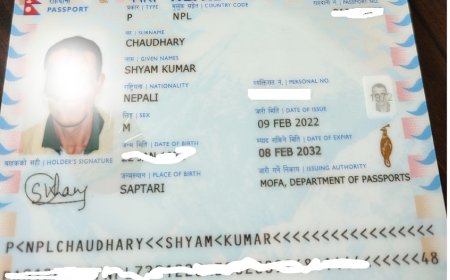
- Valid passport copy (bio page + any previous visas)
- Letter of acceptance from a designated learning institution (DLI) — must include DLI number
- Proof of tuition payment or deposit receipt
- Proof of financial support (detailed below)
- Letter of explanation / study plan
- Medical exam confirmation (upfront medical recommended for Nepal applicants)
- Police certificate from Nepal (issued within 6 months)
- Digital photo meeting IRCC specs
Source: IRCC Study Permit Document Checklist (accessed 24 Aug 2026)
Financial proof thresholds for 2026 (outside Quebec)
IRCC increased the minimum funds requirement effective 1 January 2024. For a single student applying in 2026 to study outside Quebec, you must show:
- Tuition fees for year one (as stated on your LOA)
- Living expenses: CAD 20,635 for 12 months
- First accompanying family member: add CAD 4,000 per year
- Second accompanying family member: add CAD 3,000 per year
- Each additional family member: add CAD 2,000 per year per person
So a student bringing a spouse needs tuition + CAD 24,635; with a spouse and one child, tuition + CAD 27,635; with a spouse and two children, tuition + CAD 29,635. These figures are from the IRCC "Proof of financial support" page last updated 30 January 2026.
Important: Quebec-bound students have different financial thresholds set by the Ministère de l'Immigration, de la Francisation et de l'Intégration (MIFI). For 2024–2025 the amount was CAD 15,078 for a single student; the 2026 figure hadn't been published on the MIFI site at time of writing. If you're headed to Quebec, check the MIFI financial capacity page the week you apply.
Acceptable proof includes any of the following (or a combination):
- Bank statements from the past 4 months (your own or parents'/sponsor's)
- Guaranteed Investment Certificate (GIC) from a participating Canadian bank — CAD 20,635 minimum (this is also the SDS GIC amount)
- Scholarship or funding letter on official letterhead
- Education loan approval letter from a recognized Nepali bank
- Proof of paid tuition + housing deposit
Source: IRCC Proof of Financial Support (accessed 24 Aug 2026)
Processing times from Nepal — what to expect
As of 24 August 2026, IRCC's processing time tool shows 8 weeks for study permit applications submitted from Nepal (online or VAC). That's the service standard for 80% of cases. Real-world variables that affect your timeline:
- Completeness — missing documents trigger a request letter, adding 3–6 weeks
- Medical exam — upfront exams (before submitting) typically save 2–3 weeks vs. waiting for IRCC's instruction
- Biometrics — book your VAC appointment in Kathmandu early; slots fill fast in July–August
- SDS eligibility — if you qualify for Student Direct Stream (GIC of CAD 20,635 + tuition paid + IELTS 6.0 overall with no band below 6.0), processing drops to ~20 calendar days
- Security/background checks — can add unpredictable delays; no way to expedite
Source: IRCC Processing Times Tool — Study Permit from Nepal (accessed 24 Aug 2026)
Post-Graduation Work Permit (PGWP) pathway
The PGWP lets you work in Canada after graduation. Key eligibility rules for 2026 graduates:
- Completed a program at a DLI that's at least 8 months long
- Program must be full-time (some part-time final semester exceptions exist)
- Apply within 180 days of receiving final marks/graduation letter
- Valid study permit at time of application (or maintained status)
Permit length matches program duration:
- 8 months to < 2 years → PGWP valid for same length as program
- 2 years or more → 3-year PGWP (maximum)
- Master's/PhD graduates (any length ≥ 8 months) → 3-year PGWP (policy change from 2024, still in effect for 2026)
You apply online from within Canada. No job offer needed. The application fee is CAD 255 (CAD 100 open work permit holder fee + CAD 155 work permit fee).
Source: IRCC Work After Graduation — PGWP Eligibility (accessed 24 Aug 2026)
Common refusal reasons & practical tips
Most Nepali applicants get refused for one of three reasons. Here's how to reduce risk:
1. Purpose of visit not convincing
Your study plan must explain why this specific program in Canada, not Nepal or India or Australia. Connect it to your academic background and career goals in Nepal. Generic templates get flagged.
2. Insufficient financial proof
Bank statements showing large recent deposits without source explanation raise red flags. If parents are sponsoring, include their employment letters, tax returns (Nepal PAN/VAT), and a signed affidavit of support. GIC is cleanest — no questions about fund origin.
3. Ties to home country
Officers assess whether you'll leave after studies. Show family property, parents' jobs, sibling responsibilities, or a job offer letter from a Nepali employer contingent on return. A flat "I will return" statement carries zero weight.
Extra tip: submit a certified English translation for every Nepali document. IRCC doesn't translate for you.
Quick reference links (all verified 24 Aug 2026)
- IRCC Study Permit Overview
- Document Checklist (IMM 1294, IMM 5645, etc.)
- Financial Proof Requirements
- Processing Times Tool
- PGWP Eligibility & Application
- Student Direct Stream (SDS) for Faster Processing
Rules shift. Always re-check the official pages the week you apply. Good luck with your application — preparation beats hope every time.
What's Your Reaction?