






Annapurna Base Camp Trek Permits: ACAP, TIMS and Where They Get Checked
What the ACAP permit and TIMS card actually cover on the Annapurna Base Camp trek, where they're checked on the route, what to carry, and how to verify current fees yourself.

Before the walking starts, there's a small chore every ABC trekker has to deal with: permits. Two names come up again and again, ACAP and TIMS, and they are not the same thing. One is an entry pass for the conservation area you're about to walk through. The other is a registration card that feeds a trekker database. You may need both, or only one, depending on rules that have shifted around more than once in recent years.
Here's what each one is for, who issues it, where it gets checked on the trail, and how to confirm the current fee for yourself. I'm deliberately not printing rupee figures on this page, and I explain why further down.
The ACAP permit is the one you definitely need
Annapurna Base Camp sits inside the Annapurna Conservation Area, one of Nepal's largest protected areas, managed by the National Trust for Nature Conservation through the Annapurna Conservation Area Project. Foreign trekkers need an entry permit to walk in. That's the ACAP permit, and it's the document that actually gets you past the barrier.
NTNC and ACAP issue it. In practice you pick it up at NTNC's office in Kathmandu, the ACAP office in Pokhara, or the counter at Birethanti, which most ABC treks pass through on day one. The permit is tied to your passport, so bring the actual passport, not a photo of it. It's normally issued for a single entry covering the trek you're doing, and the same slip stays with you for the whole route.
TIMS is separate, and the rules on it have wobbled
TIMS stands for Trekkers' Information Management System. It runs through the Nepal Tourism Board and TAAN, the trekking agencies' association, and it puts you on a register used for rescue coordination and route numbers.
Whether you need a TIMS card for an ABC trek is where people get stuck. Its applicability has changed over the years, and it hasn't always lined up neatly with the boundaries of the ACAP area. The requirement has also been applied unevenly at checkposts, so treat any page that gives you a flat yes or no, including this one, with a bit of caution.
Ask at the counter when you buy your ACAP permit. If you're told TIMS is required for your itinerary, get it there and then. It's a small extra cost next to the price of being sent back down the valley. If you're told it isn't, make a note of who told you and where, so you can explain yourself at the next checkpost if it comes up.
The guide question
Nepal's rules on licensed guides have changed more than once, and enforcement has varied between areas and seasons. A blog post from a few years ago, or this page, shouldn't be your last word on it. Check with the Nepal Tourism Board, TAAN or the agency handling your booking before you fly. If the rule applies to your route, it affects both your budget and your permit paperwork, so find out early rather than at the trailhead.
Permit fees: why there are no numbers here
Both documents have seen fee revisions over the years, and rates differ by nationality, with SAARC nationals paying less than other foreign visitors. I could not confirm today's figures against an official page I can open and date, and a number typed from memory is worse than no number at all, because you'd budget on it and come up short at a counter with no ATM nearby.
So check at the source, shortly before you travel, and note the date you looked:
- NTNC and ACAP (ntnc.org.np) for the Annapurna Conservation Area entry permit
- Nepal Tourism Board (welcomenepal.com) and TAAN (taan.org.np) for TIMS
Then confirm again in person when you pay. Counters take cash in Nepali rupees. Card machines up the valley are unreliable at the best of times, so don't plan on one.
What to carry with you
- Your passport, original. Both permits are tied to it and a phone photo won't get you through a checkpost.
- Two to four passport-size photos. This has been the standard ask for years, and spares weigh nothing.
- A photocopy of your passport photo page, plus photos of your permit saved on your phone.
- NPR cash, including some smaller notes.
- The permit itself, in a plastic sleeve, in the daypack you carry, not the duffel that goes ahead with a porter.
Where Annapurna Base Camp trek permits get checked
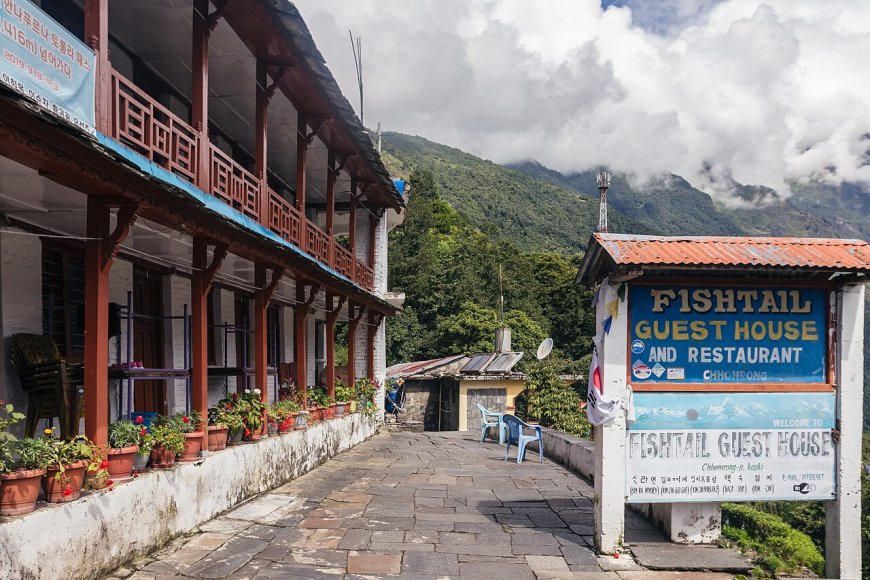
Birethanti is the first and most likely stop. It sits just past Nayapul, where the vehicles from Pokhara drop you, and there's a checkpost where your details get written into a ledger. Chhomrong has another, on the way into the sanctuary, and Ghorepani has one if you're adding the Poon Hill loop at the start.
Expect at least two checks in each direction on a standard ABC itinerary, and don't be startled by a third. The process is quick: they look at the permit, match it to your passport, write down the number and sometimes your entry date. Keep the slip dry. Lose it and you'll be buying another at the next counter that issues them, which could be a day's walk away.
What happens if you turn up without one
You get turned around. There's no negotiating at the checkpost, because the person standing there is recording entries, not selling exemptions. In practice that means walking back to Birethanti or down to Pokhara, buying the ACAP permit and starting again the next morning, which costs you a day and a night's accommodation you'd already paid for. Sorting the paperwork in Pokhara or Kathmandu the day before you start avoids the whole mess.
A five-minute check before you set off
- Look up current permit fees on the NTNC and NTB/TAAN sites, and write down the date you checked.
- Confirm whether TIMS applies to your route right now, by asking NTB, TAAN or your trekking agency.
- Confirm the guide requirement for the season you're walking in.
- Pack passport, photos, copies and cash.
- Photograph both permits once they're issued, front and back.
Permit rules and prices in Nepal do change, sometimes at short notice and sometimes with a few weeks of confusion at the counters while everyone works out what the new version means. The sensible approach for a guide like this is to point you at the official source and tell you to check it yourself not long before you travel. That's what the links above are for.
What's Your Reaction?