













From Red Cherry to Green Bean: How Nepali Coffee Actually Gets Processed
A stage-by-stage look at how Nepali coffee goes from ripe cherry to export-ready green bean: nursery choices, selective picking, floatation, pulping, fermentation, washing, drying, hulling and storage. Each stage gets its common failure mode and the labour or cost trade-off behind it, with the cherry-to-green-bean ratio labelled as illustrative trade arithmetic rather than a national figure.

Coffee in Nepal is grown mostly on small plots, on hillsides steep enough that nearly all the work happens by hand. That single fact shapes the whole chain from cherry to green bean. Equipment designed for flat estates does not fit, and a household with a few hundred trees cannot justify a wet mill of its own. What follows is the chain as it generally runs in the mid-hills, with the points where things go wrong and the trade-offs behind each choice. Treat it as a processing guide, not a promise about yield or price.
The nursery quietly sets the ceiling
Before anyone talks about processing, someone has to choose the seedling. Coffee in Nepal is grown from seed rather than grafted onto a different rootstock, so the mother tree matters enormously. Seed taken from a healthy, high-yielding, good-tasting plant gives you a fighting chance. Seed scooped up because it was available gives you a plot of uneven, mediocre trees that no amount of careful fermentation will rescue.
The trade-off here is patience and money. Quality seedlings cost more and take longer to raise than ones pulled from the nearest heap of cherry. Farmers also have to decide on shade: some cover, whether from existing trees or planted species, tends to give slower ripening and, by most accounts, a cleaner cup, but it competes with the coffee for water and nutrients. On a steep terrace the shade question is often answered by whatever was already growing there.
Picking: the single biggest lever
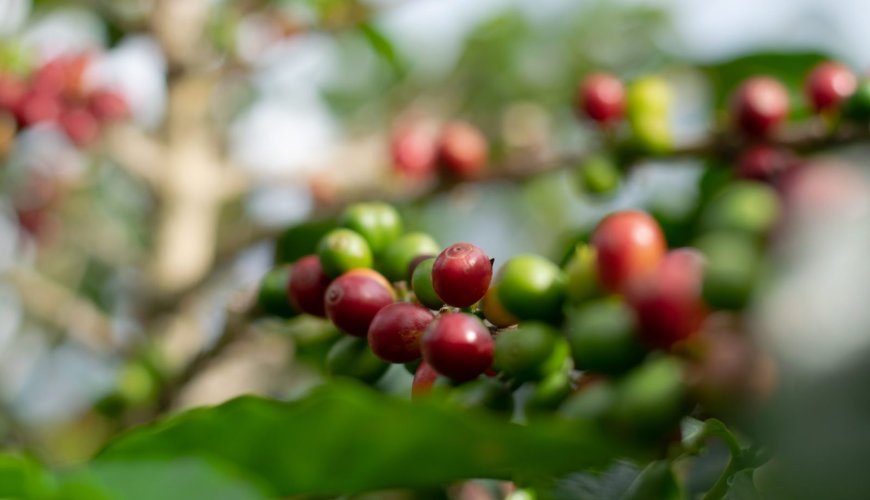
A coffee cherry ripens unevenly on the same branch, which is why selective picking exists. Pickers go through a plot several times over the season, taking only the fully red fruit. Strip picking, where everything comes off at once, is faster and cheaper on labour but drags green and overripe cherries into the lot. Once that happens, the defect is locked in before the fruit even reaches a pulper.
For smallholders the calculation is real. Selective picking may mean four or five passes over the same row, and labour is usually the largest cash cost of the season. Many families compromise: two or three passes, with a final clean-up of whatever is left. That is a reasonable middle ground. The failure mode to watch for is cherry sitting in a sack or a heap overnight, especially in warm weather, which starts fermentation inside the fruit before any deliberate processing begins.
Sorting and floatation
Before pulping, cherries usually go into water. Ripe, dense fruit sinks. Underdeveloped, hollow and insect-damaged cherries float and can be skimmed off. It is a cheap, low-tech step that removes a lot of trouble downstream, and skipping it is one of the most common shortcuts taken when volume piles up on a busy day.
Dirty water is a problem of its own. A tank that is never changed spreads mould and off-flavours across the whole batch. Fresh, clean water and a quick skim take minutes and cost almost nothing.
Pulping and the gap setting
Depulping removes the skin and most of the fruit. In Nepal this is done with hand-cranked drum pulpers, small motorised machines, or occasionally at a shared cooperative station. The critical adjustment is the gap between the drum and the plate. Set too wide, fruit pulp passes through and sours on the bean. Set too narrow, the machine shaves and cracks beans, and a cracked bean will turn harsh and papery in the drying stage.
Anyone operating a pulper for the season should check the setting on the first handful and recheck it as the drum wears. It is a two-minute job that saves a lot of disappointment.
Fermentation, and why altitude complicates it
After pulping, the beans sit with their mucilage still attached. Fermentation breaks that layer down so it can be washed off. Depending on temperature, altitude and how much fruit is in the tank, this generally takes somewhere between roughly half a day and a day and a half. Cool, high-altitude sites move slowly, warm valley sites move fast.
The failure modes are at both ends. Left too long, the beans pick up a sour, oniony or stagnant character that never washes out. Washed too early, mucilage clings and dries hard onto the parchment. The reliable test is tactile: the beans should feel gritty rather than slippery when rubbed between the fingers. In the mid-hills, where mornings are cold and afternoons are not, a batch can start slow and finish fast, so a fixed timer is a poor substitute for actually checking.
Washing and density grading
Washing happens in channels or tanks, and the water does double duty. Lighter, less dense beans get pushed along and separated from the heavier ones, which are the beans buyers actually want. Doing this on the day of washing is far easier than trying to sort it out later.
Drying: the stage that ruins good work
Parchment coffee is dried, usually on raised beds or bamboo mats, in layers thin enough that air moves through. It needs turning several times a day, gently, so the parchment does not crack. The usual trade target is somewhere around ten to twelve percent moisture, which is a norm in the trade rather than a Nepali legal requirement.
Two things go wrong here. Drying too fast, often in direct strong sun on a thin layer, cracks the bean and hurts the cup. Drying too slowly is worse in Nepal's monsoon, where humid air and a week of cloud can push a batch into mould. Covering at night is essential. So is keeping dried parchment away from damp floors and from anything with a strong smell, because coffee absorbs odours readily.
Resting, hulling and hand sorting
Most producers let dried parchment rest for a few weeks before hulling. Hulling removes the parchment layer and leaves green bean. After that comes density separation and, at the good mills, hand sorting, where workers pick out blacks, sours, insect damage and stones. This is slow, unglamorous and directly visible in the final cup.
Storage matters as much as anything else. Green bean in humid conditions loses quality within months. Sealed liners inside jute bags, a dry room, and a clean floor are basic protections that small warehouses often skip.
Cherry to green bean: what the ratio actually means
People often ask how much cherry it takes to make a kilo of green bean. As a rough rule of thumb used in the trade, you are looking at something in the region of five to six kilos of ripe cherry for one kilo of green bean, and higher if the cherries are dry or poorly sorted. Treat that as illustrative arithmetic, not a Nepali average. Actual outcomes vary a lot with variety, ripeness, processing method and how much gets lost along the way.
What makes the Nepali version different
Three things stand out. Lots are small, which is a disadvantage for machinery and an advantage for traceability. Most production sits at altitudes where ripening is slow, and slow ripening is generally friendly to flavour. And processing is often decentralized, with farmers selling cherry to a cooperative or a roadside collection point, which means the person who grew the coffee may have no say in how it was fermented or dried.
That last point is worth asking about directly. The same cherries, handled by two different pulpers on the same afternoon, can produce very different green beans.
Questions worth asking a Nepali producer
- Which variety, and how old are the trees?
- How many picking passes, and was any cherry collected off the ground?
- Were the cherries floated before pulping, and was the water changed?
- How long in the fermentation tank, and how was the end point judged?
- Raised beds or mats, and how many days to dry?
- Moisture reading at bagging, if one was taken?
- How was the green bean stored, and when was it hulled?
None of these need an instrument to answer. They are the questions that separate a careful lot from a lucky one.
What's Your Reaction?