

Nepal Trekking Permits in 2026: What You Need, Who Issues It, and Where to Check the Latest Fees
A plain-English guide to Nepal trekking permits in 2026: the TIMS card, ACAP, Sagarmatha National Park entry, the often-missed Khumbu Pasanglhamu Rural Municipality permit, and restricted-area permits for Manaslu, Upper Mustang, Kanchenjunga and Dolpo. It explains who issues each permit, which office checks it on the trail, why a guide does not satisfy the two-trekker minimum for restricted areas, and which official sites to check for current fees before paying.

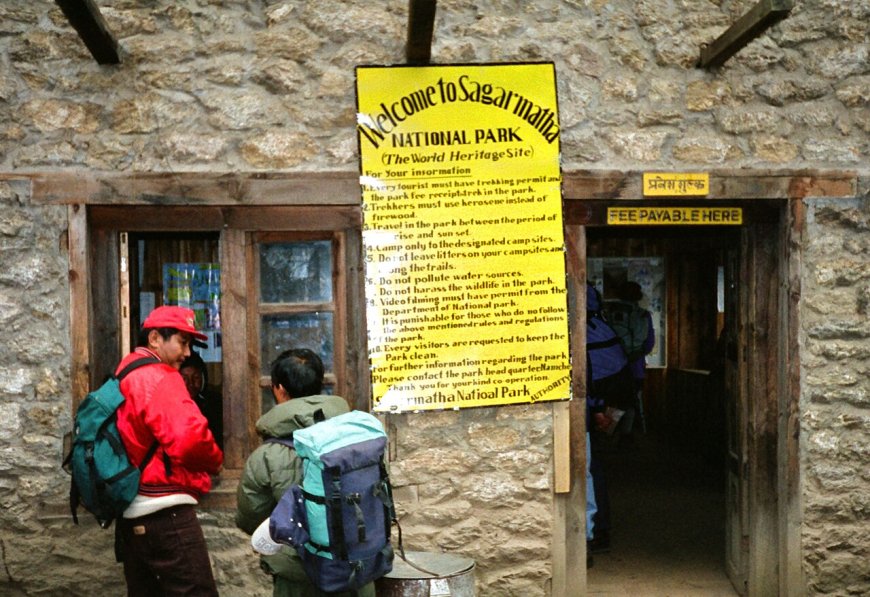
Planning a trek in Nepal this year means sorting paperwork before you hit the trail. The system has several layers. Some permits cover whole regions, others apply to a single park or a restricted valley, and the office that collects your money isn't always the one that made the rule. Below is a plain-English rundown of the permits you'll meet in 2026, who stands behind each one, and where to check today's rates before you pay.
The permits most trekkers deal with
TIMS card
The Trekkers' Information Management System (TIMS) is the baseline registration for most trekking routes outside restricted areas. It's managed by the Nepal Tourism Board in coordination with the Trekking Agencies' Association of Nepal (TAAN). Individual trekkers and group trekkers get different coloured cards, and the distinction matters at checkposts.
Issuing body: Nepal Tourism Board (NTB) / TAAN
Where to apply: NTB office in Kathmandu (Bhrikutimandap), TAAN office in Kathmandu (Maligaon), or the NTB counter in Pokhara (Lakeside). Some registered trekking agencies process it on your behalf.
One exception worth knowing up front: the Everest region has its own local permit (see below), and in practice that card has taken over the registration role TIMS plays elsewhere. Treks out of Lukla normally don't need a TIMS card on top of it.
Annapurna Conservation Area Permit (ACAP)
Required for any trek inside the Annapurna Conservation Area. That includes the Annapurna Circuit, Annapurna Base Camp, Mardi Himal, Khopra Ridge, and the lower Mustang trails up to Kagbeni.
Issuing body: National Trust for Nature Conservation (NTNC)
Where to apply: NTNC counter at the NTB building in Kathmandu, NTNC office in Pokhara (Lakeside), or at entry checkposts such as Besisahar for Circuit starters and Ghandruk for the ABC approach.
Sagarmatha National Park entry permit
Covers the national park itself: Namche Bazaar, Tengboche, Dingboche, Lobuche, Gorak Shep, and the Gokyo valleys. If you fly into Lukla, the park permit is checked at the Monjo entry gate. Walk in from Jiri or Salleri and it's checked at the same gate.
Issuing body: Department of National Parks and Wildlife Conservation (DNPWC)
Where to apply: DNPWC office in Kathmandu (Babar Mahal), or at the Monjo checkpost. Many agencies arrange it in Kathmandu so you don't queue at Monjo.
Khumbu Pasanglhamu Rural Municipality entry permit
This is the one people miss. Every trekker heading into the Khumbu through Lukla needs a local-government entry permit issued by Khumbu Pasanglhamu Rural Municipality. It is separate from the national park fee, it is collected separately, and buying one does not cover the other. The municipality office sits at the Lukla end of the trail, and the permit is also sold at checkposts along the way, including Monjo. Agencies in Kathmandu can arrange it in advance, which saves time on a trekking morning when you'd rather be walking.
Issuing body: Khumbu Pasanglhamu Rural Municipality
Where to apply: Municipality office at Lukla, the Monjo checkpost, or through a registered trekking agency before departure.
Manaslu Restricted Area Permit (RAP)
Manaslu Circuit and Tsum Valley fall under restricted-area rules. You need a special permit issued only through a registered trekking agency, and you must travel with a licensed guide. The permit is valid for a set number of days, and overstaying means a fine at the checkpoint.
Issuing body: Department of Immigration (DoI), under the Ministry of Home Affairs
Where to apply: Only through a government-registered trekking agency in Kathmandu. The agency submits your passport copy, itinerary, and guide details to DoI. You collect the physical permit from the agency before departure.
Other permits that come up on specific routes
- Kanchenjunga Restricted Area Permit — DoI, agency-only, guide required.
- Upper Mustang Restricted Area Permit — DoI, agency-only, guide required. The fee is charged in fixed blocks with a minimum number of days, so a short trip still costs the minimum.
- Lower Dolpo / Upper Dolpo Restricted Area Permits — DoI, agency-only.
- Makalu Barun National Park entry — DNPWC, same process as Sagarmatha.
- Langtang National Park entry — DNPWC, available at the Dhunche checkpost or in Kathmandu.
- Rara National Park entry — DNPWC, at Talcha airport or park headquarters.
- Shey Phoksundo National Park entry — DNPWC, for Phoksundo Lake and the Upper Dolpo approach.
- Gaurishankar Conservation Area Permit — NTNC, for Rolwaling and Tsho Rolpa treks.
- Manaslu Conservation Area Permit (MCAP) — NTNC, required in addition to the RAP for the Manaslu Circuit.
Who checks what, and where
This is where confusion happens. The permit you bought in Kathmandu might be checked by a different office than the one that printed it.
- TIMS: Checked by NTB/TAAN staff or park rangers at major entry points such as Besisahar, Syabrubesi, Jiri, Salleri, and Taplejung.
- ACAP / MCAP / Gaurishankar: Checked by NTNC staff at conservation-area entry gates.
- National park entries (Sagarmatha, Langtang, Makalu, Rara, Shey Phoksundo): Checked by DNPWC rangers at the park gate.
- Khumbu Pasanglhamu Rural Municipality permit: Checked by municipal staff, usually at the same Lukla and Monjo stops where the park permit is inspected. Expect to show both.
- Restricted-area permits (Manaslu, Upper Mustang, Kanchenjunga, Dolpo): Checked by Nepal Police or the Armed Police Force at the designated restricted-area entry point, for example Jagat for Manaslu and Kagbeni for Upper Mustang. They verify the permit, your passport, and your guide's licence.
How to verify current fees before you pay
Fee schedules change, and no blog post is a substitute for the issuing authority's own published notice on the day you apply. These are the official sites where the current rates are posted:
- TIMS and general tourism notices: Nepal Tourism Board — ntb.gov.np
- ACAP / MCAP / Gaurishankar: National Trust for Nature Conservation — ntnc.org.np
- All national park entries: Department of National Parks and Wildlife Conservation — dnpwc.gov.np
- Restricted-area permits: Department of Immigration — immigration.gov.np (look for trekking permit notices)
- Khumbu permit: ask your agency or the municipality counter at Lukla, since this one is set locally rather than by a ministry
This describes the permit structure as of October 2026. Fees and office locations can change without notice, so open the official sites above on the day you plan to apply.
Practical tips
- Carry printed copies of every permit plus your passport. Phone screens glare in bright sun, and rangers prefer paper.
- If an agency quotes a "package permit fee," ask for the breakdown between agency service charge and government fee. The government fee is public, so you can check it yourself.
- Restricted-area permits are issued to groups of at least two foreign trekkers. A guide or porter does not count toward that minimum, so a solo traveller has to join another trekker. Hiring a second staff member will not get you a permit.
- TIMS and ACAP can be bought on arrival at some checkposts, but queues build fast in peak season (March to May, October and November). Getting them in Kathmandu or Pokhara saves hours.
- Keep receipts. If a checkpoint asks for a top-up because your permit days expired, the receipt shows what you already paid.
Quick reference: permits by popular trek
| Trek | Permits required |
|---|---|
| Everest Base Camp / Gokyo | Sagarmatha National Park entry + Khumbu Pasanglhamu Rural Municipality permit |
| Annapurna Circuit (full) | TIMS + ACAP |
| Annapurna Base Camp | TIMS + ACAP |
| Manaslu Circuit | Manaslu RAP + MCAP + TIMS |
| Tsum Valley | Manaslu RAP (Tsum extension) + MCAP + TIMS |
| Upper Mustang | Upper Mustang RAP + ACAP (for the lower section) + TIMS |
| Langtang Valley | TIMS + Langtang National Park entry |
| Kanchenjunga Base Camp | Kanchenjunga RAP + Kanchenjunga Conservation Area entry + TIMS |
| Makalu Base Camp | TIMS + Makalu Barun National Park entry |
| Rolwaling / Tsho Rolpa | TIMS + Gaurishankar Conservation Area Permit |
The Everest rows list the municipality permit rather than TIMS because that local card is what gets checked on the ground in the Khumbu. Everywhere else, the pattern is the national registration card plus whatever park or conservation-area fee the route passes through. Rules shift, and a notice issued last week can change a fee or move an office, so treat this table as the shape of the system rather than the final word on cost.
What's Your Reaction?