








Climate Finance in Nepal: Who Pays, Who Receives, and Why the Numbers Never Agree
Climate finance is supposed to move money from high-emitting countries to those living with climate risk, and Nepal is a case study in how complicated that transfer really is. This explainer walks through what counts as climate finance, the chain from global funds down to local governments, Nepal's own budget tagging, the persistent grant-versus-loan argument, and why reported totals rarely agree. It avoids single headline figures on purpose, because no one number describes the flow, and points to three developments worth watching as Nepal approaches LDC graduation.

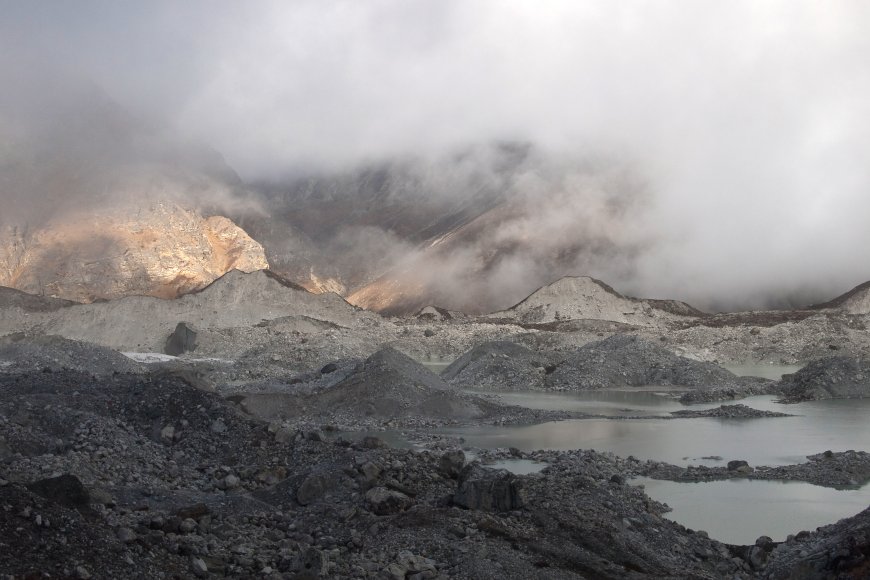
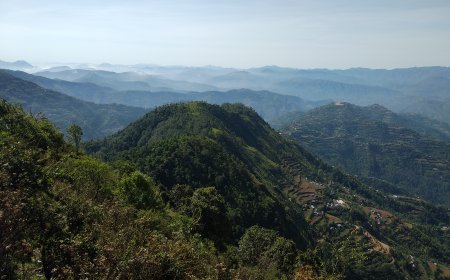
Ask a Nepali farmer in the mid-hills what climate change looks like and you will probably hear about rain that arrives at the wrong time, or a spring that used to run in April and now does not. Ask a government official the same question and you will hear about financing gaps. Both answers are about the same problem, but only one of them comes with a spreadsheet.
Nepal's own emissions are negligible on a global scale. Its exposure to climate risk is not. That mismatch is the whole reason climate finance exists as a topic: money is supposed to flow from the countries and industries that caused the problem toward the countries living with the consequences. In Nepal, that flow is real but messy, and much of it is hard to see from the ground.
What actually counts as climate finance
The term gets used loosely. Broadly it means money mobilised to help a country cut emissions (mitigation) or cope with the changes already underway (adaptation). It can come as grants, concessional loans, guarantees, or private investment. It can be channelled through a global fund, a development bank, a bilateral agreement between two governments, or an NGO running a watershed project.
For Nepal the balance matters enormously. The country needs very little mitigation finance compared with what it needs for adaptation, because the costly work is embankments, irrigation, landslide protection, early warning systems, resilient roads and climate-ready seeds. Adaptation projects rarely generate revenue, which makes them a poor fit for loans. Yet a large share of what gets reported as climate finance globally arrives as debt. That single fact shapes most of the argument inside Nepali policy circles.
The chain from pledge to hillside
Follow a typical project and you pass through several rooms. A fund like the Green Climate Fund, the Adaptation Fund, the Global Environment Facility or the Least Developed Countries Fund approves a programme. An accredited entity, which might be a UN agency, a development bank or occasionally a national institution, takes responsibility for it. From there it moves into Nepal's finance ministry, then to a line ministry such as forests and environment or agriculture, then down to provincial and local governments, and finally to a contractor, a user group or a household.
Every one of those steps has its own paperwork and its own way of describing the money. A pledge announced at a climate summit is not the same as an amount signed into an agreement, which is not the same as an amount disbursed, which is not the same as an amount spent on the ground. Commentators routinely compare one of these with another and conclude that something has gone missing. Sometimes it has. Often the figures simply are not measuring the same thing.
Nepal's own accounting
Nepal has been doing something relatively few countries attempted early on: tagging climate-relevant spending inside its own national budget. The practice dates back to the mid-2010s and was meant to answer a simple question that donor reporting cannot answer, namely how much of the government's own money is going toward climate-related work.
Budget tagging is useful but not precise. It depends on officials deciding which line items qualify, and those judgements shift between years and ministries. It tells you about intent and direction. It does not tell you whether a culvert built with tagged money survived the next monsoon.
The grant versus loan problem
Nepal has argued consistently in international negotiations, alongside other mountain and least developed countries, that adaptation should be financed with grants. The logic is straightforward: a country cannot repay a loan with the avoided cost of a disaster that did not happen. Debt raised for a bridge that a flood would otherwise have destroyed is still debt.
This is not an abstract debate. Nepal already carries a significant infrastructure reconstruction burden, and each major flood or landslide adds to it. When climate finance arrives as a loan with a long tenor and a low interest rate, it is certainly better than commercial borrowing. It is still not the same as money that does not have to be repaid, and treating the two as equivalent in global accounting flatters the totals.
Local adaptation and the federal puzzle
Before federalism, Nepal produced Local Adaptation Plans of Action at village level, and they were widely copied as a model. After the 2015 constitution, the responsibility for many of the things those plans proposed shifted to palikas, the local governments. The plans and the new budget structures did not always line up.
Local governments now have both the mandate and, in many cases, a real willingness to act on landslide risk and water sources. What they often lack is the technical capacity to write a fundable proposal and the patience for multi-year approval cycles. Smaller grants managed closer to the ground tend to work better than large national programmes for this reason, though they are harder to count and rarely make headlines.
Loss and damage
The Loss and Damage Fund was operationalised at the COP28 climate summit in 2023, with the World Bank named as interim host, and countries began pledging to it. Nepal was among the delegations pushing for it to be grant-based and easy to access for vulnerable countries rather than requiring the same accreditation hurdles as larger funds.
How much of that money will reach Nepali communities, and how quickly, remains genuinely unclear. Anyone who tells you a specific figure for Nepal's loss and damage receipts is almost certainly quoting a pledge, an allocation or a projection rather than cash that has arrived.
Why the totals never match
There are at least five reasons. Definitions differ between institutions. Reporting years differ. Commitments get counted alongside disbursements. Currency conversion is done at different rates. And some finance is counted twice, once by the fund that approved it and again by the recipient government in its own budget documents.
The honest position is that no single number describes climate finance in Nepal. There are several numbers, each answering a slightly different question, and the useful skill is knowing which question a given figure is answering before you repeat it.
What to watch next
Three things will shape the next few years. First, Nepal is scheduled to graduate from least developed country status in late 2026, and LDC status is a gateway to some funds and to particular terms of access. What replaces that access matters.
Second, rules for carbon trading under Article 6 of the Paris Agreement are being developed, and there is a real risk that Nepal sells cheap mitigation credits abroad while keeping the expensive adaptation burden at home.
Third, pressure is growing for funders to publish project-level data in a form that a district officer, not just a ministry economist, can read. That sounds dull. It is probably the most practical reform on the table, because money you cannot follow is money you cannot hold anyone accountable for.
Until then, treat any single headline figure about climate finance and Nepal with caution. The story is in the plumbing, not the press release.
What's Your Reaction?