




Lumbini in 2026: Visiting the Buddha's Birthplace in Nepal
A 2026 guide to Lumbini, the Buddha's birthplace in Nepal's Rupandehi District. It covers how to get there (Kathmandu connections, irregular international service at GBIA, the Sunauli border crossing), what to expect at the Maya Devi Temple and the sacred garden, the eastern and western monastic zones, the best months to visit, and the site's contested archaeology including the 2013 wooden-structure finding. It also explains who runs the site, the Lumbini Development Trust, and why fees and hours should always be checked rather than taken from an old guidebook.

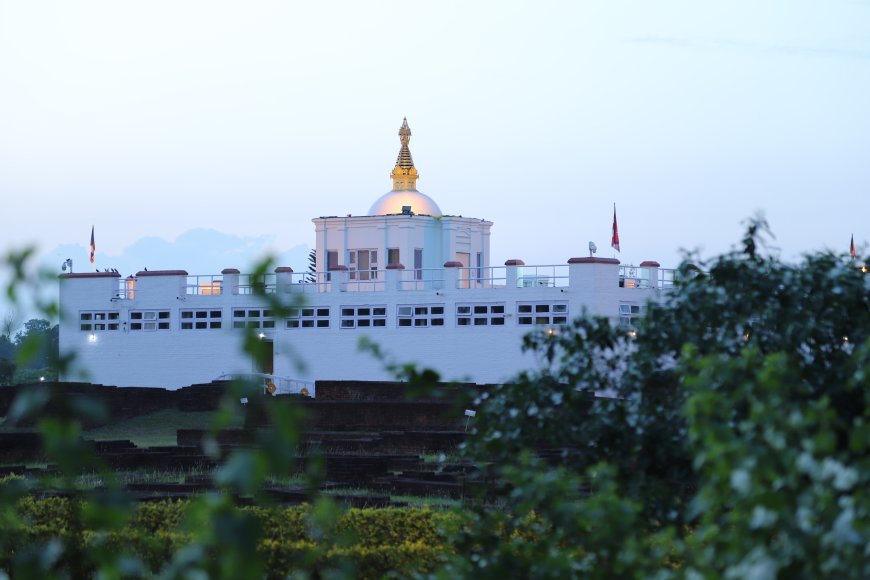
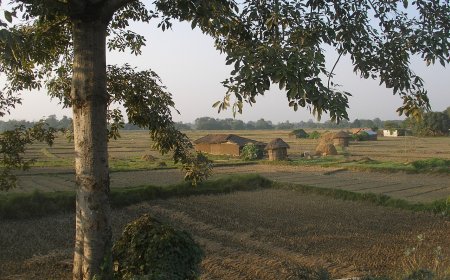
Lumbini is one of those places where expectation and reality sit far apart. Visitors picture a grand temple complex. What they actually find is a low, quiet garden on the Terai plains, where the most important object on the site is a slab of stone under a temple floor and the loudest sound most mornings is a group of pilgrims chanting.
So here is the honest version of what is happening there in 2026: nothing at the Buddha's birthplace has been demolished, rebuilt or moved. The Maya Devi Temple, the Ashoka Pillar and the monastic zone are exactly where they have always been. What does shift year to year are the practical details around the site, and those are worth checking rather than assuming. Flights, fees and opening hours change more often than the ruins do.
Getting there: Kathmandu first, then the plains
Most foreign pilgrims still fly into Kathmandu and connect from there. Domestic flights from Kathmandu to Bhairahawa (Gautam Buddha Airport) are routine and take well under an hour, and this remains the simplest route by a wide margin.
Gautam Buddha International Airport, the newer terminal at Bhairahawa, opened in 2022 with the aim of pulling international traffic directly to the site. In practice international service there has been limited and irregular, with airlines starting and stopping routes. Some international flights do serve GBIA, but treat any schedule as provisional and confirm with your airline before you build a trip around it. Kathmandu remains the common entry point for a reason.
The third option is overland from India, crossing at Sunauli near the border town of Siddharthanagar, also called Bhairahawa. Buses and shared taxis from Gorakhpur on the Indian side run frequently. Coming from Kathmandu by road takes the better part of a day, and monsoon landslides on the highway can stretch that further.
The sacred garden and the Maya Devi Temple
Everything centres on the sacred garden. The Maya Devi Temple marks the spot where, by tradition, Queen Maya Devi gave birth to Siddhartha Gautama while travelling to her parents' home. Inside, visitors move along a raised walkway above the excavated layers, with the marker stone that identifies the exact spot visible below.
Just outside stands the Ashoka Pillar, put up in the 3rd century BCE, its inscription naming the site as the Buddha's birthplace. That inscription is the single strongest historical anchor for everything built around it. Also in the garden are the bathing tank and a large Bodhi tree where pilgrims tie prayer flags and sit for long stretches.
This is an active place of worship, not a monument park with a turnstile. Shoes come off before you enter the sacred area. Shoulders and knees should be covered. Photography inside the temple is restricted, and the queue moves slowly because people stop to pray. Entrance fees and opening hours are set by the Lumbini Development Trust and revised from time to time, so check the trust's current notices rather than a blog post from three years ago.
East and west: the monastic zone
Beyond the garden, the monastic zone is split into eastern and western sections, where monasteries built and maintained by different countries stand side by side. The eastern side is largely Theravada, with temples from Sri Lanka, Myanmar and Thailand. The western side leans Mahayana and Vajrayana, with monasteries from China, Japan, Vietnam, Korea, Germany and elsewhere.
Some close for a midday break. Some ask visitors to stay quiet during chanting. A few welcome guests into meditation sessions. The area is much larger than it looks on a map, so a bicycle or an e-rickshaw is a sensible way to cover it rather than walking the whole loop in the heat.
When to go
October to March is the comfortable window. April onwards gets genuinely hot, and pre-monsoon afternoons in the Terai can push past 40C. The monsoon, roughly June into September, turns the site humid and the paths muddy, though the surrounding fields are at their greenest.
Vesak, observed here as Buddha Jayanti, falls on the full moon of Baisakh, which lands in April or May. The 2026 observance has already passed; the next one arrives in spring 2027 and brings heavy crowds, full hotels and tighter security. Book months ahead if you want the festival. Avoid it if you want a quiet garden.
How old is the Buddha's birthplace? And what lies beneath the temple
Tradition places the Buddha's birth in the 6th century BCE. Much modern scholarship, working from inscriptions and textual chronologies, favours a later range in the 5th to 4th centuries BCE. The exact year is a matter of convention rather than settled fact, and it is better presented that way.
The archaeology is a separate thread. In 2013, a team of archaeologists working with UNESCO and Nepal's Department of Archaeology reported traces of a wooden structure beneath the Maya Devi Temple, which they dated to around the 6th century BCE and described as a possible earliest shrine at the site. It was a significant finding and was covered widely at the time. It was also debated. Dating material of that kind is contested, and later work has continued to refine the picture. Worth knowing about, not worth quoting as a final answer.
Lumbini was inscribed as a UNESCO World Heritage Site in 1997, and that status shapes how the site is managed and protected.
Who runs the site: the Lumbini Development Trust
The Lumbini Development Trust manages the site, sets fees and hours, and oversees the master plan drawn up in the 1970s. The Greater Lumbini Area Development Project is the long-running framework for the site and its surroundings, tied to the trust and supported by international heritage bodies. It has been in place for years and is better understood as an ongoing programme than as a single construction push.
If you need its current status, budget or timeline, go to the trust, the Government of Nepal or UNESCO directly. Those details change and go stale quickly in secondary summaries, including this one.
A note on planning
Lumbini sits in Rupandehi District, a short drive from Siddharthanagar, and most visitors spend a full day at the site rather than an afternoon. Base yourself in Bhairahawa or in one of the guesthouses inside the monastic zone, and give yourself two mornings if you can. The first pass is for orientation. The second is when the place starts to make sense.
For more on how Lumbini fits into the country's wider religious landscape, see our Religion and Culture section.
What's Your Reaction?