


Nepal Trekking Rules and Permits: How to Verify Before You Book (Updated 5 October 2026)
A verification-first guide to Nepal trekking rules and permits as of 5 October 2026. Covers what we verified (permit categories, issuing bodies) and what we could not (guide enforcement, TIMS regional checks, Khumbu municipality permit, restricted-area solo rules). Includes contact links, a source-only permit table, and separate checklists for pre-trip booking and in-Kathmandu counters.

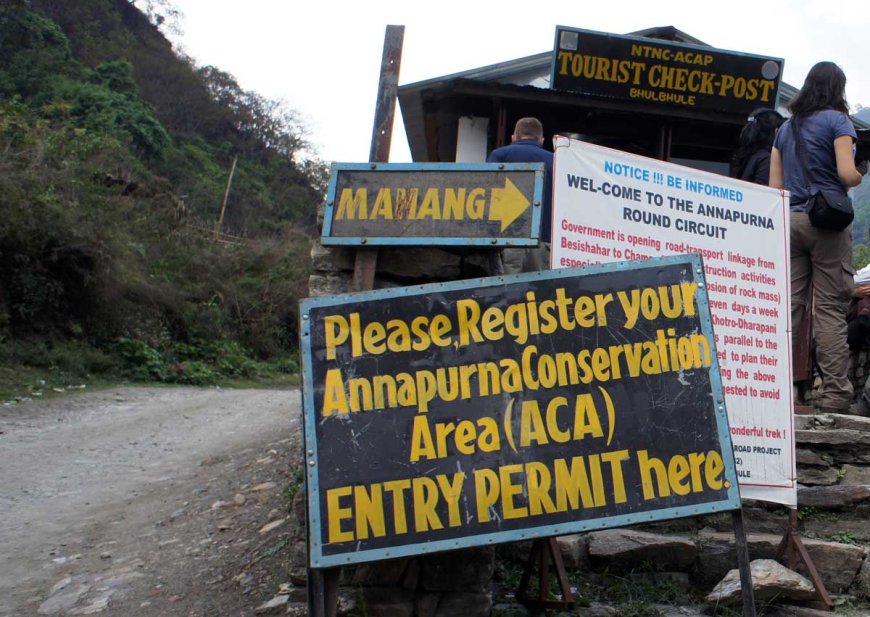
Most pages about trekking in Nepal tell you what the rules are. This one does something less satisfying: it tells you how to check them yourself, and it is honest about the parts we could not verify from a primary document as of 5 October 2026.
That distinction matters because trekking paperwork here changes quietly. A notice goes up at a counter, an association circulates a letter to its members, and blog posts keep repeating the previous season's version for years. Book on the strength of a rule you read somewhere and you have no way of knowing which year it came from.
What we verified and what we could not
The guide requirement for foreign trekkers
In March 2023, Nepal's tourism authorities announced a guide requirement for foreign trekkers, widely reported to take effect around 1 April 2023. Within days, multiple outlets reported the rule was put on hold. We have not seen the original notice or any subsequent circular that confirms current enforcement in 2026. Any page stating as present fact that a guide is mandatory everywhere should be read with that gap in mind.
TIMS by region, and the green/blue split
You may have seen the claim that the Trekkers' Information Management System card is no longer checked in Khumbu or Annapurna but still required in Langtang, Manaslu, Rara and the far west. We cannot confirm it. Claims that something is not being checked are especially hard to prove from outside, because the evidence would be an absence of records. The useful question is: which office currently issues TIMS, and which checkpoints inspect it? The system historically had two flavours: green cards for independent trekkers (issued by NTB) and blue cards for those travelling with an agency (issued by TAAN). We have not confirmed whether that split still holds in 2026. Ask the issuing office. When we have a written reply, it goes on this page with a date next to it.
Khumbu rural-municipality permit
Multiple sources report that a Khumbu Pasanglhamu Rural Municipality entry permit replaced TIMS in the Everest region years ago. We checked the municipality's published notices and found a 2023 fee schedule; we have not confirmed whether it remains the only document checked at the Sagarmatha National Park entry points in 2026. If you are heading that way, ask the municipality office or the park counter directly.
Restricted areas and solo trekking
We found no primary basis for the suggestion that solo trekkers can now enter restricted areas. Restricted-area permits are issued by the Department of Immigration (separate from its visa function), and we flag this as needing confirmation. Nothing about solo travel into restricted areas is settled here. Ask the body that issues the permit.
Nepal trekking permits: the stable categories
These permit types exist regardless of seasonal notices. Fees and checkpoint rules can change, but the categories themselves are stable:
- National park entry permit — issued by DNPWC (Department of National Parks and Wildlife Conservation) for parks like Sagarmatha, Langtang, Chitwan.
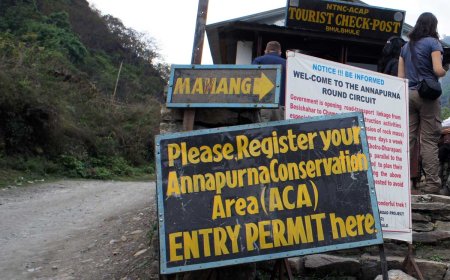
- Conservation area entry permit — issued by DNPWC or the relevant conservation area management committee (e.g., Annapurna, Manaslu, Gaurishankar).
- TIMS card — green (independent) via NTB, blue (agency) via TAAN, if still in force for your route.
- Restricted-area permit — issued by the Department of Immigration for regions such as Upper Mustang, Manaslu, Dolpo, Kanchenjunga, Nar Phu, Tsum Valley.
- Local or municipality-level permits — e.g., Khumbu Pasanglhamu Rural Municipality permit, local fees in certain villages or community forests.
Who issues what
Four names come up constantly, and they are not interchangeable.
- Nepal Tourism Board (NTB) — government body; starting point for national-level trekking notices. ntb.gov.np
- TAAN — Trekking Agencies' Association of Nepal, an association of agencies. A TAAN membership check tells you an agency is on that list. That is not a government licence. taan.org.np
- DNPWC — Department of National Parks and Wildlife Conservation; behind national parks, conservation areas, wildlife and hunting reserves. Entry rules and permits for those areas sit here. dnpwc.gov.np
- Department of Immigration — handles visas and restricted-area permits. immigration.gov.np
- Nepal Gazette — where legal instruments are published. The place to look when someone tells you a rule "changed". gazette.gov.np
How to verify Nepal trekking rules, in four steps
- Ask the issuing office directly, by email if you can, so you have a written reply. Phone answers disappear.
- Ask for the document, not the summary: its title, its number and its date. "They told me" is not a source.
- Ask which office issues the permit and which checkpoints inspect it. Those are often different answers.
- Ask your agency to name, in writing, every permit included in the price, and who pays if a rule changes after you have paid.
Permit verification table (blank until sourced)
| Permit type | Issued by | Where checked | Verified on | Source |
|---|---|---|---|---|
| National park entry | DNPWC | Park entry gates | — | — |
| Conservation area entry | DNPWC / Area committee | Conservation area checkposts | — | — |
| TIMS (green/blue) | NTB / TAAN | Route checkpoints | — | — |
| Restricted-area permit | Dept. of Immigration | Restricted-area checkpoints | — | — |
| Local/municipality permit | Relevant rural municipality | Local checkpoints | — | — |
We will fill rows only when we have a document title, number and date. If you spot something we have missed, tell us with the document title and date and we will look at it.
Booking months ahead: the written checklist
If you are planning from abroad, get this in an email before you transfer money: which permits are included and which are extra, whether a guide is included in the quoted price, whether the agency is a TAAN member and under what certificate, and what happens to your money if a new notice changes your route. A quote that promises "all permits" without naming them is not a quote, it is a feeling.
Already in Kathmandu: counter checklist
Confirm the issuing counter's opening days before you turn up. Ask what the fee is at the counter rather than accepting a figure from a blog post. Keep the receipt and the permit itself. Ask the counter the one question most people forget: which checkpoints on my route will ask for this? If you are paying an agency to arrange permits, ask to see the permits themselves, not a promise that they exist.
Why we print no fees
Entry and permit fees are set by the issuing office and can change by notice. A number copied from an undated post will be wrong silently for years, which is worse than no number at all. Check at the counter or on the issuing office's own current notice.
What's Your Reaction?