






Why Is Nepal Called 'Cursed by Sati'? The Legend and the Temple Behind It
Nepal is often described online as 'cursed by Sati', but the Puranic Daksha story explains why shrines exist, not why a country would be cursed. This piece traces where the phrase actually circulates, looks at Guhyeshwari Temple's traditional attribution without overclaiming it, and flags the Shakti Peetha counts and misused Swayambhu Purana that muddle the topic.

Type "why is Nepal called cursed by Sati" into a search box and you get answers delivered with total confidence. Nepal is cursed, the pages explain, because part of the goddess Sati fell here, and the country has carried it ever since. What's missing is where that sentence actually comes from. Most of the pages point at nothing. Some point at each other.
One confusion to clear up first. Sati the goddess is not sati, the historical practice of widow immolation. They share a name and almost nothing else. The goddess belongs to Puranic narrative; the practice was a social custom that reformers spent the nineteenth and twentieth centuries campaigning against. Everything below is about the goddess, and about a claim attached to her.
What follows sorts the story into two piles: what traces to written sources, and what looks like it grew online, in English, fairly recently.
What the Puranic story actually says
The narrative underneath all this is genuinely old. Sati, daughter of Daksha, marries Shiva against her father's disapproval. Daksha holds a large sacrifice and leaves Shiva off the guest list. Sati goes anyway, is insulted in front of the assembly, and dies, in most tellings by yielding her body to yogic fire. What follows is Shiva's grief and rage, the disruption of the sacrifice, and the scattering of the body, with shrines arising where the pieces land.
The outline is stable across texts. The details are not. Different Puranas arrange the sequence differently, and even within a single Purana the manuscript traditions vary on who says what and why Daksha took offence. If you want the actual wording, Canto 4 of the Bhagavata Purana carries the Daksha episode, and Bibek Debroy's Penguin translation is the one I'd put in an English reader's hands. Read the episode there rather than trusting a summary, mine included.
Why is Nepal called cursed by Sati? Tracing the phrase
Here is the gap. The Puranic story explains why certain shrines exist. In nothing I have been able to check does it say that Nepal as a country is cursed. That is a separate sentence, and it is the one doing all the travelling.
In the pages I went through, the phrase shows up almost entirely in English-language travel and list writing. Undated, uncited, and often repeated close to word for word by sites that clearly never compared notes with a text. One version says a body part fell at Guhyeshwari, therefore Nepal is cursed. Another stretches it to the whole Kathmandu Valley. The reasoning shifts; the certainty does not.
Who wrote it first, and when, I cannot tell you. What I found was repetition rather than an origin: no temple record, no priestly account, no dated institutional publication describing the country that way. Neither question gets closed here, because guesswork dressed as an answer is worse than an open one. The same caution applies to the Puranic summary above, which I assembled from general reading rather than from a printed text on the desk. That is why it comes with a named edition and no invented translator-and-year.
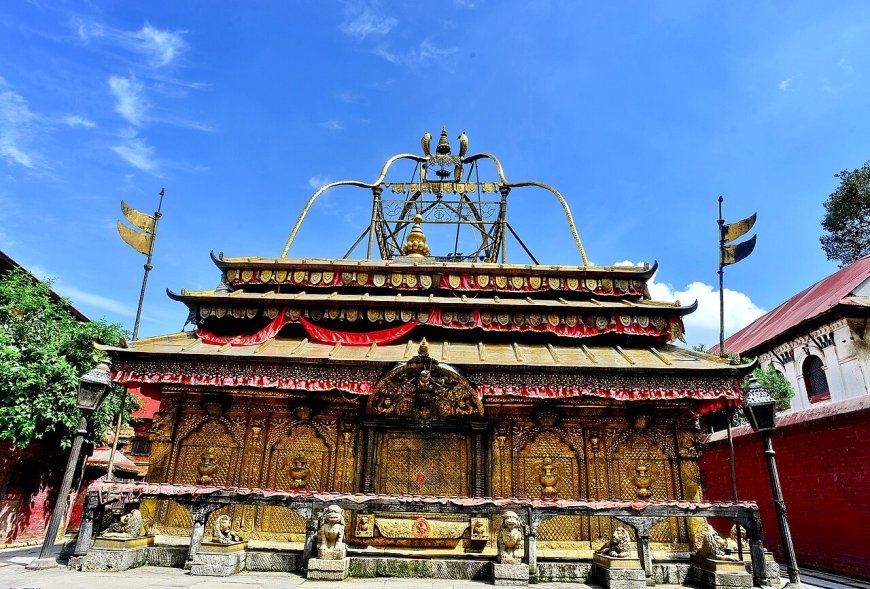
Guhyeshwari Temple in Kathmandu
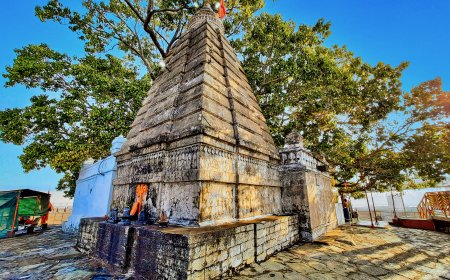
The temple sits on the Bagmati, close to the Pashupatinath complex, and it draws both Hindu and Vajrayana Buddhist devotees. The identification of the site with the place where Sati's yoni fell is a traditional attribution, and it belongs in the sentence as an attribution: "tradition holds", "the temple's own account". Not as a verified fact with a date bolted on.
That distinction is not a technicality. The dual veneration is a living practice question, and it stands perfectly well without the curse being true. It does not need the legend to prop it up.
Counting Shakti Peethas, and one text that gets misused
You will see numbers thrown around: 51, 108, and various smaller local counts. I am not putting one in this article, because any figure depends entirely on which list you are reading, and the lists disagree with each other. A number without a named list and a publication year behind it is just a number somebody typed. The same suspicion is worth applying to any list of Nepali Shakti Peethas you come across. If a claimed site cannot be checked against a dated source, skip it, even when the list it appears on ranks well.
One more thing worth clearing up. The Swayambhu Purana gets dragged into these articles and it should not. It concerns the origin of the Kathmandu Valley and the Swayambhu shrine, not the Daksha sacrifice. Citing it as a Sati source is a category error, however old and impressive the name sounds.
What is genuinely contested
Two things. First, whether the phrase "cursed by Sati" has any textual basis at all. I doubt it does, and I would rather say so than pretend the question is settled either way. Second, what fell where. Local Newar and Nepali tellings do not always match the Sanskrit Puranic versions, and they do not always match each other. That is normal for oral tradition. It is only a problem when a website flattens the differences into one confident paragraph.
If you are reading this before a visit, treat the curse as a story people tell. Sometimes a good one. Just not a fact about a country. And if someone hands you an actual text, with a translator and a year on the title page, take them seriously. That is rarer on this topic than it should be.
What's Your Reaction?