







How Loss and Damage Finance Works for Nepal: What's Real and What's Still Missing
As of September 2026, Nepal has not received any disbursement from the UN Loss and Damage Fund, nor has a Nepali entity entered its allocation process. This piece maps the confirmed institutional mechanics — the Fund's voluntary governance, the Santiago Network's technical-assistance role, and existing bilateral/multilateral climate finance channels — while flagging what remains unconfirmed.

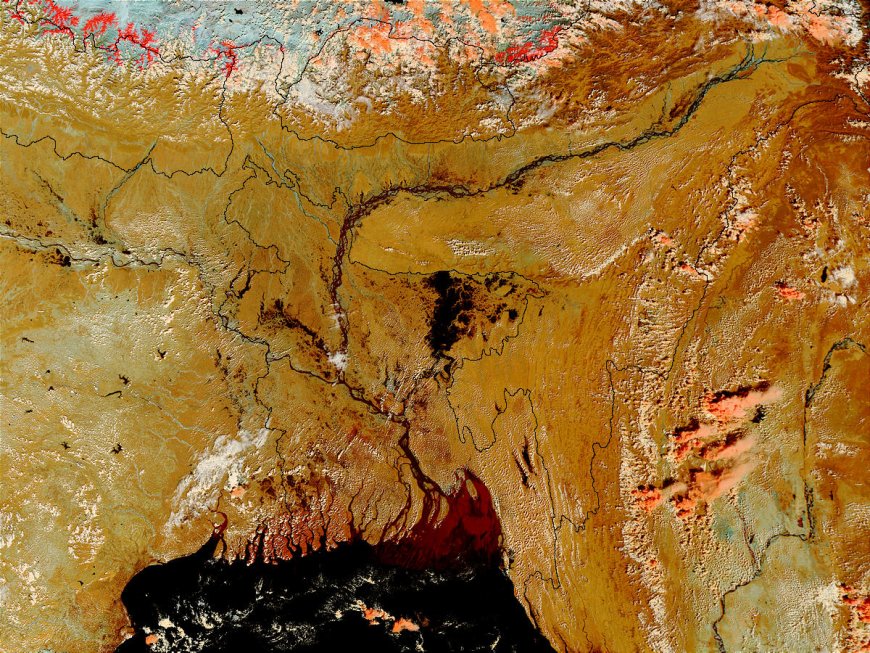
Loss and damage has become the sharpest edge of climate politics for countries like Nepal — places that did little to cause the crisis but face its hardest blows. The term covers the harm that remains after adaptation hits its limits: a glacial lake outburst that washes away a village, farmland lost to permanent salinization, heritage sites crumbling under extreme heat. Since COP27, a dedicated Loss and Damage Fund exists on paper. But as of late September 2026, the gap between the Fund's rules and any money reaching a Nepali community remains wide.
Has Nepal Received Any Loss and Damage Fund Money?
Short answer: no public record confirms a disbursement to Nepal, nor that a Nepali entity has entered the Fund's allocation process. The Fund was established by COP27 decision in November 2022 and operationalised through a Governing Instrument adopted at COP28 in December 2023. Contributions are voluntary — the text "urges" developed countries and "invites" others to pay. No treaty-level obligation to contribute exists. The Board, constituted in 2024, approved an access framework defining two windows: direct access through accredited national entities, and international access through accredited international entities. Nepal's Ministry of Forests and Environment has not been confirmed as an accredited direct-access entity in publicly available Fund documents.
How the Fund's Governance Actually Works
The Governing Instrument says the Fund "shall be guided by the principles of equity and common but differentiated responsibilities." That language matters, but it doesn't create enforceable payment duties. Pledges announced so far total roughly USD 700–800 million globally — a fraction of the estimated need. By comparison, Nepal's second NDC puts its adaptation costs at USD 28.4 billion. The Fund has not published a aggregate figure for approved or disbursed projects worldwide as of September 2026.
The Santiago Network: Technical Help, Not Cash
Established at COP25 and structured at COP27, the Santiago Network for Loss and Damage (SNLD) provides technical assistance — not financial compensation. Its secretariat, hosted by UNDRR and UNOPS in Geneva, became fully operational in 2024. Nepal can submit requests through its national designated authority (MoFE). The Network's 2024 progress report shows no request from Nepal in the published log of submitted and approved requests. It connects requesters with technical organisations; no money changes hands.
Where Nepal's Climate Finance Actually Flows Today
Existing finance runs through the Green Climate Fund, Global Environment Facility, Adaptation Fund, and bilateral programmes. The GCF and Paris Agreement Article 9 create obligations for developed countries to provide finance, but not a prescribed quantum per recipient. Nepal's GCF portfolio shows approved adaptation and mitigation projects, but none labelled "loss and damage" in the project database. Bilateral programmes with the UK, Finland, and other partners list adaptation and resilience activities — not a loss-and-damage compensation line. The FY 2026/27 Red Book (published by the Financial Comptroller General's Office) allocates climate-relevant expenditure under the climate budget code, including adaptation spending on early warning systems, watershed management, and climate-resilient agriculture. No budget line is labelled "loss and damage" or "L&D compensation."
Why Glacier Science Matters for Any Future Claim
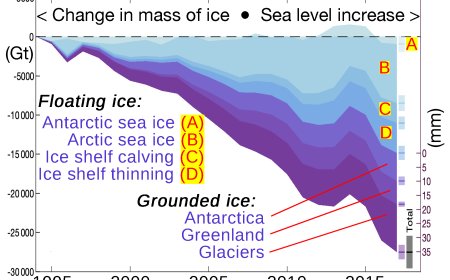
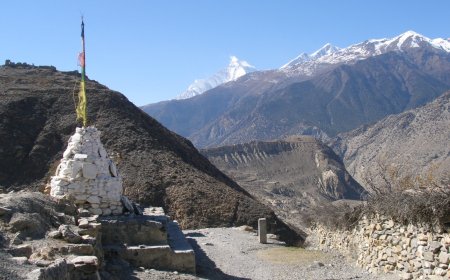
The most recent comprehensive Hindu Kush Himalaya assessment is ICIMOD's HI-WISE report (2023). It documents accelerated glacier mass loss — roughly -0.32 m w.e. yr⁻¹ over 2010–2019 versus -0.17 m w.e. yr⁻¹ over 2000–2009 — and snow persistence declining about 2.3 days per decade across the region 2000–2021, steepest in the western and central Himalaya. No newer HKH assessment with updated mass-balance or snow-persistence figures has been published as of September 2026. These trends are the scientific baseline for any future attribution of loss and damage in Nepal's glacier-fed basins. The Fund's framework requires proposals to demonstrate climate-attributed loss and damage consistent with IPCC AR6 definitions — meaning adverse observed impacts or projected risks where adaptation limits have been reached. Nepal-specific evidentiary standards have not been published.
What a Nepali Municipality or Ministry Would Actually Do
Communities and municipalities cannot submit claims directly to the Fund. Only accredited entities can. If MoFE gains direct-access accreditation, it could submit a funding proposal through the Fund's project cycle: concept note, full proposal, Board approval, funded activity agreement, then disbursement. For the Santiago Network, MoFE submits a request via the online portal; the secretariat matches it with a technical partner. For bilateral channels, the entry point is the relevant ministry's project pipeline, negotiated in joint committee meetings under each agreement. No Nepal-specific distribution procedure for Fund money — whether through federal, provincial, or local channels — has been published by the Fund Board, MoFE, or the National Planning Commission.
What's Funded Instead: Adaptation Finance in Current Instruments
Nepal's second NDC (submitted December 2020) and National Adaptation Plan (October 2021) remain the guiding instruments; Nepal had not submitted an updated 2035-target NDC as of the UNFCCC registry check in late September 2026. The second NDC lists 38 adaptation programmes with indicative costs totalling USD 28.4 billion. The NAP prioritises 64 programmes across eight sectors, with a financing gap identified but not quantified in a single figure. The UNEP Adaptation Gap Report 2024 (the latest edition as of this writing) states developing countries' adaptation finance needs are 10–18 times greater than international public adaptation flows; it does not disaggregate a Nepal-specific figure. No Nepal-specific source dated 2026 confirms a dedicated loss-and-damage finance stream outside the Fund.
Bottom Line
The institutional machinery exists. The Fund has a Board, an access framework, and voluntary pledges. The Santiago Network has a secretariat and a matching process. But as of 29 September 2026, no named source confirms Nepal has received Fund money, entered its allocation process, or established a domestic distribution mechanism. Adaptation finance continues to flow through existing channels — GCF, bilateral programmes, the national budget — without a loss-and-damage label. For a Nepali official or community leader, the practical starting point remains: work through accredited entities for the Fund, use the Santiago Network for technical capacity, and track bilateral and multilateral adaptation pipelines that already exist.
What's Your Reaction?