







How to Send a Letter or Parcel in Nepal: Address Prep and Pre-Send Checks
A practical guide to the parts of sending mail you control in Nepal: writing an address that works for Nepal Post (ward, municipality, district) versus a private courier (area, landmark, reachable phone), including a postal code only when you actually know it, adding the recipient's mobile number and your own return address, and the correct order of pack, present for the contents check, then seal in front of the clerk. Also covers what to ask at the counter and why you should keep and photograph the receipt.

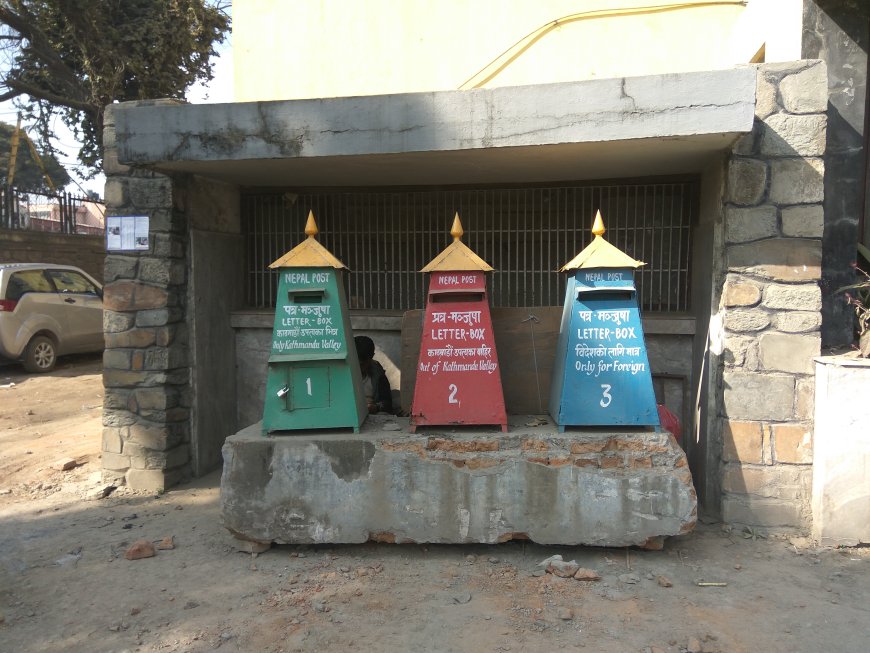
Most mail that goes wrong in Nepal goes wrong before it ever reaches a counter. The address is missing a piece, the parcel is taped shut with something inside it shouldn't contain, or the sender walks away with no receipt and no way to ask questions later.
If you went looking for how to send a parcel in Nepal and came away with a page of rate tables, that probably wasn't much help. The rate is the easy part and it changes anyway. What decides whether your item arrives is the address, the contents check and the receipt. This guide sticks to those three, whether you're using Nepal Post (hulak) or a private courier.
Those two split in one place that matters early: Nepal Post routes by administrative address, so the ward, municipality and district are what carries the item. Private couriers mostly don't route by ward at all. They want a landmark, an area or neighbourhood name, and a phone number that actually rings. Write the wrong kind of address and the label gets redone at the desk. If you're not sure which service you'll end up using, ask what the label needs before you write it.
Nothing here lists rates or service names. Those shift over time and depend entirely on where the item is going, so the person behind the counter is the source to ask. Asking is part of the process, not a sign you got something wrong.
The address is the part you own
Nepal postal address format is not a single fixed template. Addresses get written in slightly different ways depending on the district, the town and whoever is holding the pen. For Nepal Post, the logic holds everywhere: you move outward from the person to the wider administrative area.
Start with the name, finish with the district
Recipient's full name first, written clearly, in capitals if your handwriting tends to slope. Then, on separate lines: house or building number if there is one, the street or tole name, the ward number, the municipality or rural municipality, the district, and the province. Make the district line the most legible thing on the envelope. If someone sorting mail glances at your item for two seconds, that's the line you want them to catch.
Going by courier instead? Replace the ward and municipality with the area name and the nearest landmark, and put the phone number somewhere it can't be missed.
Do not invent a postal code
If you already know the recipient's postal code, include it on its own line. If you don't know it, leave it out rather than guessing. A wrong code can send an item to a sorting point in the wrong district, which is worse than no code at all. Where the exact code matters for your item, ask at the counter and they can tell you what to write.
Add a mobile number, and your own address
Delivery in Nepal often involves a phone call, especially where street names are informal or several houses share one gate. Adding the recipient's mobile number under their name saves days. Write your own return address in the top left corner or on the back. If the item cannot be delivered, it comes back to you instead of disappearing onto a shelf.
Pack it, show it, then seal it
There is an order to this, and skipping the order is how people end up cutting open a parcel they just finished taping. Pack the item so it survives being stacked, dropped and rained on: cushioning around anything fragile, a waterproof bag around paper, corners reinforced. Bring it to the counter closed but openable, not sealed. Tell the clerk what is inside and let them look if they want to. Once the contents are cleared and any form is filled in, seal it right there in front of the person who just checked it. No taping every edge twice, no hunting for scissors at home.
What's inside matters more than how it's wrapped. Postal operators restrict certain goods, and the rules differ depending on whether the item stays inside Nepal or crosses a border. If you're unsure whether something is allowed, ask before you seal the parcel. Our packing guide covers wrapping fragile items in more detail.
Anything leaving the country usually brings paperwork with it. Ask the counter which forms apply to your destination and what you need to declare. Don't assume last year's experience still applies, since customs and documentation requirements are revised from time to time.
At the counter: what to ask
This is where the useful information lives. If you want to know how to send a letter in Nepal, the practical answer is that you hand it over and ask your questions at the same time. Bring the item closed but openable so it can be checked.
Tell the clerk the destination, then ask directly:
- What service options are available for this destination, and which give me a record of posting?
- What is the current charge for this weight and destination?
- Roughly how long does it usually take?
- Are any forms needed, and do I fill them in here?
- Is there a reference number I should note down?
Pay, then check the receipt before you leave the window. The destination and the weight should match what you handed over.
Keep the receipt. Photograph it too.
The receipt is the only proof that you posted the item, and it carries the reference you will need if you have to follow up. Keep it somewhere you'll still find it in three weeks. A photo on your phone costs nothing and settles arguments about whether the parcel ever left the counter.
Quick pre-send checklist
- Postal code on the label only if you actually know it
- Your own return address, written on the item
- Recipient's mobile number
- Contents cleared with the clerk before you seal
- Receipt checked, then photographed
None of this is complicated and none of it takes long. It just has to happen before the item leaves your hands, because once it's in the system, the address on the front is the only thing anyone can act on.
What's Your Reaction?