



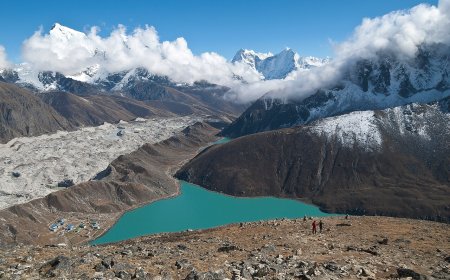

After the Summit: The Everest Descent and the First Days Back at Base Camp
Reaching the Everest summit is only half the round trip. This piece walks through what happens next: the turnaround rule on top, the second night at the South Col, the descent down the Lhotse Face and through the Western Cwm and Khumbu Icefall, and the quiet first days back at Base Camp — medical checks, packing, waste rules and the wait for a helicopter or a walk out to Lukla. Written as of 10 November 2026, with figures left out where they couldn't be verified.

As of 10 November 2026.
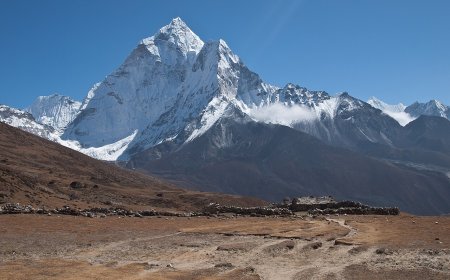
Reaching the top of Everest is the halfway point. It doesn't feel like it when you're standing there, but it is. The summit sits at 8,849 metres, a figure confirmed by the joint Nepal-China survey published in 2020, and everything above the South Col is only half the round trip. The other half is downhill, on legs that have already spent everything, in weather that has a habit of changing in the afternoon.
This piece is about what happens after the photographs. The descent, camp by camp, and then the strange, flat days at Base Camp before the mountain lets you leave.
What happens after reaching the summit of Mount Everest
Almost nobody lingers. The summit is a place to arrive at, confirm, and leave. Climbers typically spend a short time on top, long enough for a photo and a look around, then turn their attention to getting back to the South Col before the day gets warm and the snow gets soft.
That turning point is the part of the climb most often underestimated. The upper mountain gives you a false sense of progress on the way up, because you're moving toward something. On the way down you're moving toward a tent, and the tent is a long way below.
Everest summit turnaround time: the clock decides, not the view
Teams work to a turnaround time agreed in advance, usually set by the guide or the expedition leader before the push from the South Col. If you haven't reached a certain point by a certain hour, you turn around. That rule is not flexible on the day, and it is not a suggestion. It exists because the descent is where the day gets dangerous.
Ask expedition leaders and they will tell you the same thing: problems show up on the way down far more often than on the way up. Fatigue, depleted oxygen, dehydration, the slow onset of altitude illness, a boot that was fine going up and is now rubbing through a sock. All of it compounds when you're descending.
Weather adds the other variable. Afternoon cloud and wind on the upper ridges can close the route behind you, and the window for a comfortable return to the South Col is narrower than the window for the ascent.
Everest South Col descent: the night nobody photographs
The South Col sits at roughly 7,900 metres and the cluster of tents there is not a comfortable place. It's exposed, it's cold, and it's where climbers arrive after the summit with just enough energy to boil water and collapse.
Most teams plan to spend a second night at the Col before dropping further. That night is one of the least photographed and most important of the whole expedition. It's a chance to rehydrate, take stock, and let the body come down a few hundred metres closer to thicker air. It is also where a climber who is deteriorating becomes obvious to the people around them, which is exactly why the guides want everyone together there rather than spread out down the mountain.
Some climbers do continue straight down. Whether that happens depends on the person, the weather, and the judgement of the team leading them.
Down the Lhotse Face and through the Western Cwm
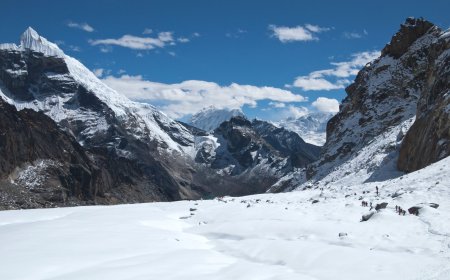
Below the Col the descent passes Camp 3 on the Lhotse Face and then Camp 2 in the Western Cwm. The Cwm is a glacier floor between Everest and Lhotse, and it heats up through the day. Climbers who come through it in the afternoon describe a greenhouse effect: still air, reflected sun, and a slow slog in full down suit.
Fixed ropes help on the steep sections, but they also mean traffic. A climber descending meets climbers still ascending, and passing takes time and care. Descents are rarely fast, and no honest guide will promise you a schedule.
The Khumbu Icefall, on tired legs
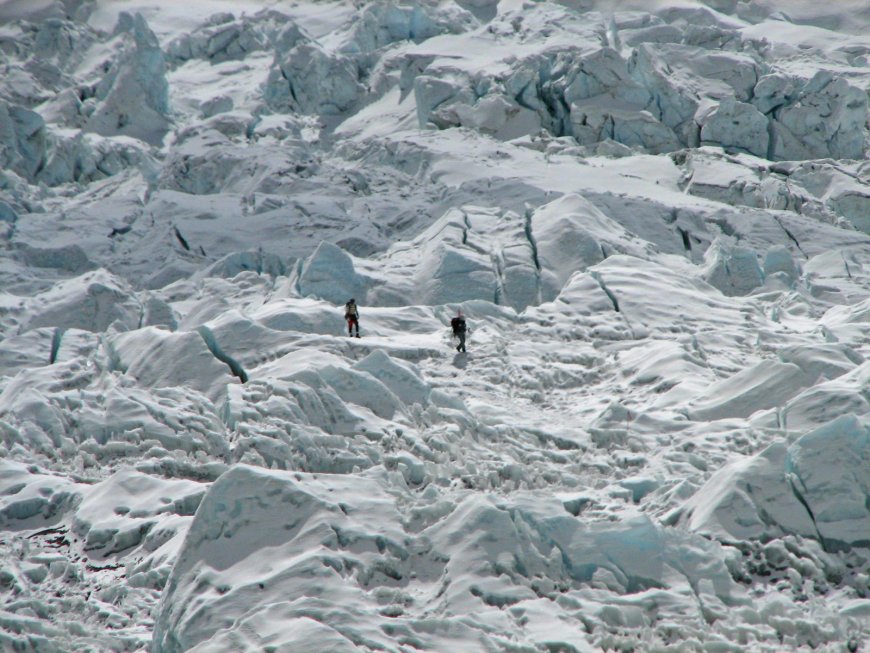
The last obstacle before Base Camp is the Khumbu Icefall, which moves constantly through the season and is re-routed by the Icefall Doctors, the team employed by the Sagarmatha Pollution Control Committee to fix and maintain the route through it.
Crossing the icefall is the section most climbers dread on the way down, not because it's technically hard but because it demands concentration at exactly the moment concentration is hardest to find. Ladders, seracs, and a route that may have shifted since you last came through. Most teams cross early in the morning, both on the way up and on the way down, for the same reason: colder, more stable, less traffic.
Everest Base Camp after summit: the first hours back
Arriving at Base Camp after a summit is anticlimactic in a way that surprises people. There's no crowd, no ceremony. The cook crew has food. There's a tent with your name on it. Somebody hands you a hot drink and tells you to sit down.
The first thing that happens is a medical check. Expedition doctors and the Base Camp medical teams watch returning climbers closely, because the walk into camp doesn't tell you much about what's going on inside. Oxygen saturation, breathing, frostbite checks on fingers and toes, a look at the eyes for snow blindness. Some climbers get put on oxygen in the medical tent for a while even though they feel fine.
Then most people sleep. Often for a very long time.
The first few days: admin, appetite, and waiting
Base Camp life after a summit is mostly mundane. Gear gets sorted and packed. Borrowed equipment goes back to whoever lent it. The expedition's paperwork with the Department of Tourism, which issued the climbing permit, gets closed out, and the liaison officer assigned to the team signs off on the return of the rubbish that climbers are required to bring back down.
Appetite comes back slowly at that altitude, and so does ordinary sleep. Climbers who lost weight on the mountain spend the next few days eating. Nobody is training. The mood in camp is quiet and slightly odd, a mix of relief and flatness that most people don't expect.
Getting out: icefall, weather, and helicopters
Leaving Base Camp is not simply a decision. The route out through the icefall has to be usable, the weather has to allow a helicopter to fly, and the team has to be ready at the same time. In practice, departures slip by a day or two, sometimes more.
Some teams walk out to Lukla over several days, which is a slow, knee-punishing but generally pleasant way to end a trip through the Khumbu. Others fly from Base Camp or from Gorak Shep. Helicopter evacuation, when it's needed for a medical reason, is arranged through the expedition operator, the insurance provider and the liaison officer. Rules around helicopter use in the Khumbu region have been under review in recent years, so check the current position with your operator rather than relying on accounts from a few seasons ago.
What you carry down
Waste rules at Base Camp are taken seriously and have tightened over the years. Climbers have long been required to bring a set amount of rubbish back down with them, checked on return. Reporting in 2024 described a requirement for human waste to be carried down from the upper camps in sealed bags rather than left on the mountain. The Sagarmatha Pollution Control Committee is the body that manages this at Base Camp.
I haven't been able to confirm the exact wording and status of those rules for the 2027 season, and I'd rather say so than guess. Ask your operator what applies to your expedition before you pay a deposit.
One honest caveat
Descent timings vary enormously between teams, seasons and individuals, and no operator's schedule survives contact with the mountain intact. If a company gives you a precise hour-by-hour descent plan, treat it as an intention rather than a promise. The 2019 photographs of climbers queuing on the summit ridge are a useful reminder of how much conditions can differ between seasons, but they describe 2019, not today.
What is reliable is the shape of the thing: summit, South Col, the face, the Cwm, the icefall, Base Camp, and then a few quiet days of eating and waiting before the walk out.
What's Your Reaction?