










Ama Dablam Climbing Guide: Difficulty, Season Timing and Readiness
A practical guide to climbing Ama Dablam: what the technical difficulty really involves, how to plan around the spring 2027 window, how it compares with Island Peak, and how to judge whether you are ready.

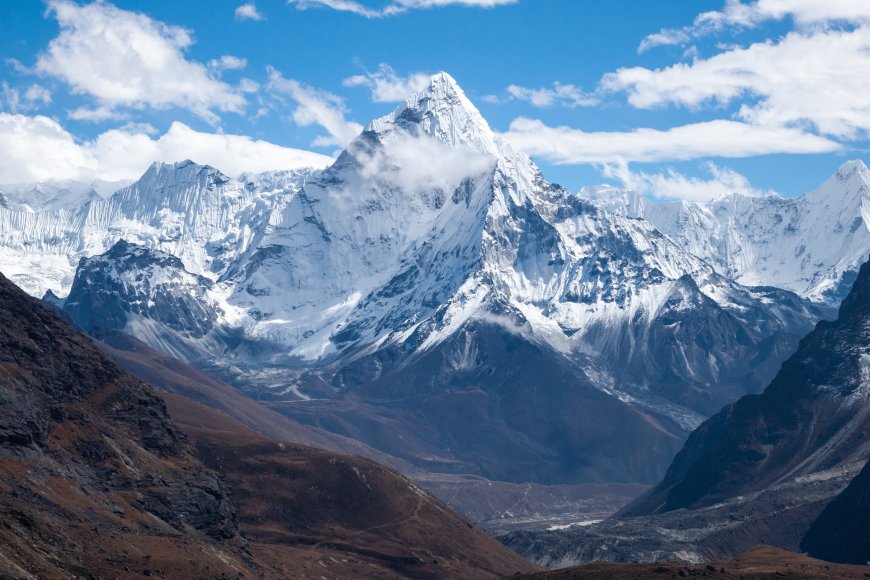
Ama Dablam is the peak people photograph from the trail below Tengboche and then ask about all the way back down. It looks approachable from a distance. It is not. The climbing is technical, the exposure is real, and the gap between wanting to stand on that summit and being ready for it is wider than most trekkers expect. This guide covers what the climb actually demands, how to think about timing now, how it stacks up against Island Peak, and the questions worth asking before you pay anyone a deposit.
Difficulty: what the climb actually asks of you
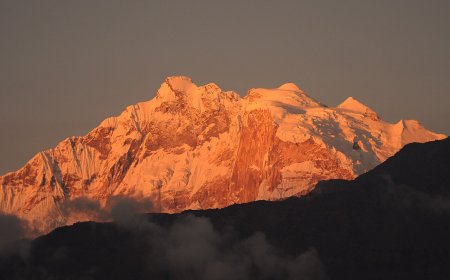
Ama Dablam sits in a different category from the trekking peaks of the Khumbu. The standard south-west ridge route puts you on fixed rope for long stretches, moving with an ascender, crossing ladders over crevasses, and climbing rock steps in boots and crampons. There are camps stacked up the ridge, each one higher and more exposed than the last, and the summit ridge itself is narrow enough that your attention has nowhere else to go.
The other half of the difficulty is objective hazard. Ice cliffs and rock bands above the route shed material, and the weather in the Khumbu can turn a straightforward day into a retreat. A good team manages that risk with timing, fixed ropes and judgement. Nobody removes it.
What this means practically: Ama Dablam is not a fitness challenge with a glacier attached. It rewards people who already know how to move efficiently on steep snow and rock, who have been above 5,000 m before without falling apart, and who are comfortable being scared and still making good decisions. If your only high-altitude experience is a trek to Everest Base Camp, you are not ready yet. That is not a judgement, it is just the honest starting line.
Season timing: where things stand in late 2026
The autumn 2026 window has closed. If you are reading this in the last weeks of the year, the next realistic opportunity is spring 2027, roughly late March into May, when the jet stream shifts and the mountain settles into its most reliable pattern.
Spring and autumn are not interchangeable. Spring generally means a colder, snowier route, more teams working the same fixed lines, and a base camp that feels like a small village. Autumn follows the monsoon: snow that has had time to consolidate, fewer people, but a window that opens later and can close quickly as winter arrives. Both seasons have produced plenty of summits and plenty of turnarounds. Treat these as general patterns rather than a forecast, because every year writes its own version.
Build slack into your dates. Weather days on Ama Dablam are not a contingency you might need, they are part of the plan.
Ama Dablam vs Island Peak
Island Peak, also called Imja Tse, is classified as a trekking peak. The climb is largely a glacier walk with a final headwall that needs fixed rope, and it fits neatly inside a longer Khumbu itinerary. It gives you real altitude, real crampons and a genuine summit day without demanding days of technical ground.
Ama Dablam is a step up in almost every dimension. The technical climbing is sustained rather than confined to one pitch, the exposure is greater, the route takes more days, and the whole expedition needs dedicated acclimatisation before you even reach the climbing. Objective hazard from rockfall and ice is also more present than on Island Peak, where crevasses and the headwall are the main concerns.
A sensible progression runs Island Peak first, then a season or two of consolidating those skills, then Ama Dablam with a team you trust. Plenty of strong climbers skip the stepping stone. Few of them skip the preparation.
The height question
Ama Dablam's elevation gets quoted with more confidence than the sources support. Different maps and authorities give figures that differ by a few dozen metres, and older numbers keep circulating long after newer surveys appear. That is not a scandal, it is just how mountain measurement works.
If you need a number for a form, a talk or a trip report, take it from a current official map or survey and note which authority it came from. A precise figure with no attribution is decoration, not information.
A readiness checklist
- Previous time above 5,000 m with a good outcome, not just survival.
- Glacier travel and fixed-rope skills you have practised recently, not once in 2019.
- Fitness for long days carrying a pack in thin air, built over months.
- Comfort on steep, exposed ground in crampons.
- Kit you have actually climbed in, checked before you fly.
- A schedule with spare days built in.
Questions to ask an operator
What is the guide-to-climber ratio on the upper mountain? Who fixes the ropes and when? How many nights at base camp, and what does the acclimatisation plan look like in detail? What happens if you turn around at the last camp? Which parts of the fee are separate? And ask to sight the permit yourself before departure, confirming the peak, the season and the issuing agency.
Permit rules, royalties and what an expedition actually costs are a separate conversation, and they deserve their own space rather than a paragraph bolted onto this one.
No operator can promise you the summit. What a good one can promise is a plan you understand, a team that tells you the truth about conditions, and a decision-making process that puts you back in Kathmandu in one piece. Choose on that basis.
What's Your Reaction?