








Nepal's 2026 Climate-Smart Agriculture Subsidy Scheme: What Farmers Need to Know (Pending Official Confirmation)
Nepal's 2026 Climate-Smart Agriculture Subsidy Scheme remains unconfirmed as of September 2026. This article outlines what farmers can expect based on draft concepts and past programs, and where to watch for the official announcement.

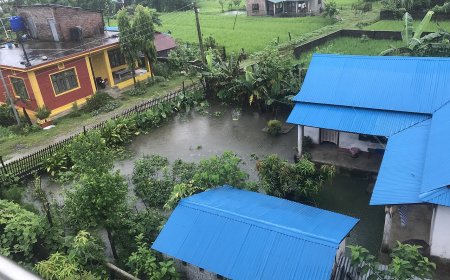
Talk to any farmer in the Tarai or the mid-hills these days and the conversation eventually turns to weather that doesn't follow the old patterns. Monsoon arrives late, or it dumps a month's rain in two days. Winter fog lingers too long. Spring heat comes early. The government has been promising a response, and for months now there's been talk of a 2026 Climate-Smart Agriculture Subsidy Scheme. But as of mid-September, the Ministry of Agriculture and Livestock Development (MOAD) has not published a final gazette notice, circular, or formal notification that would make the program official.
What we know so far
Several draft concepts have circulated in agriculture extension circles and were discussed at a stakeholders' workshop in Kathmandu back in April. Those documents — not yet gazetted — outline a scheme aimed at helping smallholders adopt practices that reduce emissions, conserve soil moisture, and improve organic matter. The language mirrors Nepal's Nationally Determined Contribution under the Paris Agreement and the National Adaptation Plan 2021-2050. But until a signed ministerial decision or a notice in the Nepal Gazette appears, nothing is binding.
How past subsidy programs have worked
Farmers who've dealt with the Prime Minister Agriculture Modernization Project (PMAMP) or the fertilizer subsidy distributed through the Agriculture Input Company Limited (AICL) will recognize the likely structure. Typically, eligibility hinges on landholding size — often capped at one hectare for full benefits, with tapered support up to two hectares. Category matters too: women-headed households, Dalit and Janajati farmers, and those in designated climate-vulnerable municipalities usually get priority. Residency is verified through the local ward office, and the applicant's name must match the land ownership certificate (lalpurja) or a valid tenancy registration.
Where to watch for the official announcement
The most reliable sources are the MOAD website (moad.gov.np), the Department of Agriculture portal (doa.gov.np), and the Nepal Gazette (rajpatra.gov.np). District Agriculture Development Offices (DADOs) — now restructured as Agriculture Knowledge Centers under the federal system — will be the frontline for application intake. Some municipalities have started assigning agriculture technicians to help farmers prepare documents in anticipation. If an online portal launches, it will likely be linked from the MOAD homepage. For now, there is no active link.
Documents you should have ready
Based on every previous scheme, keep these updated: citizenship certificate, land ownership or tenancy papers, a recent passport-size photo, bank account details in the applicant's name (for direct benefit transfer), and a recommendation letter from the ward chair. If the scheme requires a farm plan — as the draft concept suggested — you'll need a simple sketch showing proposed activities: drip irrigation layout, compost pit location, improved seed varieties, etc. The local agriculture technician can help draft this.
What the draft concept mentioned about support levels
The April workshop handout indicated a subsidy covering 50 to 75 percent of eligible input costs, with a ceiling around NPR 75,000 per hectare. Eligible items listed: drought-tolerant seed varieties, bio-fertilizers, vermicompost units, drip or sprinkler kits, mulching plastic, and small solar pumps. Training and exposure visits were listed as complementary measures, not cash grants. But again — these figures are from an unapproved draft. The final numbers could be higher, lower, or structured differently.
Benefits claimed in the draft
The concept note cited studies from the Nepal Agricultural Research Council (NARC) and ICIMOD showing that climate-smart packages — combined improved seeds, mulching, and deficit irrigation — can raise maize yields by 15 to 25 percent in rainfed systems and reduce methane emissions from paddy by 20 to 30 percent through alternate wetting and drying. Soil organic matter improvements of 0.2 to 0.4 percentage points over three years were referenced from long-term trial plots in Rampur and Khumaltar. None of these projections are guarantees for every farm; they're research station results under managed conditions.
Complementary support that often accompanies such schemes
If the final scheme follows the PMAMP model, expect: (1) three-day residential training at the nearest Agriculture Knowledge Center on integrated pest management and nutrient budgeting; (2) a technical backstopping visit within 30 days of input distribution; (3) linkage to a cooperative or collection center for market access, especially for high-value vegetables or seeds. Some municipalities have already started farmer field schools using their own budgets — ask your ward office.
What to do right now
Don't wait for the gazette. Visit your Agriculture Knowledge Center or municipality agriculture section this month. Ask the technician if they've received any orientation on the 2026 climate-smart subsidy. Get your land papers and bank account sorted. Join the local farmer group or cooperative if you haven't — group applications often get processed faster. And check the MOAD website weekly; when the notice drops, the application window may be only 30 to 45 days.
Disclaimer: All information in this article is based on publicly discussed draft concepts, historical program patterns, and research citations from NARC and ICIMOD publications up to 2024. No official gazette notification, ministerial circular, or MOAD directive confirming the 2026 Climate-Smart Agriculture Subsidy Scheme had been issued as of 11 September 2026. Details including eligibility, subsidy rates, eligible inputs, application procedures, and timelines are subject to change pending final approval. Farmers should verify every detail with the Ministry of Agriculture and Livestock Development or their local Agriculture Knowledge Center before making investment decisions.
What's Your Reaction?







-
 xxzjyYAWFpxSCXAmaaWyIzORwWxBGGqVhkQaBVs