




Cho Oyu: Height, Location and the Sixth-Highest Ranking Explained
Cho Oyu rises 8,188 m on the Nepal–Tibet border, ranking sixth among the world's 8,000 m peaks — 661 m lower than Everest.

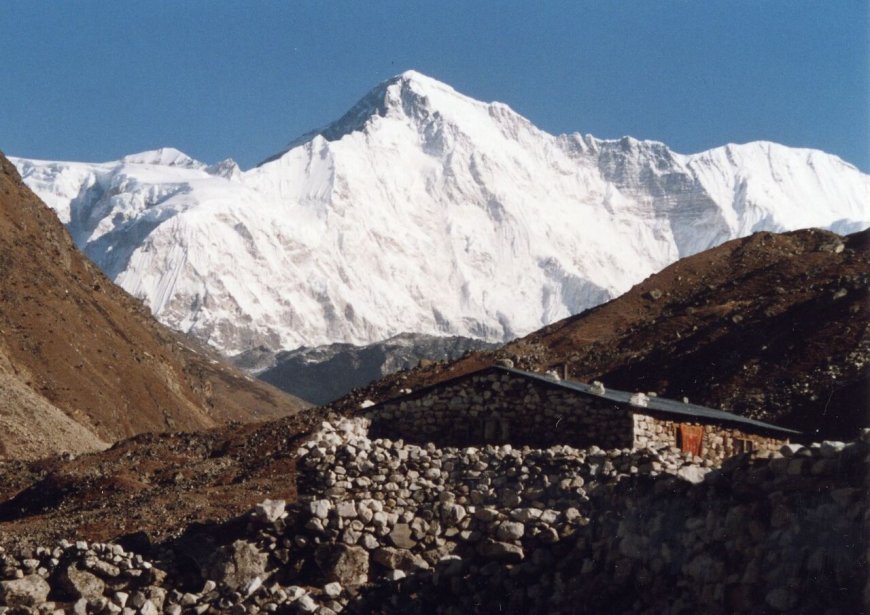
What and where
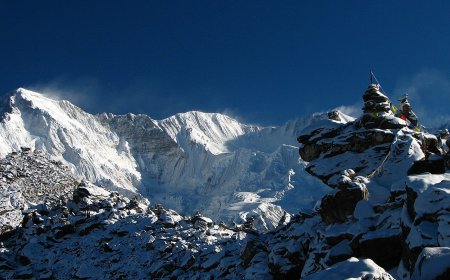
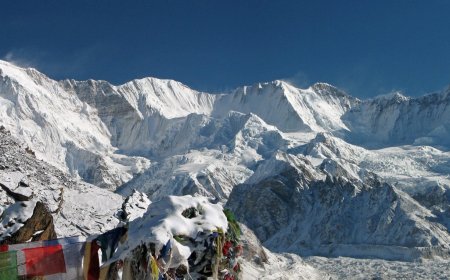
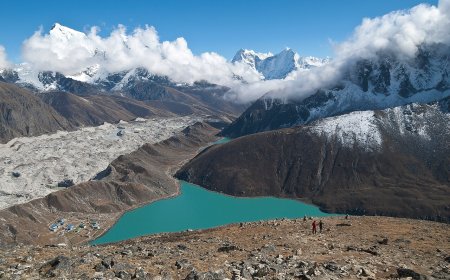
Cho Oyu stands at 8,188 metres (26,864 feet) on the border between Nepal and the Tibet Autonomous Region of China. It lies in the Himalayas, roughly 20 kilometres west of Mount Everest, placing it squarely in the Khumbu sub-range. The summit ridge marks the international boundary, so climbers approaching from either side step onto the same highest point.
Its elevation makes it the sixth highest mountain in the world. That ranking holds across the major published lists, even though some older sources quote a slightly different figure for the peak. The order of the fourteen eight-thousanders is stable enough that a 13-metre spread in reported heights does not reshuffle the sequence.
The Everest comparison
Mount Everest, the world's highest summit, reaches 8,849 metres (29,032 feet). Subtracting Cho Oyu's 8,188 metres leaves a difference of 661 metres — about 2,169 feet. In practical terms, that gap is roughly the height of a 200-storey building. The two peaks are close enough to appear in the same high-altitude panoramas from many viewpoints in the region, yet the vertical separation is large enough to place them in distinctly different physiological zones for anyone ascending without supplemental oxygen.
What "sixth-highest" means
The term refers to a fixed ranking among the fourteen mountains whose summits exceed 8,000 metres. Survey updates occasionally adjust individual elevations by a few metres as measurement techniques improve, but the gaps between adjacent peaks in the list are generally much larger than those adjustments. Cho Oyu sits between Dhaulagiri I (8,167 m) and Makalu (8,485 m), so even a revision of ten or twenty metres would not move it up or down a slot. The ranking is therefore a property of the set, not a fragile claim tied to a single survey.
References: Cho Oyu – Britannica; Mount Everest – Britannica
What's Your Reaction?