






Api Himal Trek: Season Windows and Finding a Guide in Darchula
Two things decide an Api Himal trek in Darchula: which season window actually holds, and how to check a guide when the local pool is small. Covers the spring and post-monsoon windows, what permits to confirm with DNPWC, and the questions worth asking before you pay a deposit.

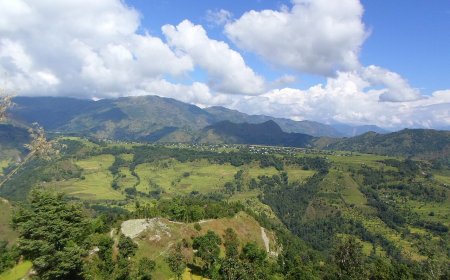
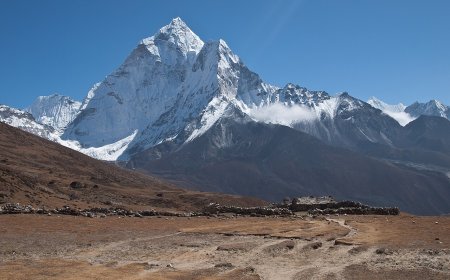
Api Himal stands in Darchula district, Sudurpashchim Province, inside Api Nampa Conservation Area, which was established in 2010 and covers roughly 1,903 km² of river valley, forest and high grazing ground. The mountain tops out at 7,132 m, the biggest thing in this corner of Nepal. The Api Himal trek is the approach to it: a long walk in through the valleys below the peak rather than a lodge-to-lodge circuit, with the summit left to climbers and trekkers turning around somewhere below it.
That is the far north-west of the country, where the district meets Uttarakhand in India and the Tibet Autonomous Region to the north. People still say Far-Western Nepal out of habit, and there is nothing wrong with that; the province came into being in the 2015 federal reorganisation and later took the Sudurpashchim name. Either label puts you a long way from the tea-house queues of Annapurna.
Which is rather the point. Api is the kind of mountain that offbeat trekking in Nepal keeps promising and rarely delivers on, because the remoteness that makes it interesting also makes it awkward: fewer operators, fewer people who have genuinely been there, and a planning process that rewards patience over enthusiasm. Two practical things follow, when to go and who to go with. Whether you sleep in teahouses or tents is a fair question for your operator early on, and it varies by itinerary, so I have left it to them rather than guessed.
When to go on the Api Himal trek
Trekking in this district is season-bound, and the binding agent is the summer monsoon. The two practical windows fall either side of it: pre-monsoon, roughly spring, and post-monsoon, roughly October into November. Those are the periods most commonly recommended for the region, and you should treat them as a framework rather than a forecast.
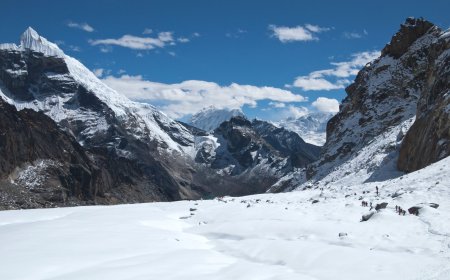
The monsoon months are ones to plan around rather than through. Trails get slick, streams run high, and because so few groups come through, very little current information flows back from the ground. Winter is a third option on paper and rarely a good one in practice: snow sits on the high grazing ground, and with so little traffic there is nobody ahead of you to report what a pass looks like.
Whatever window you settle on, confirm conditions close to departure with a local operator or the conservation area office. General seasonal patterns are not a substitute for that, and nowhere in Nepal is that truer than here.
Permits: the Darchula paperwork to confirm before you commit
You need an entry permit for Api Nampa Conservation Area. That much is straightforward. The terms around it are not something to take from a blog, this one included. Fees, which office handles what, and whether any additional trekking paperwork applies in Darchula all get revised from time to time, and a stale number is worse than no number.
So confirm the current terms directly with the Department of National Parks and Wildlife Conservation (DNPWC) before you pay anyone a deposit. Then ask your agency the same question and compare answers. If the two don't match, that tells you something useful about the agency.
Why guide capacity is the constraint
Ask anyone who has organised a trek in a quiet district what the hard part was, and it is rarely the walking.
My working premise is that guide and porter capacity around Darchula is thin next to the Annapurna and Khumbu corridors. I don't have a headcount behind that, and I would be suspicious of anyone who did. In practice it means the pool of people with real, repeated experience of this particular valley is small, so the gap between a good trip and a hard one usually comes down to how carefully you check who you are hiring.
Nepal has formal guide training pathways through its tourism and mountaineering bodies, and that is a good thing to ask about rather than assume. A certificate tells you someone finished a course. It does not tell you they have crossed a Darchula pass in shoulder season, or that they know which household to ask about conditions on the way up. Both of those matter here.
Questions to ask a guide or agency
None of these are gotchas. A good operator will enjoy being asked.
- How many times have you or your guide walked in Darchula district, and in which seasons?
- Who is the guide on this trip specifically, not the company's most senior name?
- What training and first-aid certification does that person hold, and when was it last renewed?
- What is the permit process, who handles it, and what does it require from me?
- How do you handle a medical problem in a district this far from a hospital?
- If the group needs to turn around, is that your call or mine?
- Can you put me in touch with a past client who walked this district?
What this piece leaves out
Route stages, trailhead access, teahouse versus camping logistics, permit fees and evacuation specifics are absent on purpose: as of November 2026 I could not confirm them against a current, openable source, and a travel article that guesses is worse than one that admits the gap. For those, go to a named operator with a published itinerary and a date, a first-hand trip report, or the DNPWC.
What's Your Reaction?