



Everest Base Camp helicopter tour cost: how to read a quote before you pay
A reader's guide to what actually drives the cost of an Everest Base Camp helicopter tour: departure airport, shared seat versus private charter, the real landing point, permits, inclusions, weather risk and the insurance details people miss. No invented fares, just the questions that separate a fair quote from a hollow one.

Nearly every question about helicopter flights to Everest Base Camp comes down to cost, and nearly every price printed online is useless on its own. One figure is a per-seat fare in a shared aircraft. Another is the whole helicopter, divided however you like. A third has sat on some agency page for years without anyone updating it. Put them side by side and you learn nothing.
So this is not a price list. It is the order in which the real cost drivers stack up, which is what you actually need in order to judge whether a quote is fair or quietly hollow.
Where the helicopter takes off
This is the biggest fork in the road, and it is the one people miss. A flight that lifts off in Kathmandu is a different product from one staged out of Lukla after you have already paid for a fixed-wing hop to get there. In the busiest trekking weeks, aircraft and crews get repositioned and some services shift their staging point out of the capital entirely, the way Lukla fixed-wing flights have for years. Ask, in writing, which airport you board at, and what happens to your money if that changes after you have booked.
Per seat, or the whole machine
The helicopters used on this route carry a handful of passengers, usually four to six, and that is the reason per-seat pricing exists at all. A private charter costs several times a single shared seat, but split between four people the gap narrows quickly. Ask for both numbers for your date. Any operator who will only quote one of them is steering you.
Where it actually lands
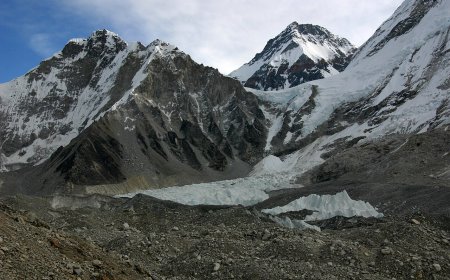
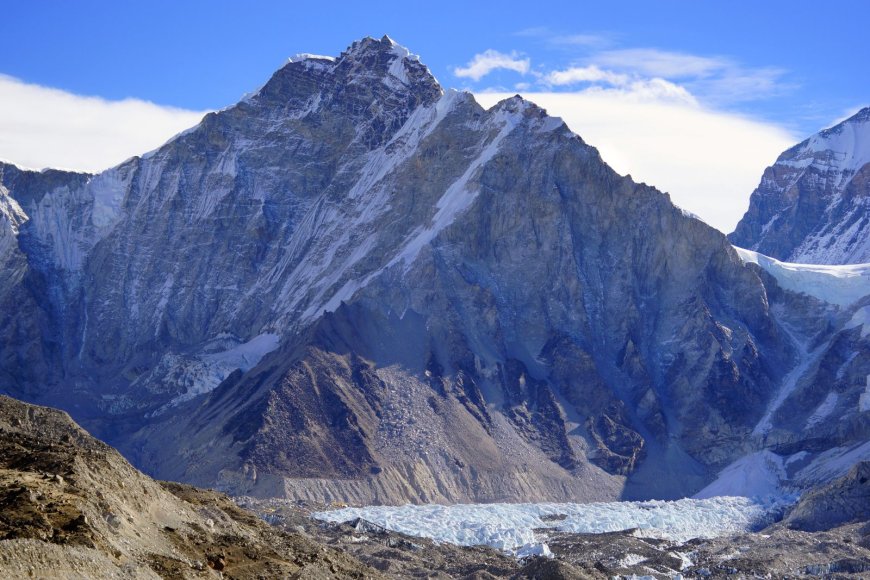
Base Camp sits at roughly 5,364 m. Not every itinerary sold under that name puts you there. Some set down near Gorak Shep. Some land at Kalapatthar, at about 5,545 m, because the view is better and the paperwork easier. Others advertise a Base Camp stop that turns out to be closer to a slow pass than a landing. Landing permissions and the rules around them shift from season to season, so have the exact landing point written into your quote rather than described over the phone.
Permits, and whether they are inside the price
Two fees normally apply on this route: Sagarmatha National Park entry and the Khumbu Pasanglhamu Rural Municipality levy. Rates get revised, and quotes handle them in wildly different ways. Some fold them into a vague 'government fees' line, some bill you at the checkpost, some genuinely include them. Ask which ones are covered and get the figure confirmed at the time of booking, not on the morning of the flight.
The inclusions that decide if a cheap quote is cheap
Hotel transfers at both ends. Ground handling at the airport. A guide or liaison who stays with you on the ground. Oxygen aboard the aircraft. A weight allowance per passenger, which matters more than most people expect because baggage gets weighed and surplus can be refused or charged. Breakfast or a hot drink at the landing stop, sometimes promised and sometimes not honoured. Each of these is small on its own and adds up to a wide spread between two quotes that look identical at the top line.
Weather, delays, and who carries the risk
Mountain flying is visual-flight-rules flying. When cloud sits in the Khumbu valley, the flight does not go, and no amount of planning changes that. The question is what your operator does next: rebook you onto the next slot, hold your deposit, refund in full, refund in part? Get the cancellation terms in writing and understand that a marginal-weather morning in peak season is exactly when the difference between a good operator and a cheap one shows up.
Season shapes both price and reliability. Broadly, spring from March into May and autumn from late September into November are the dependable windows, with winter flyable but more exposed to weather and the monsoon months best avoided. As of mid-November 2026 the autumn window is winding down rather than opening, so if you are planning now you are most likely looking at next spring.
Altitude is not a theme park ride
Flying from Kathmandu to above 5,300 m in a single morning gives your body no time to acclimatise. Ground time on these tours is short by design, and that is precisely why you should take the headache, breathlessness and nausea warnings seriously, keep the oxygen handy, and skip any plan to walk further than a few hundred metres once you are down. If you have heart or lung conditions, talk to a doctor before booking.
Then read your travel insurance properly. Many policies cap helicopter evacuation cover at a stated altitude, and a medevac from the Khumbu is the single most expensive thing that can happen to you on this trip. Check the ceiling, check that helicopter evacuation is named, and check whether trekking above a certain height is excluded.
Questions worth asking before you pay
- Which airport do I board at, and who pays if it changes?
- What is the exact landing point, in metres?
- Is this a shared seat or a private charter, and how many others are on board?
- Which permits are included, and at what confirmed amount?
- What is my baggage and body weight allowance?
- What happens if the flight is cancelled for weather?
- Who is the operator, and what is their aircraft registration?
Red flags
No named operator. No written cancellation policy. A promise of a 'guaranteed landing' on a mountain where nothing is guaranteed. A price far below every other quote you have received, which usually means permits or transfers have been left out. And any insistence on cash with no receipt.
If a quote cannot answer those questions in writing, the price was never the interesting part.
What's Your Reaction?