

Where to Stay on the Everest Base Camp Trek: Sleeping Altitude, Facilities and How the Bill Adds Up
A post-autumn 2026 planning guide to EBC trek lodging: the overnight altitude ladder, where acclimatisation nights land, what a teahouse night includes and how the bill is structured, plus what to verify before booking spring 2027.

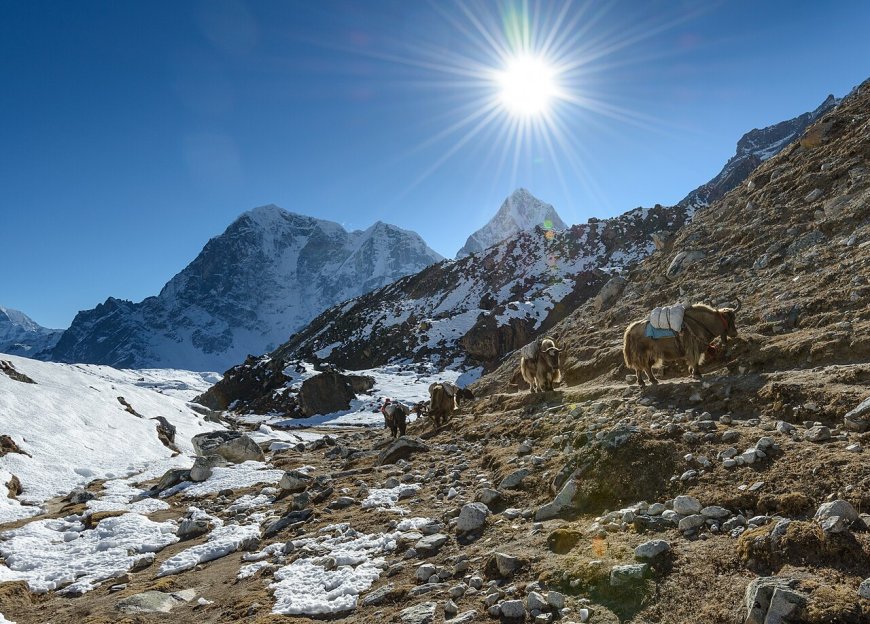
Autumn 2026 has finished on the Everest Base Camp trail. The next big planning window is spring 2027, roughly March to May, with winter 2026–27 sitting in between: quieter, colder, easier to book at short notice, and with fewer services running higher up. This guide is written for the decision in front of you, which is where to sleep each night and what that choice does to your acclimatisation, your next morning's climb and your spending. It is not a list of lodge names.
The overnight ladder from Lukla to Gorak Shep
The standard route runs Lukla, Phakding, Namche Bazaar, Tengboche, Dingboche or Pheriche, Lobuche, Gorak Shep, then Base Camp and back down. Sleeping altitudes below are approximate and rounded. Different maps and park signage vary by a few tens of metres, so treat them as a ladder for planning, not as survey figures.
- Lukla, about 2,860 m
- Phakding, about 2,610 m (lower than Lukla, which is why night one often feels easy)
- Namche Bazaar, about 3,440 m
- Tengboche, about 3,860 m
- Pheriche, about 4,270 m; Dingboche, about 4,410 m
- Lobuche, about 4,940 m
- Gorak Shep, about 5,160 m
What matters more than the exact metres is the jump between stops. Phakding to Namche is a big gain, and Tengboche to Dingboche or Pheriche is the other one that catches people out. Those are the two nights where the room you take and the rest you get decide how the following day goes.
Where the acclimatisation nights usually fall
Most itineraries build in two extra nights: one at Namche and one at Dingboche or Pheriche. Both are usually walked as short acclimatisation hikes rather than full rest days, which means the lodging choice at those stops is really about comfort and sleep quality, not about distance.
Namche has the widest range of places to sleep on the whole route, from basic teahouses to proper hotels with attached bathrooms and heating. Spending a little more there buys you a better night before the altitude starts biting. Dingboche and Pheriche are a real trade-off. Dingboche sits slightly higher and tends to have more lodges; Pheriche is a bit lower, which some trekkers sleep better at. If you have had a rough night at Namche, Pheriche is worth considering.
Gorak Shep is the one stop where almost nobody sleeps well. It exists for proximity to Base Camp and Kala Patthar, not for comfort, and one night is normally enough.
What a teahouse night actually includes
Teahouses are the dominant accommodation on the route, and the range within that word is wide. Lower down you will find twin or double rooms with attached bathrooms. Above Namche, shared bathrooms become the norm, and above Pheriche even a shared hot shower may not be available.
Ask about these before you take a room: attached or shared bathroom, whether the hot shower is included or paid per shower, whether there is in-room heating or only the dining hall is warm, and what device charging and Wi-Fi cost. Charging is usually priced per device and Wi-Fi per day, and both get patchier and pricier with altitude.
A sleeping bag rated for well below zero is not overkill. Rooms are unheated in most places and the dining hall, usually the only warm room, closes when the last person leaves.
How the bill adds up
This guide deliberately does not print a price table. Teahouse rates move with season and demand, quotes differ between operators, and a table without a dated source behind every number is worse than no table. What you can rely on is the structure of the bill.
Rooms are usually quoted per room, not per person, and the quoted rate is often conditional on eating dinner and breakfast in the same lodge. That second condition is the single biggest thing to confirm, because food, not the bed, becomes the larger share of your daily spend the higher you go. Menus are priced in rupees, portions shrink with altitude, and the set meals are usually the best value.
Extras to budget for separately: hot showers, device charging, Wi-Fi, boiled drinking water, and anything you buy in the dining hall through the evening. Carry enough Nepali rupees for the upper route. Do not assume card acceptance or a working ATM above Namche, and confirm locally rather than trusting what a lodge told you last season.
Winter and monsoon: the general pattern
Outside the main trekking seasons, higher villages go quieter and some lodges shut entirely. The pattern is consistent enough to plan around: reduced services above Namche, fewer places open at Dingboche, Pheriche, Lobuche and Gorak Shep, and a much thinner choice of rooms. Monsoon brings cloud, rain, slippery trails and unreliable Lukla flights. Confirm that your intended lodge is open before you commit to a night at altitude. We are not naming which villages open or close in which month, because that changes and needs checking locally each time.
Check these before you fly
Permits for the Sagarmatha National Park and the Khumbu Pasanglhamu Rural Municipality are both part of trekking here, and the fees and issuing points should be confirmed against official sources close to departure, not against blogs. In recent seasons there have also been changes around TIMS cards in Khumbu and around guide requirements, so confirm the current position before you go.
Flights are the other moving part. In several recent spring seasons, services into Lukla were relocated to Manthali or Ramechhap. Do not assume spring 2027 will operate from Lukla. Check with your airline and with CAAN notices close to your travel date and build in a buffer day.
Choosing the type of place
Teahouse, lodge, homestay and the small number of higher-end lodges are not just price tiers. A homestay may mean a colder room but a warmer evening, and higher-end lodges buy you heating and attached bathrooms at a point where that genuinely affects how you sleep. Match the spend to the altitude: comfort is worth most at Namche, Dingboche or Pheriche, and matters least at Gorak Shep, where nobody sleeps well anyway.
What's Your Reaction?