



How Nepal Lowers Glacial Lakes: Siphons and Outlet Channels
Nepal has successfully lowered two high‑altitude glacial lakes — Tsho Rolpa and Imja Tsho — using siphons and open outlet channels. Both projects are documented, but as of October 2026 no lead agency has released a verified project sheet for any new lake‑lowering campaign. The article explains the methods, the decision‑making and funding architecture, what the public record currently shows, and why a transparent project register matters for downstream communities.

Two verified projects
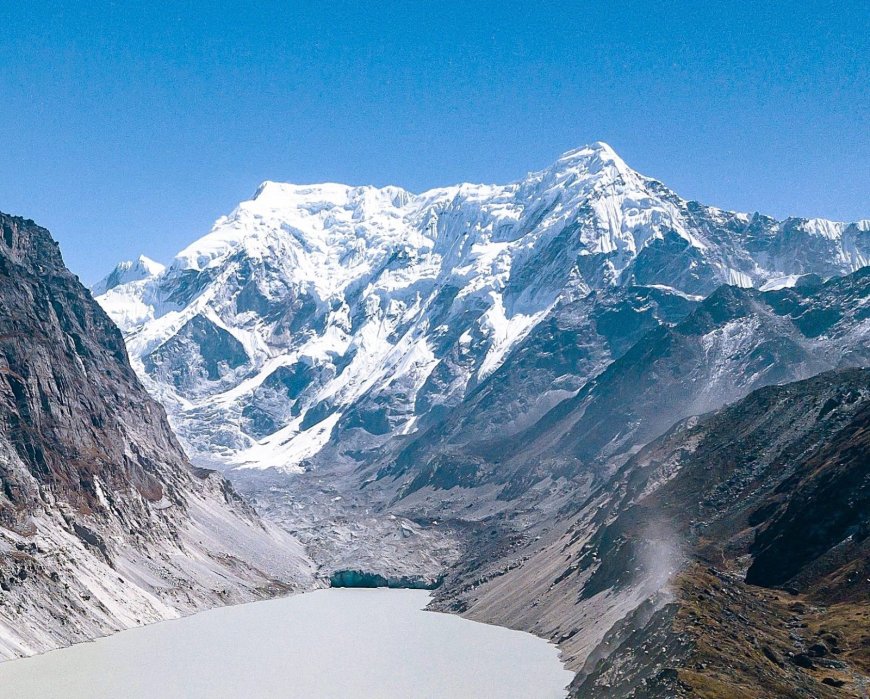
Nepal glacial lakes have been lowered in two verified projects using siphons and open outlet channels. Tsho Rolpa in Dolakha was drawn down about three metres between 1998 and 2000. The Department of Hydrology and Meteorology (DHM) oversaw construction of an open outlet channel with a control gate, financed by a Netherlands government grant. The drawdown reduced the assessed outburst‑flood peak downstream in the Rolwaling and Tamakoshi valleys.
Imja Tsho in Solukhumbu was lowered roughly 3.4 metres in 2016. High‑density polyethylene siphons began the drawdown; once the water level fell enough, an open channel was excavated through the moraine crest and took over for the remaining drop and long‑term regulation. DHM managed the work with Nepal Army engineering units, and financing came from the Global Environment Facility through UNDP. Both projects are documented in DHM completion reports, a World Bank project appraisal document (1998) for Tsho Rolpa, and a UNDP evaluation report (2017) for Imja Tsho.
How siphons and channels differ
Siphons operate without external power once primed, which makes them useful for remote sites where heavy equipment cannot reach. Their practical lift is limited by atmospheric pressure; at altitudes above 5,000 m the maximum reliable lift is about five metres, not the eight to ten metres often quoted for sea‑level conditions. Open outlet channels cut through the moraine dam can handle larger flows and allow gated control, but they require excavators and sustained access for construction and maintenance. At Tsho Rolpa the required drawdown exceeded the reliable siphon lift available at the time, so an open channel was chosen. At Imja Tsho the siphons started the work while the channel was being built; the channel then assumed regulation duty.
Who decides and funds the work
Glacial‑lake lowering follows a multi‑agency review. DHM identifies candidate lakes from its hazard inventory. The National Disaster Risk Reduction and Management Authority (NDRRMA) coordinates approvals and aligns the work with the national disaster‑risk reduction strategic action plan. The Ministry of Forests and Environment clears environmental permits. Nepal Army engineer directorates often execute high‑altitude construction. Past funding instruments include a bilateral grant (Netherlands at Tsho Rolpa) and a multilateral trust fund (GEF‑UNDP at Imja Tsho). As of October 2026, a search of the DHM website, NDRRMA publications, the Public Procurement Monitoring Office portal, the UNDP project database, the World Bank project database, and the Green Climate Fund project registry (all accessed 1–3 October 2026) shows no published project sheet that names a new lake, a drawdown target, a signed contract, a funding instrument, or a completion horizon.
What the public record shows
DHM publishes periodic hazard bulletins and a glacial‑lake inventory that rank lakes by outburst potential. Those documents do not include engineering designs, procurement status, or disbursement schedules. Procurement notices for past projects appeared on the Public Procurement Monitoring Office portal after contracts were awarded; no such notices for a new lowering campaign appear in the searchable archive as of October 2026. Parliamentary committee reports and Auditor General reviews sometimes reference expenditure after the fact, but they are not a source of forward‑looking project detail. Readers can check the same portals themselves: DHM hazard bulletins (https://dhm.gov.np), NDRRMA reports (https://ndrrma.gov.np), and the PPMO portal (https://ppmo.gov.np).
Typical drawdown sequence (text overview)
A typical sequence begins with a bathymetric survey and moraine stability assessment. If the required drawdown is within the siphon lift limit at that altitude, HDPE siphons are installed and primed. Once the water level falls enough for safe excavation, an open channel is cut through the moraine crest with a control structure. The channel then assumes regulation duty. Instrumentation — water‑level loggers, flow meters, and automated camera stations — feeds data to DHM's Glacial Lake Monitoring Network operations centre in Kathmandu. This description is generic and does not depict any specific lake or project.
Monitoring and GLOF context
DHM maintains a glacial‑lake monitoring network and publishes hazard bulletins; see the site's explainer on glacial lake outburst flood (GLOF) for the classification framework.
Why transparency matters
Communities downstream of candidate lakes — in the Rolwaling, Khumbu, Langtang and other basins — rely on timely information to plan evacuations, protect infrastructure, and negotiate land‑use decisions. When project timelines, funding commitments, and method choices remain absent from public channels, local governments and civil‑society groups cannot scrutinise assumptions or hold agencies accountable. The two completed lowerings demonstrate that Nepal has the technical capacity. The missing layer is a transparent, routinely updated project register that links each lake to a method, a budget line, a contractor and a delivery date.
What's Your Reaction?