






Nepal GLOF Warnings: How to Check Them Yourself
Learn how to check official GLOF warnings in Nepal using DHM, NDRRMA and local sources, what to look for in a credible alert, and how to stay informed when the internet is down.

Disclaimer: Warning status changes frequently. Check official channels directly. The checks below were performed on 9 October 2026.
What glacial lakes are and why lowering is discussed
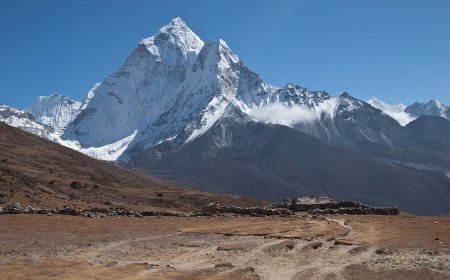
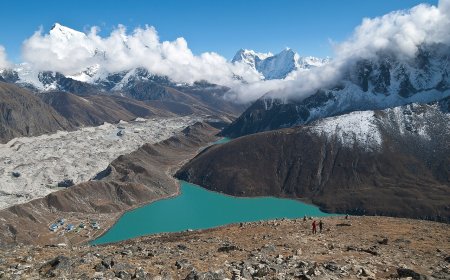
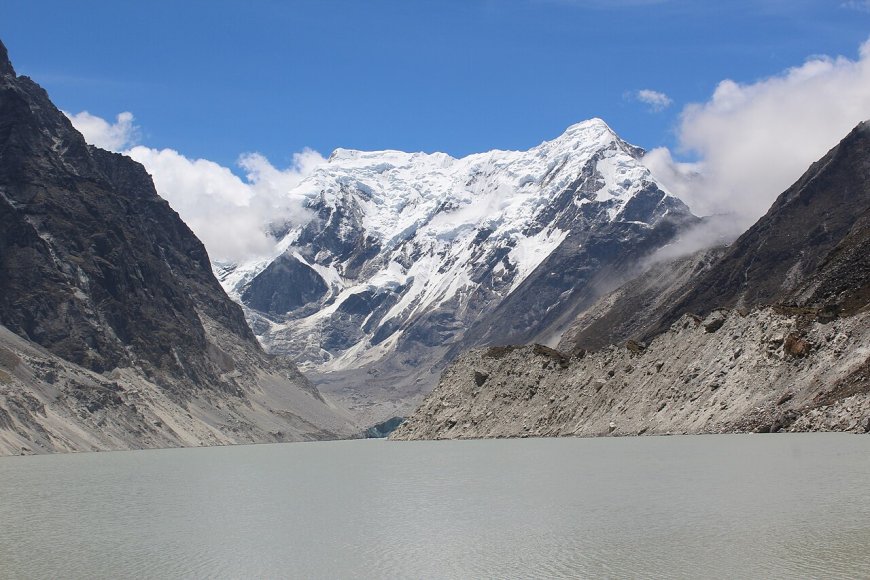
Glacial lakes form when meltwater pools behind moraine dams left by retreating glaciers. If a dam fails — from erosion, an avalanche, or sudden inflow — the resulting outburst flood can reach downstream valleys in minutes. After the August 2026 Nepal floods, news outlets revisited the idea of lowering glacial lakes in Nepal, but no government agency has published a confirmed list of lakes currently being drained or lowered. The Ratopati article of 27 August 2026 notes that past events such as the 1985 Dig Tsho outburst shaped today's monitoring protocols, though it does not name any lake now undergoing engineered lowering.
Where official warnings actually live
Department of Hydrology and Meteorology (DHM)
The DHM website (dhm.gov.np) publishes real-time river gauge data, weather bulletins, and a flood‑warning page. When we checked on 9 October 2026 the flood‑warning section loaded and displayed active alerts for major river basins. There is no separate GLOF‑specific subsection; glacial‑lake information appears within the regular flood‑bulletins and in joint DHM‑ICIMOD updates.
National Disaster Risk Reduction and Management Authority (NDRRMA)
NDRRMA (ndrrma.gov.np) issues district‑level disaster bulletins and coordinates early‑warning dissemination. On 9 October 2026 the bulletin archive was accessible; the latest GLOF‑related notice, dated 3 September 2026, advised vigilance in high‑mountain districts without naming specific lakes.
District administration and municipal channels
District Disaster Management Committees (DDMCs) and municipal offices relay DHM/NDRRMA alerts via their own websites, Facebook pages, and SMS lists. Spot checks of the Solukhumbu, Manang and Mustang DDMC pages on 9 October 2026 showed they were sharing DHM bulletins but did not publish independent lake‑status updates.
A repeatable check routine you can run today
- Open the DHM flood‑warning page and note the timestamp on the latest bulletin.
- Cross‑check the same timestamp on the NDRRMA bulletin archive.
- Visit your district administration or municipal website for any local addendum or evacuation notice.
- If a warning mentions a specific lake, record the lake name, alert level, and recommended action, then verify that name appears on both DHM and NDRRMA feeds.
- Repeat steps 1‑4 each morning and evening during monsoon; increase frequency during heavy rain or after seismic activity.
A credible warning carries an issuing authority logo, a date‑time stamp, a clear alert level (watch/alert/emergency), and a specific recommended action (monitor/prepare/evacuate). Social‑media posts without these elements are not official warnings.
What is and is not confirmed about post‑flood lake status
As of 9 October 2026 we found no published inventory of glacial lakes assessed after the August 2026 Nepal floods. The Kathmandu Post report of 6 September 2026 said rapid assessments were underway, but it did not list lake names or lowering decisions. Until a named authority releases a dated list, treat any named lake as reported but unconfirmed.
How to receive alerts when the internet is down
When connectivity fails, rely on these channels:
- DHM and NDRRMA operate 24‑hour helplines; the numbers are listed on their respective websites under “Contact”.
- Both agencies broadcast flood updates on FM radio — Radio Nepal and local community stations carry the bulletins; frequencies are posted on the DHM media page.
- You can register for free SMS alerts via the NDRRMA portal; registration links are on the NDRRMA homepage.
- Many mountain villages have siren systems or loudspeaker networks that are triggered by DDMCs when a warning is issued.
Keep a battery‑powered radio and note the helpline numbers so you can act even when data services are unavailable.
Sources and verification log
- Kathmandu Post, 6 September 2026 — press report on post‑flood assessments (title searchable on the Kathmandu Post website).
- Ratopati, 27 August 2026 — historical context on past GLOF events and monitoring history (title searchable on the Ratopati website).
- DHM flood‑warning page — checked 9 October 2026, loaded, no dedicated GLOF subsection (officially confirmed).
- NDRRMA bulletin archive — checked 9 October 2026, loaded, latest GLOF notice 3 September 2026 (officially confirmed).
- Solukhumbu, Manang, Mustang DDMC pages — checked 9 October 2026, loaded, shared DHM bulletins only (officially confirmed).
- ICIMOD Hindu Kush Himalaya Glacial Lake Inventory and GLOF risk‑reduction portal — icimod.org, accessed 9 October 2026.
If an official page is unreachable on your check date, note the failure and try the next source. Do not rely on cached or third‑party copies for warning decisions.
What's Your Reaction?