






Rara Lake and Rara National Park: A Planning Guide, and an Honest Audit of What We Could Source
A planning guide to Rara Lake and Rara National Park in Mugu district, Karnali Province, covering the three ways in, the spring 2027 season window, and what the trip costs. It also audits its own sourcing: the park entry fee, Talcha flight schedules and current road conditions could not be confirmed against dated sources for 2026, so no figures are printed and no operators are linked.

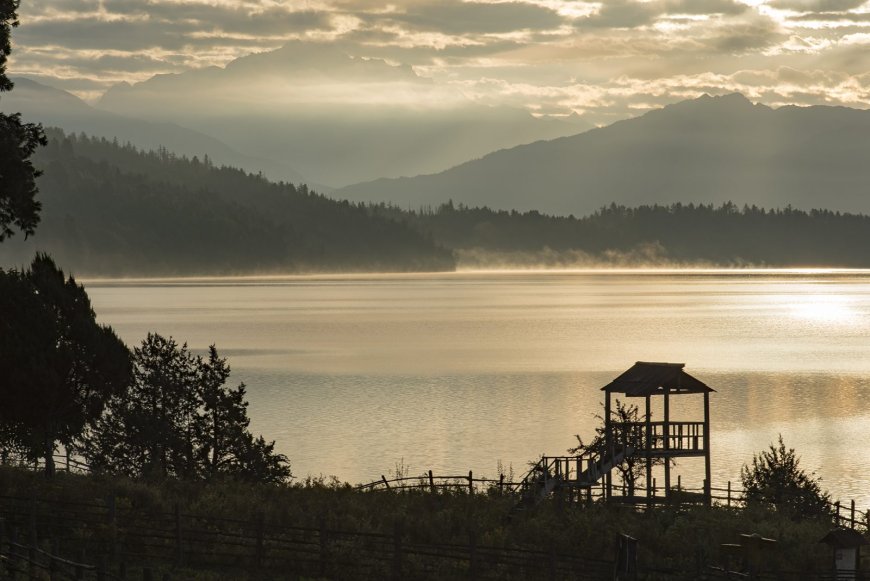
Rara Lake sits in Mugu district, in Karnali Province, inside Rara National Park. The park exists largely to protect the lake and the forested ridges around it. Planning a trip there is not hard because the place is obscure. It is hard because most of the practical information online carries no date, and fares, flights and road conditions all move. This page does two things. It lays out how to plan the trip, and it says plainly which parts of that plan we could confirm from dated sources and which we could not. The audit is the more useful half.
Planning the trip: the options, and how far each one can be trusted
Ask around for directions to Rara and you will get one confident answer, usually with no conditions attached. The reality is messier. There are three broad ways in, and each one carries a caveat worth knowing before you commit money. Travel in Karnali Province has one recurring theme: the last leg is always the fragile one.
Fly to Talcha. Talcha is the small STOL airstrip near the park boundary, in Mugu district, served historically from Nepalgunj and, at times, with connections onward from Kathmandu. The caveat: these flights are weather-dependent and have a record of being suspended or rerouted at short notice. A ticket is not a guarantee of arriving on the day you booked.
Go overland. The road route from Nepalgunj up towards the lake has changed a great deal over the past several years, as the Karnali corridor and the roads beyond it were extended and, in places, surfaced. How much of that applies on the week you travel depends on that year's monsoon, on how quickly landslides are cleared, and on whether the final stretch is drivable or only walkable. Treat road access as a seasonal variable rather than a fixed fact.
Walk in. Trekking routes approach the park from Jumla and from the road heads, and sections of the Great Himalayan Trail's western alignment pass through this country. Walking in adds days and usually requires a guide you trust, but it is the option least exposed to a single cancelled flight.
We are deliberately not giving you a numbered day-by-day ladder. The sequence changes with the season and with whichever link in the chain fails that week. What matters is that you know your fallback before you book. Planning a trip into this part of Mugu is less about distance than about dates.
When to go, written forward to spring 2027
Plainly: at the time of writing, in early October 2026, the autumn window is largely behind us. Early October can still work in a normal year, but for most readers the next realistic planning window is spring 2027, roughly March to May, and that is what this section addresses. The spring 2027 window usually means clear pre-monsoon skies, rhododendron flowering lower down and cold nights at altitude. Late spring brings haze and the first build-up of cloud. The monsoon months that follow are the least reliable for both flights and roads. Winter access is possible but constrained by cold and, at times, snow. Any of these patterns can shift, so check a current forecast rather than a season description, including this one.
Costs, and why we are not printing a fee figure
What a trip costs depends on which way you travel, how long you end up waiting out a delay, and whether you hire support. One number deserves special caution: the Rara National Park entry fee. A fee figure is only useful if it comes attached to the published schedule it was set in, and we could not retrieve a fee schedule page with a date we were willing to stand behind for the 2026 season. So we are not printing one. Ask the park office or DNPWC directly, and treat any figure you find elsewhere, including blog posts that still read as current, as unverified until its as-of date checks out.
| Cost item | What drives the amount | As-of | Source status |
|---|---|---|---|
| Flight to Talcha | Route, operator, baggage allowance, one-way or return | Not confirmed for 2026 | No operator page showed a dateable fare when checked |
| Ground transport | Season, road condition, whether you share a jeep | Not confirmed for 2026 | No dated provincial transport notice located |
| Park entry fee | Nationality category and park schedule in force | Not confirmed for 2026 | Fee schedule page not retrieved with a usable date |
| Accommodation and food | Village guesthouse versus tented camp, number of nights | Not confirmed for 2026 | No lodge page displayed a dated rate |
| Guide or porter | Days, route, number of people in the group | Not confirmed for 2026 | No agency page displayed a dated rate |
The source audit: what we checked, what held up, and where the record goes quiet
Some geography is repeated so consistently that it is easy to treat as settled. The lake's surface elevation is usually given as about 2,990 metres, and Rara National Park is generally described as Nepal's smallest national park by area. We found these repeated across many places but could not pair an official page with an independent dated authority in time for this draft, so treat both as approximate and confirm them yourself.
The superlative needs its own note. Rara is often called Nepal's largest lake. Here we downgrade that to one of Nepal's largest lakes, because the stronger claim circulates widely without the second independent citation we require before printing it.
What we could not verify for 2026
- The 2026 park entry fee schedule, and therefore any entry fee amount.
- Whether Talcha flights are running on the same frequency and with the same operators as in previous years.
- Current road condition beyond Kalikot, and whether the final approach is drivable this season.
- A second independent source for the park's area, the lake's dimensions, and the largest-lake claim.
One rule applies to everything above. No operator, airline, agency, lodge or guide is linked from this page unless that operator's own site displayed a dateable fare, schedule or rate when we looked. Nothing did, so names are given without links, or left out. That is why you will find no booking buttons here. It also means there are no affiliate links on this page and no operator paid to be mentioned; nothing here earns us a commission. If that ever changes, this paragraph changes with it.
If you have a dated source that closes one of those gaps, the gaps are the point. This page is written so it can be corrected rather than quietly aged.
What's Your Reaction?