










Sleeping Beauty Everest: On Tibet's Side, Not Nepal
"Sleeping Beauty" is Francys Arsentiev, who died on Everest's north ridge in 1998, on the Tibetan side of the mountain. Why the landmark keeps getting filed under Nepal, and why climbers name the dead.

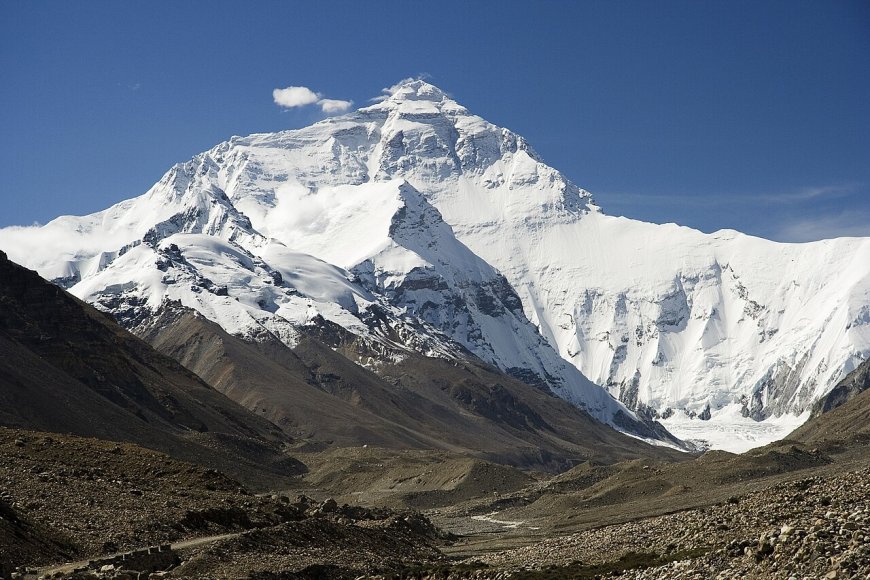
Most results for "Sleeping Beauty Everest" place the site inside Sagarmatha National Park, somewhere above Base Camp on the way to the summit. That is a geography error, and it is worth clearing up before anything else in this story makes sense.
Everest has two main commercial routes. The South Col route begins in the Khumbu, inside Sagarmatha National Park, and is the one most Nepal-based trekkers and outfitters know intimately. The north ridge route starts on the Tibetan plateau at Rongbuk and climbs through the North Col. The summit sits on the border, but the ridge and everything along it lie on the Chinese side.
The 1998 climb at the centre of this story was a north ridge climb. It ran out of Tibet, not Nepal.
Why the story keeps getting relocated
Part of the reason is tagging. Everest is filed under Nepal in most general copy, and Everest stories get rewritten from one outlet to the next, so a landmark that is genuinely in Tibet ends up described as being "on Everest in Nepal" because the country label is attached to the mountain rather than to the route. Nepali and Indian aggregator pieces amplify this, and once a version is indexed it tends to stay indexed.
That is not a small mistake to leave uncorrected. Nepal-side rules, permits, insurance requirements and rescue obligations apply to the South Col. They do not govern what happens on the north ridge. Blurring the two produces articles that are confidently wrong about who is responsible for what.
Francys and Sergei Arsentiev, May 1998
Francys Arsentiev was an American high-altitude climber. Her husband Sergei Arsentiev was born in Russia. Both were experienced, and in May 1998 they were on the north ridge during a busy season above the North Col.
The fullest published accounts of what happened over those days come from Ian Woodall and Cathy O'Dowd, who were leading a South African expedition on the north side that season. O'Dowd was on the ridge that spring, and the pair encountered Francys high on her descent and returned to the area the following year. Sergei was last reported heading back up toward his wife; he did not come down. Francys died on the mountain.
Climbers who were on the north side that month remember the sequence differently, and the differences are real. Naming who said what is more useful than stitching the versions into one smooth timeline that reads well and holds up badly.
Two landmarks, not one
"Sleeping Beauty" and "Green Boots" are separate stories that aggregators routinely merge. Green Boots is the nickname attached to a climber from a 1996 Indian expedition who died near the base of the First Step, above the north route's last camp; the identification widely circulated in the press has never been formally confirmed. Sleeping Beauty is the nickname attached to Francys Arsentiev.
There is no good reason to describe here what either site looks like, or to turn the ridge into a list of the dead. Claims that one landmark or the other has since been moved, covered or removed circulate constantly online, and some have been reported by major outlets at particular moments. None is repeated as current fact, because none could be checked against a dated, verifiable record at the time of writing in November 2026.
Why mountaineers name the dead
Expedition nicknames are a working tool before they are anything else. Teams name features so they can talk to each other in the dark and in thin air: the Football Field, the Yellow Band, the First Step. A name is a coordinate. When a death happens at a fixed point on a route, that point sometimes picks up a name too.
Then the name travels. Climbers file dispatches to expedition websites from Base Camp and the high camps, journalists quote those dispatches, and the shorthand turns up in books written years later. "Rainbow Valley" — the stretch of the north ridge where the bright down suits of dead climbers are visible from the route — appears in reporting and guidebook copy. "Green Boots" became standard Everest shorthand through the 2000s. Neither term came from a memorial committee. Both came out of the route's own vocabulary and were carried off the mountain by the people writing about it.
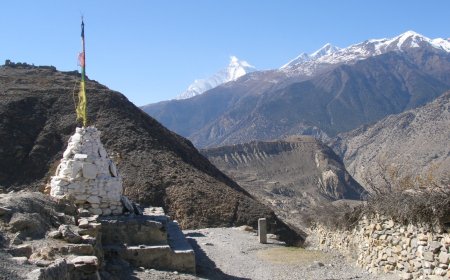
That is a different thing from Sherpa and Nepali memorial practice, and the two should not be folded into a general remark about "local beliefs." On the Nepal side, the stone cairns above Dughla, near the top of the Thukla pass, are the form most trekkers actually see: rows of flat stones raised by families and expedition mates, in a place people walk past on the way to Base Camp rather than a place reached by climbing. Different landscape, different language, different purpose.
What Nepal-side rules actually do and do not cover
Climbing permits for Nepal-side peaks, Everest included, are handled through the Department of Tourism under the Ministry of Culture, Tourism and Civil Aviation. Sagarmatha National Park falls under the Department of National Parks and Wildlife Conservation, and the Nepal Mountaineering Association has its own role in the sector. Insurance requirements and the rules around recovering climbers who die on the mountain have been revised more than once. Anyone relying on a fee or an insurance minimum should check the Department of Tourism's current published requirements, not a number repeated in an old article.
None of that governs the north ridge, which is the whole point. The 1998 route ran under Chinese jurisdiction, and the north side's own arrangements, including the clean-up programmes publicised in various seasons, are a separate question. Those rules have shifted from season to season; what the north side's administrators require now is not something an old article can tell you.
The mountain is one. The administration of it is not, and neither is the way its dead are remembered.
What's Your Reaction?