


Everest Base Camp vs Gokyo Lakes: Which Everest Region Trek Actually Fits You
A practical comparison of the Everest Base Camp trek and the Gokyo Lakes trek in Nepal's Khumbu region: what each route demands, how Gokyo Ri compares with Kala Patthar, typical day counts, the permits you actually need, the Cho La and Renjo La crossings, and how season changes the decision.

Two treks, one mountain range, and a decision that comes down to what you want your days to feel like. The Everest Base Camp trek and the Gokyo Lakes trek both begin at the same airstrip, both climb through the same Sherpa villages in the early stages, and both end with Everest somewhere in the frame. The similarity stops about there.
The short answer, before the detail
If standing under the world's most photographed mountain matters more than anything else, and you want the classic Khumbu experience with plenty of teahouses and company on the trail, go to Base Camp. If you would rather walk through a quieter valley, sleep beside a chain of glacial lakes, and finish on a viewpoint many trekkers rate above Kala Patthar, Gokyo is the better fit. If you genuinely cannot choose, the honest answer is that the two routes are connected, and a longer itinerary can take in both.
What each route actually asks of you
Everest Base Camp
The standard trail runs up the main Khumbu valley through Namche, Tengboche, Dingboche and Lobuche to Gorak Shep, then out to Base Camp itself. It is a long, gradual climb in a wide valley, and once you are high you stay high. The last stretch crosses moraine and glacier debris. Base Camp is a working settlement while expeditions are on the mountain, and a wide, empty stretch of rubble when they are not.
Most itineraries build in acclimatisation days along the way, which is part of why this route usually carries more days on trail than a Gokyo-only trek.
Gokyo Lakes
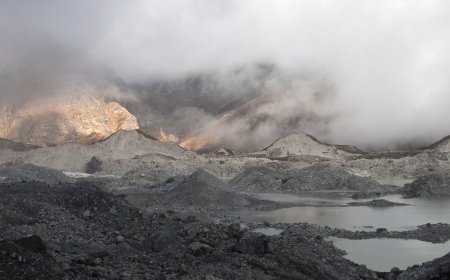
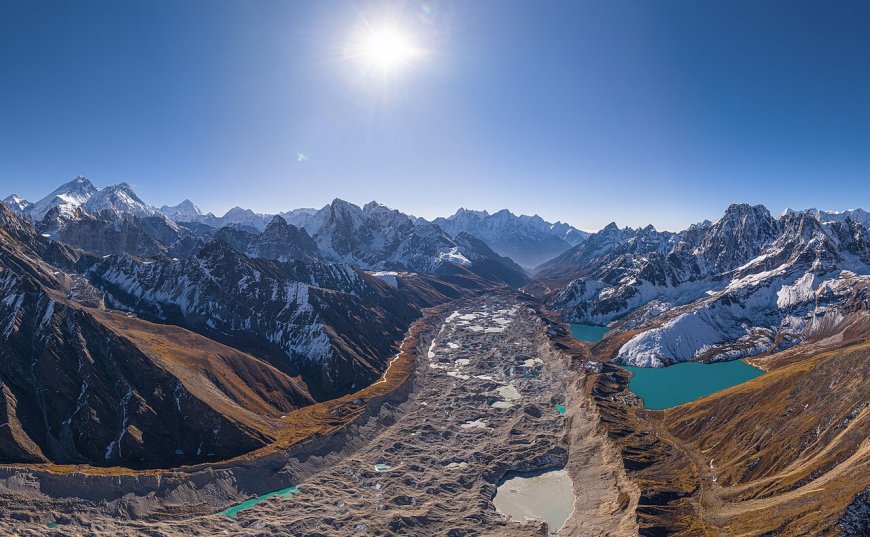
From Namche the Gokyo route turns up the Dudh Koshi instead, past Dole and Machhermo to the lakes, a series of high turquoise basins below the Ngozumpa glacier. Gokyo village sits among them, and the ritual here is a pre-dawn climb of Gokyo Ri above the village.
The valley is narrower, the teahouses are fewer, and the trail is quieter. The real trade-off is pace rather than altitude. On a Gokyo-only itinerary you tend to climb out of Namche faster than the Base Camp route does, and there are usually fewer built-in rest days, so the schedule leaves you less room to adjust if the height starts to bite. Base Camp itineraries are not gentler in absolute terms; they sleep at Lobuche at around 4,940 m and spend two nights at Gorak Shep at about 5,164 m. What they usually have is more slack in the middle.
Gokyo Ri or Kala Patthar? The viewpoint question
Both are early starts from a high village, both are steep by the final stretch, and both put you above the altitude where the air gets thin enough to slow you down. The difference is in what you see.
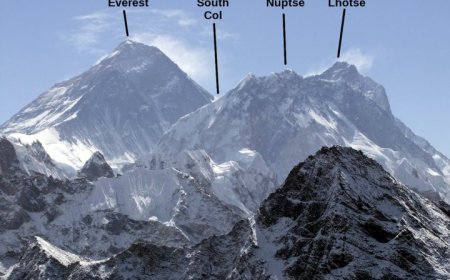
Kala Patthar is a short, blunt climb above Gorak Shep, and it looks straight across at Everest's south-west face and the Khumbu Icefall. Gokyo Ri is a longer climb and Everest sits further away, but you get the whole upper Khumbu spread out below you along with Cho Oyu and Makalu, and the lakes shining underneath. Photographers tend to prefer Gokyo Ri. People who want the mountain close enough to feel it tend to prefer Kala Patthar.
Adding Cho La, or the three passes
Cho La, at roughly 5,420 m, connects the Khumbu valley with Gokyo, which is how the two treks get joined. Renjo La (about 5,360 m) closes the loop back toward Namche, and adding Kongma La as well gives you the Three Passes Trek.
Be realistic about the crossings. They are high, often snow-covered on the far side, and only sensibly crossed in the main spring and autumn seasons, and even then only when conditions in that particular year allow it. In winter, during the monsoon, or after a heavy autumn snowfall, a pass is not a sensible extension of a trekking itinerary without proper gear and experience. Some years the route is a straightforward continuation of a Base Camp trip. Other weeks it simply is not on. Ask locally before you commit to an itinerary that depends on one.
When to go
Spring, roughly March to May, and autumn, from late September into November, are the two windows almost everyone plans around. Autumn usually brings the clearer skies. Spring is warmer but hazier, with more cloud building through the afternoon. Both are busy, and the Base Camp corridor is the busiest part of the region in either season.
Season matters more for the passes than for either valley route. Outside those two windows, Cho La and Renjo La become serious propositions rather than scenic shortcuts, and plenty of operators will not schedule them at all.
Winter, December to February, is cold and quiet, and some of the higher teahouses close. The monsoon, roughly June to early September, brings cloud, rain, disrupted Lukla flights and limited views, though the trails empty out and the villages stay open. The shoulder weeks either side of the main seasons can be excellent or a washout, and nobody can tell you which in advance.
Days on trail
Typical figures, and treat them as typical rather than fixed: a Lukla-to-Lukla Everest Base Camp itinerary runs about 12 to 14 days, and a Gokyo Lakes-only route about 10 to 12. Those ranges assume you fly in and out of Lukla and do not count the Kathmandu days at either end.
Published counts still vary between operators, because of rest days, side trips and whether the walk starts at Lukla or further down the road. If you want a number that applies to your trip, take the day-by-day tables of two or three companies you are actually considering and read them side by side. That is the only version of the figure worth planning around. Adding a pass pushes the total back up again, usually by a few days.
Permits and paperwork
Two things are needed in the Khumbu: a Sagarmatha National Park entry permit and the Khumbu Pasang Lhamu Rural Municipality fee. Depending on how you are travelling, they are usually arranged in Kathmandu through your trekking company or bought at the checkpoints on the way in.
Amounts, collection points and payment methods do change, so confirm what is currently required rather than budgeting from an old figure. As a practical habit, carry passport photos and cash in Nepali rupees.
Lukla: one logistics caveat
Flights to Lukla do not always leave from Kathmandu. At times the airlines operate from Manthali, near Ramechhap, which means a long road transfer before an early flight. Which arrangement is running depends on the season and on how carriers are allocating aircraft, so confirm the current departure airport with your airline or operator as part of booking. Weather also cancels flights, so leave slack at the end of the trip rather than flying home the day after you land back.
Altitude, honestly
This comparison is not a safety ranking, and it should not be read as one. Both routes spend long stretches at altitude, and acclimatisation is mostly a question of itinerary shape: where the schedule puts your rest days, and how big the jump in sleeping altitude is from one night to the next. A route that feels gentler on paper can still put you higher, sooner, than you expected.
Speak to a travel-medicine professional before you go and follow current official guidance. If you feel unwell at altitude, stop climbing and get assessed. Do not push on because the itinerary says so.
So which one fits you
Base Camp if this is your one big Himalayan trek and you want the classic version of it, with company, steady acclimatisation and Everest at close range from Kala Patthar.
Gokyo if crowds wear you down, if lakes and glaciers interest you more than a busy camp, and if you are happy to move a little faster with less padding in the schedule.
Both if you have the days, the legs and a willingness to accept that a high pass is only as crossable as this year's conditions allow.
Check before you commit. Permit amounts, the Lukla departure airport and pass conditions all change, so confirm each one with your operator or the relevant office rather than budgeting from an article.
What's Your Reaction?