






Ama Dablam vs Everest: Difficulty, Exposure and Cost Drivers
Ama Dablam vs Everest compared: technical difficulty, altitude risk, seasons, permits and the real cost drivers, with sources you can check yourself.

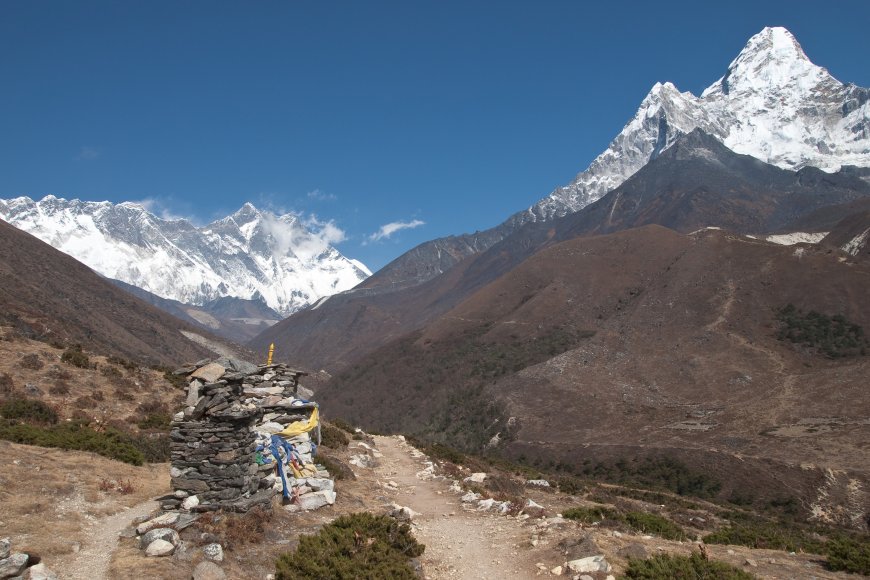
Ama Dablam and Everest share a valley, a flight into Lukla and the same permit office in Kathmandu. That is roughly where the resemblance stops. One is a steep technical climb measured in weeks, the other a two-month expedition to the highest point on earth. Neither belongs on a beginner's list, and if this would be your first Himalayan season, the honest answer is probably "not yet".
The short comparison
| Aspect | Ama Dablam | Everest |
|---|---|---|
| Height | 6,812 m (Department of Tourism peak schedule) | 8,848.86 m (Nepal Survey Department, announced 8 Dec 2020) |
| Technical demand | Rock, ice and fixed line on a steep ridge; almost no flat ground | Less technical on the standard South Col route; ladders and long cold sections |
| Main hazard | Rockfall and seracs on the approach, exposure and cornices on the ridge | Khumbu Icefall, extreme altitude, cold, exhaustion |
| Experience needed | Solid rock and ice skills, comfortable jumaring at altitude | A long high-altitude record and tolerance for weeks in thin air |
| Permit | Climbing permit through a registered agency; royalty band set by peak and season | Same framework, higher royalty band; confirm current rates with the Department of Tourism |
| Logistics | Lukla flight, trek in, high camp on the ridge, weather window | Lukla flight, longer trek, full expedition logistics and repeated rotations |
| Cost drivers | Agency support, fixed ropes, guiding ratio, insurance | Royalty, bottled oxygen, Sherpa support ratio, helicopter cover, duration |
| Insurance and evacuation | Policy must cover climbing at this altitude | Policy must cover climbing above 8,000 m, oxygen use and helicopter rescue |
On the height row: 6,812 m is the figure in the Department of Tourism's peak schedule, which is the list used for permits and royalties. Some other published sources give roughly 6,856 m for Ama Dablam. We have used the department's figure throughout rather than mixing the two in one article. Everest's 8,848.86 m comes from the survey Nepal's Survey Department carried out with Chinese counterparts, announced jointly on 8 December 2020 and reported at the time by BBC News.
Technical difficulty and exposure
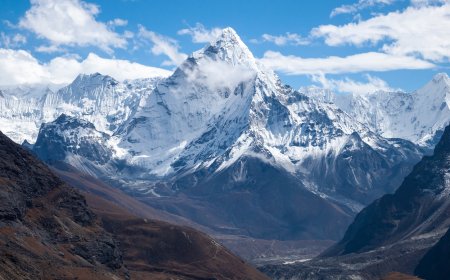
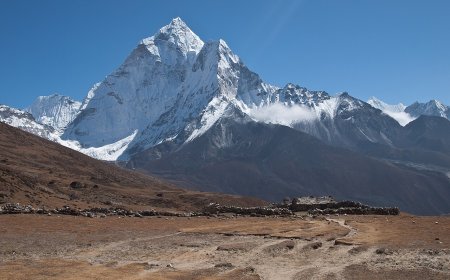
Ama Dablam is short, and it is steep. The standard southwest ridge hands you rock steps, snow and ice, fixed line on the upper sections, and almost nothing you could call a rest. The climbing is not long by Himalayan standards, but it is continuous. People underestimate the descent far more often than they underestimate the climb.
Everest's South Col route is a different test. Most of the individual moves are less technical than Ama Dablam's ridge. What makes it hard sits around those moves: the Icefall, weeks of rotation between camps, thin air above 8,000 m, the cold, and a summit window that decides whether the whole trip meant anything.
So is Ama Dablam harder than Everest? Per metre of climbing, yes. As an expedition, no. Put another way, the Ama Dablam vs Everest question was never about which mountain is harder in the abstract. It is about which kind of hard you are actually equipped for.
Altitude and objective hazard
Everest tops out at 8,848.86 m, a measurement that has not been re-surveyed since 2020. Ama Dablam stands at 6,812 m on the Department of Tourism schedule, roughly 2,000 m lower and, more importantly, below the death zone. That gap matters more than the number difference suggests. Above 8,000 m the body is deteriorating no matter how fit you are, and no amount of preparation changes the arithmetic.
The hazards are not the same hazard wearing a different hat. Everest has the Khumbu Icefall, a moving glacier that no amount of skill fully controls. Ama Dablam has rockfall on the approach and serious exposure on the ridge above Camp 2. Accidents happen on both, and the records worth reading are kept by the Department of Tourism and the Himalayan Database, rather than by whichever blog ranks peaks as deadliest. Ranking tells you nothing useful about whether you should be there.
When people climb them
Everest is a spring mountain in practice. Most summit attempts fall in May, in the window before the monsoon arrives, with a smaller autumn season that very few teams bother with. Ama Dablam is busier in autumn, typically October into November, and also sees spring teams in April and May. Both depend on the jet stream behaving, and both start with a Lukla flight that weather can cancel for days.
Experience and logistics
Ask your agency directly what it expects, and ask the Department of Tourism what the rules currently require. Do not assume one peak automatically qualifies you for the other, and do not trust a prerequisite you read on a forum. Agency expectations and official requirements are not always the same thing, and both are worth confirming in writing before you pay a deposit.
Logistics differ mostly in length. Ama Dablam is a trek in, a high camp, a weather window, out. Everest adds weeks of acclimatisation rotations, a much larger team at base camp, and a summit push whose timing depends on a forecast nobody fully controls.
Permits and what drives the cost
Both are regulated mountaineering objectives. Permits come from the Department of Tourism under Nepal's mountaineering framework, applied for through a registered agency. Royalty depends on the peak and the season, and Everest sits in a higher band than Ama Dablam.
We have not printed rupee figures for royalty or for a full expedition, and that is deliberate. The department's own tables are the only numbers that stay correct, and an out-of-date rate reproduced confidently is worse for you than no rate at all. Check the current royalty table on the day you read this, along with the other requirements: liaison officer arrangements, rubbish deposits, and insurance and evacuation cover that satisfies both the department and your policy wording.
What drives expedition cost is easy enough to understand without a price list. Royalty is one line. On Everest, bottled oxygen, masks and regulators, and the Sherpa support ratio are bigger ones, because supplementary oxygen is standard on the south side. On Ama Dablam it is far less common, though some guided teams do offer it, so ask rather than assume either way.
Then add helicopter evacuation cover, insurance that genuinely covers climbing, guiding ratios, base camp food and logistics, and flights. Duration is the quiet multiplier on both peaks. Every extra week is staff wages, food, fuel and camp fees, whether or not the weather cooperates.
Ama Dablam vs Everest: which suits whom
Ama Dablam suits climbers with real rock and ice skills who want a technical, comparatively short objective and are comfortable on fixed line above 6,000 m. Everest suits people with a long high-altitude record, a large budget and the patience for a two-month schedule.
Neither suits someone whose experience is trekking peaks and enthusiasm. That is not gatekeeping. It is the difference between a hard trip and a trip where the margin for error has quietly disappeared.
Before you commit
Verify current permits, agency requirements, liaison officer arrangements and insurance cover with the Department of Tourism before you pay anything. Nothing here is medical, safety or legal advice, and the rules described were checked as of November 2026. Read the department's own pages rather than trusting any article, this one included.
Sources
- Everest height: Nepal Survey Department survey, joint Nepal-China announcement 8 December 2020; BBC News report as secondary source (retrieved 21 November 2026).
- Ama Dablam height: Department of Tourism peak schedule, 6,812 m.
- Royalty, liaison and insurance requirements: Department of Tourism current tables, checked 21 November 2026.
- Accident records: Department of Tourism and the Himalayan Database.
What's Your Reaction?