







Everest Expedition, Day by Day: A South Col Route Itinerary from Kathmandu to the Summit
A range-based, day-by-day look at the South Col route on Everest's Nepal side: the standard sequence, rotation logic, permit paperwork, and the typical mid-May to early June summit window, written as spring 2027 planning guidance.

This guide sticks to one route and one country: the South Col route on the Nepal side of Everest, from Kathmandu to the summit and back down again.
It is planning material, written at the end of 2026 with spring 2027 in mind. The spring 2026 season on the Nepal side has already finished, so there is nothing here about live conditions or current operations. Treat every line as a starting point for a conversation with an expedition operator, not as a booking confirmation.
The route, in order
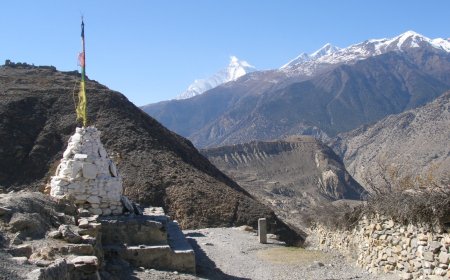
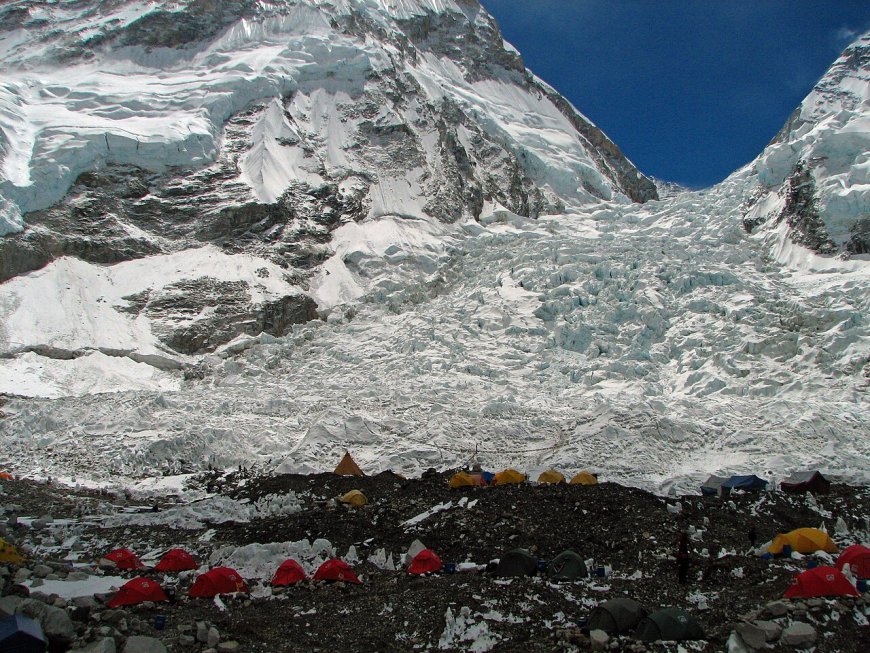
Almost every commercial Nepal-side expedition follows the same spine. Fly or take a helicopter from Kathmandu to Lukla, walk up the Khumbu valley through Phakding and Namche Bazaar, take rest days as the altitude climbs, then continue through Tengboche and Pheriche to Everest Base Camp. A puja ceremony at Base Camp marks the start of the climbing proper.
From there the line goes through the Khumbu Icefall to Camp 1, up the Western Cwm to Camp 2, onto the Lhotse face for Camp 3, across to Camp 4 on the South Col, and out along the southeast ridge to the summit. The descent reverses it.
That sequence is general practice. The timings wrapped around it are not fixed, and anyone who tells you otherwise is usually selling something.
A day-by-day itinerary, as a range model
The counts below are an illustrative model, built from how Nepal-side expeditions generally sequence their time. They are not one operator's published schedule, and no single itinerary is reproduced here. Real expeditions move faster or slower depending on weather, health, rope-fixing progress and the group in front of them.
Kathmandu. Two to four days for arrival, briefings, gear checks and the flight queue. Lukla flights get delayed, so build slack in early.
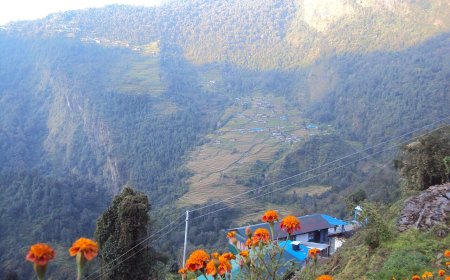
The walk in. Roughly eight to ten days from Lukla to Base Camp, including rest days at Namche and somewhere above Pheriche.
Base Camp first phase. A few days of Puja, icefall practice and sorting loads before the first trip up the mountain.
Rotations. Two or three trips, each around a week with rest in between, spread across three to four weeks.
Summit push. Usually four to seven days from Base Camp to summit and back to Base Camp, once a window opens.
Down and out. Two to four days back to Lukla, then the flight to Kathmandu.
Total it up and most people spend six to nine weeks away from home. The buffer is the part that matters. Weather and cancelled flights eat days faster than anything else on the trip.
Acclimatisation rotations
Rotations are the climb-high-sleep-low part of the schedule: go up, spend a night or two, come back down so the body catches up. A first rotation commonly tops out at Camp 1 or Camp 2. The later one usually reaches Camp 3 and may touch Camp 4 before descending, so the South Col is not a surprise on summit night.
How many rotations, and how high each one goes, is decided by the operator's guides and by how you are actually performing. Nobody can promise you a fixed number of them in advance.
Permits and paperwork
Everest climbing permits for the Nepal side are issued through the Department of Tourism. The royalty on the permit, the liaison officer requirement, the Sagarmatha National Park entry permit, the local municipal fee and the SPCC garbage deposit all sit somewhere in that chain, and most are handled by your operator on your behalf.
No royalty figure is quoted here on purpose. The Department of Tourism sets it, rates get revised, and the spring 2027 rate was not confirmed at the time of writing. Check the department's own fee schedule, or ask your operator to show you the current one, before any money changes hands.
The summit window
On the Nepal side the window is commonly described as mid-May to early June, when the jet stream shifts off the mountain and the pre-monsoon pattern settles into something climbers can work with. That describes a typical pattern rather than a scheduled event. Expeditions sit at Base Camp and wait for it, sometimes for days, and a team that reaches the South Col early can still be turned around by wind.
Deliberately out of scope
Cost is not broken down here. Quotes move between operators and between years, and every line in one (oxygen, insurance, flights to Lukla or Manthali, liaison officer costs, refundable deposits) has to be re-confirmed with the operator at the time you book rather than trusted from a blog. Kit lists, operator comparisons, Lhotse, the north side from Tibet, and the trek to Base Camp as a standalone trip are separate subjects too.
Safety, and what this page is not
General information only, not medical advice. Acclimatisation schedules vary from person to person and no plan survives contact with a bad night at altitude. This article does not substitute for a qualified expedition operator or a doctor, and it is not a promise that anyone reaches the summit.
What's Your Reaction?