

Everest Viewpoints in Nepal: What You Can Actually See, and Why Mid-November Is the Tail End of Your Window
A reader's guide to where Everest is genuinely identifiable in Nepal, from Kala Patthar and Gokyo Ri to the hill stations where the skyline is spectacular but the summit is hard to pick out. Includes honest season framing: mid-November is the tail end of the post-monsoon clear-view window, with March to May 2027 the next opportunity and pre-monsoon haze already a factor.

Every October and November, someone stands on a ridge in the middle hills, points at a white summit on the horizon and says, that's Everest. Often it isn't. Sometimes it is. The trouble is that most of us can't tell the difference with the naked eye, and a lot of the signage and lodge names along the way don't help.
So this is a straightforward guide to the places where the Everest massif is genuinely identifiable, the places where you get a magnificent Himalayan panorama but probably not Everest itself, and what the light is doing right now in mid-November.
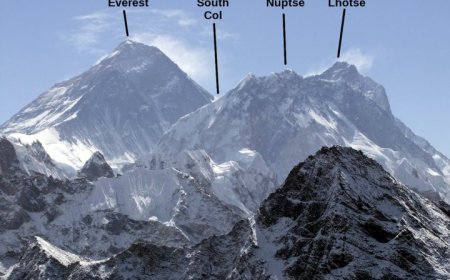
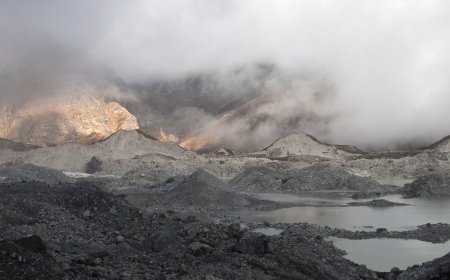
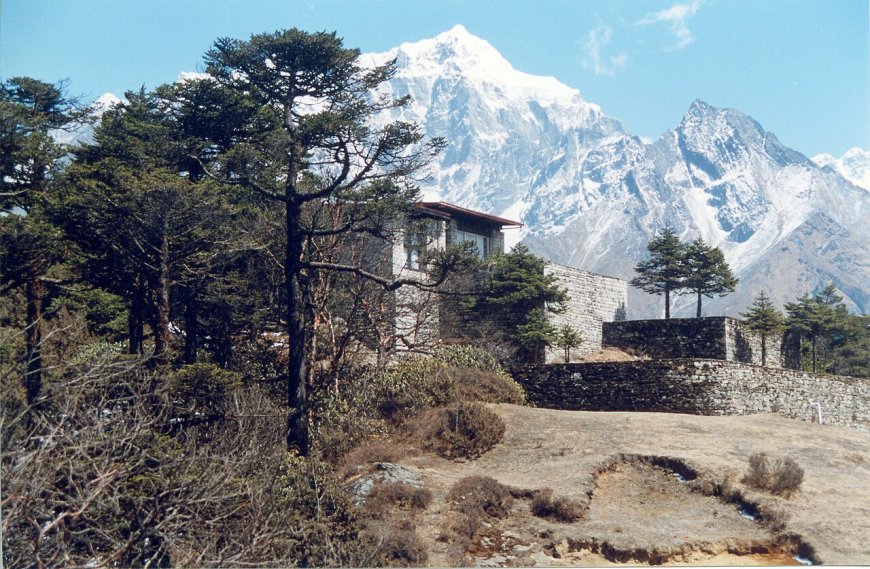
Lead image: the Everest massif at first light from the Kala Patthar ridge, Nuptse's dark west face in the foreground and the Khumbu glacier below.
Seeing Everest and identifying Everest are two different things
This is the rule that should govern every claim you read about a viewpoint, including on this page. A wide Himalayan panorama is not evidence that Everest is identifiable in it. From many low and mid-altitude viewpoints, Everest is either hidden behind Nuptse, lost among neighbouring peaks of similar height, or simply too far away to pick out without a labelled reference.
Where I describe a place below as an Everest viewpoint, it's one where the massif has been documented repeatedly by people standing there. Where I'm more cautious, that caution is the point, not hedging.
Close range: the Khumbu viewpoints that actually deliver
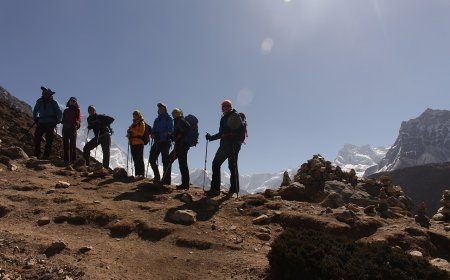
Inside Sagarmatha National Park the question mostly solves itself. From Kala Patthar, above Gorak Shep, you look straight at Everest's south and west faces, with the Khumbu glacier and the icefall wrapping around below. It is the closest thing to a definitive view most trekkers will get, and it comes with a cold, early start.
Tengboche is a gentler option. From the ridge by the monastery, Everest and Ama Dablam sit above the treeline in the same frame, which makes it easy to tell which is which once someone points them out. Further up the valley, the Syangboche area near the Everest View Hotel offers a similar angle with less walking and more tea.
The Gokyo side, and why it's a different view
From Gokyo Ri you get Everest, Lhotse, Makalu and Cho Oyu in one sweep, seen from the west rather than the south. It's a broader, more open view than Kala Patthar and arguably better for understanding how the peaks relate to each other. The trade-off is the climb, and the fact that Everest's summit cone reads less dramatically from this side.
Hill stations: a great skyline, a hard identification
Nagarkot, Dhulikhel, Daman, Bandipur and similar spots are marketed heavily as Everest viewpoints. On a clear morning you will see snow peaks, and the skyline is genuinely impressive. Picking out Everest from that distance, without a labelled panorama or a guide, is much harder than the brochures suggest. Go for the sunrise over the Himalaya. Treat Everest identification as a bonus, not the plan.
The same caution applies to Sarangkot and the Annapurna side of the country. That's a beautiful range and it is not the Everest range.
Mountain flights and the shortcut question
Scenic flights out of Kathmandu run when the weather allows, and a seat on the right side of the aircraft usually gives the best angle on the high peaks. Prices vary by operator, so check current rates directly rather than trusting a figure from a blog. Flights are also the most weather-dependent option here: a morning that looks clear in the valley can be closed in over the mountains.
Mid-November: the tail end, not the middle
Mid-November sits at the tail end of the post-monsoon clear-view window, and that window is closing. Haze thickens through the day, daylight is short, and ridge mornings are cold. Clear views are possible, not promised, and the chance narrows over the coming weeks rather than holding steady.
If you're planning ahead, the next prime window is March to May 2027, with its own caveat built in: pre-monsoon haze and dust build as that season runs. Early March and late May are not the same proposition, and the difference matters more at hill-station distances than it does at Kala Patthar.
What people mistake for Everest
From the Kathmandu valley rim, the peak most often pointed out as Everest is usually something else entirely, and on the Gokyo and Khumbu approaches Nuptse's dark wall hides the summit from plenty of angles. If a view matters to you, carry a labelled panorama or ask someone who has stood there before. Don't rely on memory, and don't rely on a lodge name.
Corrections: two labels that are not viewpoints
These two come up often enough that they belong in their own block, clearly marked as corrections rather than as recommendations.
Correction one: a hotel, lodge or restaurant with "Everest view" in its name is not a viewpoint. The name is marketing. Ask what is visible from the terrace, and at what time of day.
Correction two: a wide Himalayan panorama is not proof of an Everest view. This applies to photos, viewing towers and signboards alike. If a spot can't be backed by a documented first-hand check or a reliable labelled reference, don't treat it as an Everest viewpoint.
Practical notes for the next few weeks
Mornings are your friend. Haze builds through the day, so the earlier you're in position the better, and that means headtorch starts at altitude. Ridge mornings are properly cold now, colder than the sunshine at midday suggests. Daylight is short enough that a late start can cost you the view entirely, and acclimatisation matters more than any schedule you set at home.
One last thing. A clear view of Everest is a piece of luck, not a deliverable. Plenty of people spend a week in the Khumbu and see the summit properly once. Plan for the walk, and treat the view as the reward it is.
What's Your Reaction?