






Best Time to Climb Mount Everest: Seasons, Summit Windows and What Decides Your Dates
Spring (broadly April to late May) is the supported commercial climbing season on Everest, with a summit window that usually falls in May and is decided by the jet stream's seasonal shift and the timing of the monsoon. Autumn sees rare ascents outside the commercial season, while winter and the monsoon are not climbing seasons. The article explains the weather mechanics, why acclimatisation locks your dates weeks before your summit attempt, and which planning factors you actually control.

Ask anyone who has stood on the summit of Everest when to go and you'll get a version of the same answer: May. Ask them when they actually left Base Camp, and the answers scatter across weeks. Those are two different questions, and the gap between them is where most planning goes wrong.
This is written as of mid-November 2026. The spring 2026 season is over. The next climbing window ahead is spring 2027, and nobody can tell you today what that season will look like. What follows is the mechanics that hold regardless of the year, plus the parts that depend on decisions you make long before you fly to Lukla.
Here for the Base Camp trek rather than the climb? The seasons work differently for you, and a trek timing guide is the page you want instead of this one.
The short answer
Spring, broadly April into late May. That's the supported commercial season on the Nepali side: permits being issued, operators running expeditions, the route through the Khumbu Icefall fixed by the Icefall Doctors, lodges and teahouses along the approach open and staffed. Almost every commercially guided ascent happens inside that window.
Autumn is the second window in a technical sense, and it is a fine season for trekking. It is not a supported commercial climbing season, and the ascents that do happen then are rare and run by small teams doing their own thing.
Two windows a year, only one of them built for you
Everest has two periods when the weather occasionally allows a summit push: pre-monsoon spring and post-monsoon autumn. What separates them isn't the mountain, it's the infrastructure around it. In spring there are fixed ropes, established camps, other teams, shared forecasts and a steady flow of supplies up the valley. In autumn that scaffolding mostly isn't there. A strong independent team can climb without it. A guided client cannot.
What the weather is actually doing
The summit sits in the jet stream for much of the year. In winter the stream is parked overhead and the winds are ferocious. Through spring it migrates north, and the days when the wind eases for long enough to climb become more frequent. It's a gradual shift, not a switch, which is why nobody can name the good days a year ahead of time.
Then there's the monsoon. Nepal's monsoon typically arrives in June and withdraws around late September, bringing cloud, snowfall and unsettled weather to the high mountain. Its onset is tracked each year by the Department of Hydrology and Meteorology, and the exact date moves around. Once it settles in, the climbing season is finished.
Autumn, after the monsoon withdraws, gives you colder temperatures, shorter stable periods and none of the commercial support described above. Winter is a different sport altogether: extreme cold, high winds and very few people on the mountain.
The summit window, and why it's crowded
Within spring, the best conditions usually land in May, often in the second half of the month, though the mountain has handed out good days in late April too. The 'window' is measured in days, sometimes hours. Teams watch forecasts from Base Camp, waiting for a forecast that looks survivable for the four or five days a summit push takes from Camp 4 and back.
Here's the paradox. Everyone is watching the same forecasts and sitting at the same Base Camp, and when a good window appears, everyone moves. Weeks of waiting collapse into a short burst of traffic on the same ropes on the same day. That is not a failure of scheduling by any single operator. It's what a narrow weather window looks like when a lot of people need it.
Why your calendar is locked weeks before your summit date
You cannot arrive in May and go straight up. Acclimatisation dictates the shape of the expedition. The usual pattern is a series of rotations: carry and sleep at Camp 1, return to Base Camp, go higher to Camp 2, return, touch Camp 3, return. Then you wait at Base Camp for the window, and only then make the push.
All of that means the date you start walking from Lukla is effectively the date you've chosen for your summit attempt, minus several weeks. Pick a late start and you may run out of season while still acclimatising. Pick too early and you sit at Base Camp for a long time paying for the privilege. This is the single most underrated decision in Everest planning, and it's made by your operator's schedule as much as by you.
Autumn on Everest
Autumn ascents do happen. They're rare, they're outside the commercial season, and they're undertaken by teams with their own logistics. If you read about one, note the year it happened. It says something about what's possible, not about what's available to a guided climber booking a package.
The seasons side by side
| Season | Commercial climbing | What to expect |
|---|---|---|
| Spring (April to late May) | Yes, the main season | Fixed route, camps in place, shared forecasting, the best odds of a settled window |
| Autumn (post-monsoon) | No | Cold, shorter stable periods, occasional ascents by small independent teams |
| Winter | No | Jet stream overhead, extreme cold, very rare ascents |
| Monsoon (June to September) | No | Snow, cloud, avalanche hazard; not a climbing season |
What actually decides your dates
Four things, roughly in this order of stubbornness:
- The operator's schedule. Guided expeditions have fixed start dates. You fit around them, not the other way round.
- Permits and government process. Climbing permits are issued through Nepal's Department of Tourism, and the arrangements around liaison and paperwork have shifted over the years. Check the department's current notices for your season rather than relying on what someone did five years ago.
- Your own record. Most operators want prior experience on 6,000m and 7,000m peaks before they'll take you on Everest. Building that takes seasons, not weekends.
- The mountain itself. Which nobody controls. Some springs give a generous window, some give almost nothing.
How the year actually unfolds
If you're aiming at spring 2027, the shape looks like this. Booking happens well ahead, often the previous year. Training and previous expeditions fill the months before. You fly to Lukla in late March or early April, trek up the valley to Base Camp over about a week and a half, and spend April on rotations. Late April and May are for waiting and then going. By early June, the mountain is emptying out.
That's nine-ish weeks of commitment at minimum, before you count travel and the recovery after. Anyone selling you a shorter Everest trip is selling you something else.
Who should pick a different objective
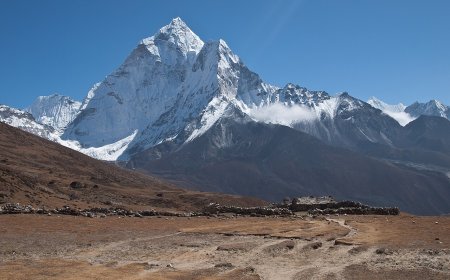
If you have no high-altitude experience, if eight or nine weeks away is impossible, if you're choosing Everest because it's the famous one rather than because it's the right next step, spring on Everest is the wrong plan. There are 6,000m and 7,000m peaks in Nepal that teach you more per rupee and per week. Imja Tse, Lobuche East, Ama Dablam, Mera Peak, Baruntse. Go and do those first. Everest will still be there.
The bottom line
The best time to climb Everest is spring, and more specifically the stretch of it that the weather decides for you somewhere between late April and the end of May. Everything you can control, you control months earlier: which operator, which start date, how much altitude experience you turn up with. Everything else, you wait for at Base Camp like everybody else.
What's Your Reaction?