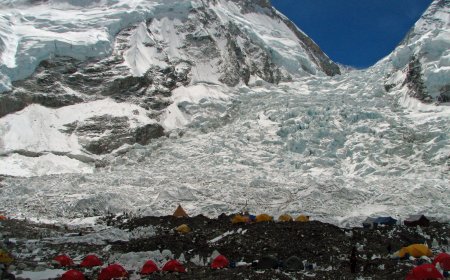







Lhotse vs Everest: Which Mountain Is Harder, and for Whom?
Everest is the harder climb for most people, and Lhotse is no soft alternative. A comparison that takes a clear position, and explains who each mountain is actually harder for.

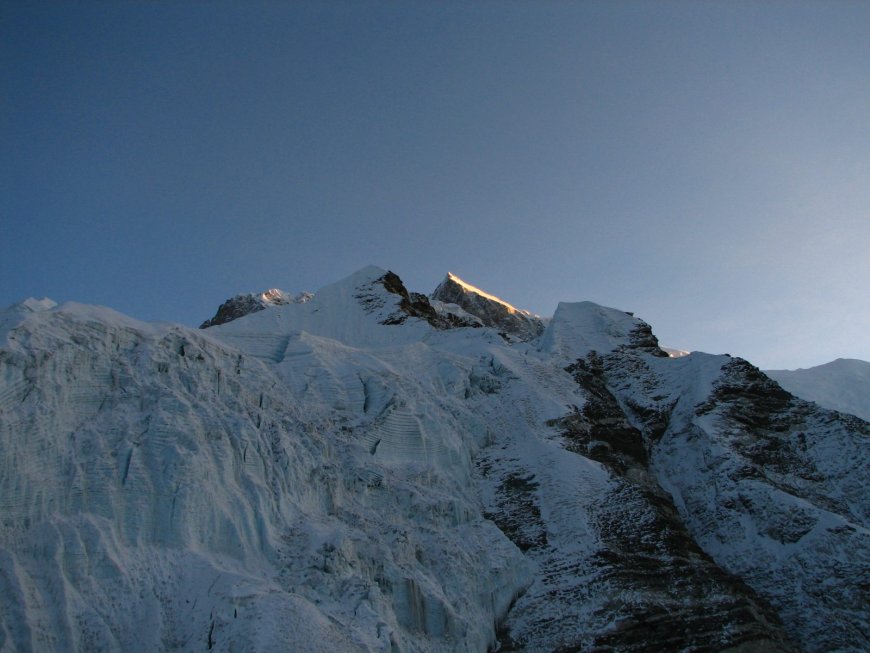
Every spring, someone in a Kathmandu guesthouse or a Base Camp mess tent asks the same question. Everest feels crowded, expensive, more circus than mountain. So why not just climb Lhotse instead?
Fair question. The honest answer is that Lhotse is nobody's easy twin. Which of the two is harder depends heavily on who is asking, and on what they mean by harder.
What we actually mean by "harder"
Harder is not one thing. A mountain can be harder physically, harder technically, harder logistically, or harder in the head. Most armchair comparisons only score the first two and quietly ignore the rest.
For Everest and Lhotse, two measures do most of the work. The first is summit altitude. Everest's top sits several hundred metres above Lhotse's, and above a certain height the body stops recovering and starts declining. The second is commitment: weeks away, days spent waiting on weather, and the number of decisions you have to make yourself when you are tired.
The case that Everest is the harder climb
For most people, Everest is the harder objective, and the reason is not complicated. It is higher.
That extra height is not a rounding error. It means more hours in air thin enough that your body is losing ground, a longer summit day, and a longer descent back towards thicker air while you are already spent. Altitude is the one variable up here you cannot train around indefinitely. Everest asks for more of it.
Then there is the weight of expectation. Families, employers, sponsors, and your own ego all know exactly what Everest is. That pressure is real, and it pushes people into decisions at altitude they would never make at sea level.
Lhotse is not the shortcut
This is where the Lhotse climb difficulty conversation usually goes off the rails. People hear "less crowded" and quietly translate it as "easier". Those two words are not related.
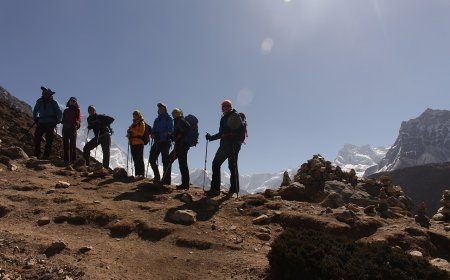
Lhotse is a full-length high-altitude expedition. Same massif, same region, same weeks of acclimatisation, same dependence on a weather window that nobody controls. What you save in altitude you tend to spend in self-reliance. Fewer people around you means fewer eyes on conditions and less margin for a bad call, not a gentler mountain.
For the guided client, Everest wins on difficulty
Say you are fit, you have trained, you have joined a commercial team, and someone else is making most of the big calls. In that setup Everest is the harder mountain and it is not particularly close. Higher summit, more exposure to the worst air, more hours between you and safety, and a much heavier mental grind when things slow down.
On Lhotse, a guided client gets a shorter summit day and less time in the thin zone. That is a genuine difference. It does not make the mountain suitable for beginners. Both peaks assume you are already comfortable at serious altitude and that you have spent uncomfortable nights up high and still functioned the next morning.
For the self-sufficient climber, the gap narrows
Someone who has already climbed at this level, moved without a large team, and made their own calls in bad weather will find the two much closer together. Everest is still the higher summit and still the harder objective, but a chunk of what made it harder for the guided client no longer applies.
For that climber, Lhotse can be the more satisfying trip. A big mountain, a quieter one, and a serious day out without the media circus attached to the other side of the massif.
So which is harder, Lhotse or Everest?
Everest. If that is the only sentence you take from this piece, take that one. It holds for the overwhelming majority of people who will ever have a realistic shot at either peak.
Lhotse is not a substitute for Everest and it should never be sold to yourself as one. It is a comparable expedition with a lower summit and far fewer people on it. Choose it because you want that mountain, not because the other one frightened you. If the only reason you are looking at Lhotse is that Everest feels too big, that is a fairly strong signal you are not ready for either yet.
What to weigh before you commit
Work through the boring questions first. How many weeks can you genuinely take away from work? What is the highest you have slept, and how did your body behave the following day? How do you handle a plan collapsing because the wind will not drop?
Be honest about money too, without letting it decide. Both trips are expensive, and the cheaper of the two is not the easier of the two. Paying more has never bought anybody a summit.
One last thing, written in November 2026 with the next spring season in mind: neither mountain is going anywhere. If this year's version of you is not ready, a later one might be. Whichever you pick, the mountain gets the final vote.
What's Your Reaction?