






Mahottari District Guide (2026): Jaleshwar, Bardibas and the Mithila Border Plain
A practical 2026 guide to Mahottari district in Nepal's Madhesh Province: Jaleshwar's Shiva temple and Pokhari tank, Bardibas highway junction, Janakpur–Jaleshwar road travel, Mithila culture, mango season, monsoon realities, and corrected Chhath date (14 Nov 2026). Includes a to-confirm checklist with current official sources.

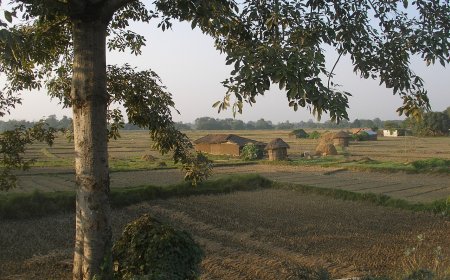
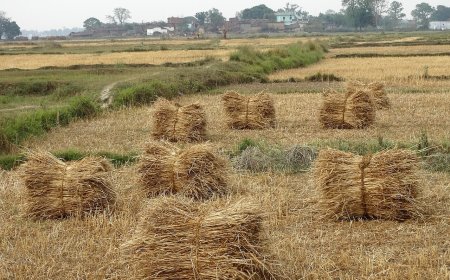
This Mahottari district guide covers the flat, heavily farmed plain of Madhesh Province that runs down to the Indian border. Nobody comes here for mountains. What Mahottari offers is a working stretch of Mithila: a temple town at Jaleshwar, a highway junction at Bardibas, brick kilns and mango orchards, and a landscape that shifts from dry and drivable in October to green and awkward once the monsoon settles in.
Where Mahottari sits
The district occupies the Terai plain in Nepal's south-east. Its southern edge is the international border with Bihar, and Mithila's cultural geography carries across that line without much ceremony. For the exact list of Nepali districts touching Mahottari on the west, north and east, the authority is the Survey Department's district boundary map under the Ministry of Land Management, Cooperatives and Poverty Alleviation. Boundaries get adjusted and resurveyed, so check the current map rather than trusting a remembered list.
Mahottari belongs to Madhesh Province; the province's official name and spelling are set by the provincial government itself. Its municipalities and rural municipalities, including how many there are and what each is called, are listed by the Ministry of Federal Affairs and General Administration (MoFAGA). If you need that count for anything official, use the MoFAGA listing.
Jaleshwar, the district headquarters
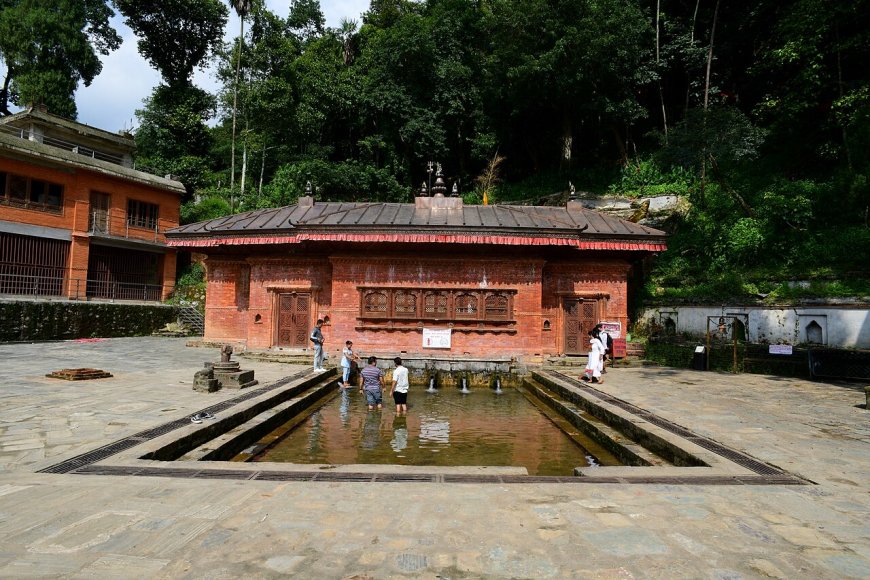
Jaleshwar is where the district administration sits and the town most travellers pass through. Its landmark is the Jaleshwar Nath (Mahadev) temple and the Jaleshwar Pokhari tank beside it, a Shiva site that anchors the town's identity and much of its festival calendar. The temple's stone shikhara rises above a courtyard that fills with pilgrims on Mondays and during Shivaratri; the tank's stepped ghats are used for ritual bathing and evening aarti. Around the complex, the Jaleshwar bazaar runs along a single spine of shops selling puja materials, plastic wares, and stacked mango crates in season. The air smells of incense, fried snacks, and dust.
Opening hours, photography rules and festival access change; ask at the temple office or district administration the day before you go. A two-minute call beats arriving to a locked gate.
Bardibas and the East-West Highway
Bardibas sits in the district's north-east, strung along the East-West Highway corridor. It is also the eastern end of the B. P. Koirala Highway that climbs towards Sindhuli and on to Kathmandu, making it the junction most road travellers actually use. The Bardibas bazaar is a ribbon of tea stalls, tyre-repair shops, and lodges catering to truck crews and bus passengers. In October the highway is dry and fast; in July the same stretch can turn into a single-lane crawl through standing water and potholes.
Road names and numbers get revised when sections are widened or upgraded. If you are navigating by route number rather than by town, confirm the current designations of both highways against the Department of Roads' own record before you set out.
Janakpur to Jaleshwar by road
Janakpur, the Mithila hub in neighbouring Dhanusha district, is the nearest city of real size. The run from Janakpur to Jaleshwar is about 20 kilometres on a two-lane blacktop that cuts through rice paddies and mango groves. Local buses and shared jeeps leave from Janakpur's main bus park every 20–30 minutes through the day; the ride takes 35–45 minutes depending on traffic and road condition. In monsoon, low-lying sections near the river crossings can flood, adding an hour or more. Fares shift with fuel prices; ask at the bus park on the day.
How to reach Mahottari
Almost everyone arrives by road. From Kathmandu the usual approach is south-east down the B. P. Koirala Highway to Bardibas, then onward into the district. From the south, the crossing most used for Mahottari is at Bhitthamore; opening hours and documentation requirements are set by the immigration authorities on both sides and should be confirmed before you travel.
On rail: a cross-border line runs from Jaynagar in Bihar through Janakpur, with an extension towards Bardibas. Service patterns on that line have changed more than once, including whether the Bardibas section carries passengers at all. For current status, contact Nepal Railway Company (the passenger operator) or the Department of Railways under the Ministry of Physical Infrastructure and Transport. Janakpur Airport is the nearest airport for the district; schedules shift, so confirm with the airline or the Civil Aviation Authority of Nepal.
When to go, and what the weather does
October to March is the comfortable window, with cool mornings and dry roads. April onwards gets hot and sticky, and the monsoon runs roughly June to September. In October the plain is green from the retreating rains, roads are firm, and mango trees are in leaf but not yet fruiting. By April the heat climbs past 38°C, and the air hangs heavy before the first storms. July brings daily downpours; low fields turn to sheet water, village lanes become mud tracks, and the highway at Bardibas often slows to a crawl.
Mahottari's monsoon exposure is real but should be read from the documents: the district's own disaster preparedness and response plan, and national disaster risk material held by the National Disaster Risk Reduction and Management Authority. Check the current version before assuming any particular road will be open in July.
On festivals: Chhath falls on the sixth day after Diwali. In 2026 Diwali is on 8 November, so Chhath lands on 14 November 2026 (Kartik 29, 2083). Exact dates come from the official Nepal calendar published by the Nepal Calendar Determination Committee (Nepal Academy). Maha Shivaratri, the big annual observance at Jaleshwar Nath, has already passed for 2026 and returns in late winter.
What people eat and speak
Maithili is the everyday language; you'll hear it in the bazaar, on buses, and at the temple. The food is Mithila staples: steamed rice with fish curry (machh), lentils, and a range of pickles — mango (aam ko achar) in summer, lime and chilli year-round. Street stalls fry sel roti and sell dahi-chiura (curd with beaten rice) for breakfast. In mango season (April–June), the markets pile high with varieties like Maldah, Bombai, and Kalkatiya; a crate bought roadside costs a fraction of city prices.
Pre-trip checklist (12 October 2026)
- Bus and jeep fare, plus journey time from Kathmandu, Janakpur or Bhitthamore: ask the operator or the bus park on the day.
- Jaleshwar Nath temple hours and any festival access rules: temple office or district administration.
- Bhitthamore crossing hours and document requirements: Nepal's Department of Immigration and the Indian border authorities.
- Jaynagar–Janakpur–Bardibas rail status, including whether the Bardibas section carries passengers: Nepal Railway Company or Department of Railways.
- Flights to and from Janakpur: the airline or CAAN.
- Monsoon road conditions: the district disaster plan and NDMA material, plus whatever locals tell you that morning.
- Population or household figures, if you need them at all: the National Statistics Office 2021 district profile, still the most recent national census as of October 2026.
Mahottari rewards a traveller who arrives with realistic expectations and a phone number or two rather than a fixed itinerary. Confirm the small things the day before, and the plain itself is straightforward.
What's Your Reaction?