






What Actually Drives the Cost of a Cho Oyu Expedition
Cho Oyu quotes vary enormously because operators bundle different things. Here is how an eight-thousand-metre expedition budget is actually built, what to ask before comparing prices, and what a suspiciously cheap quote may be leaving out.

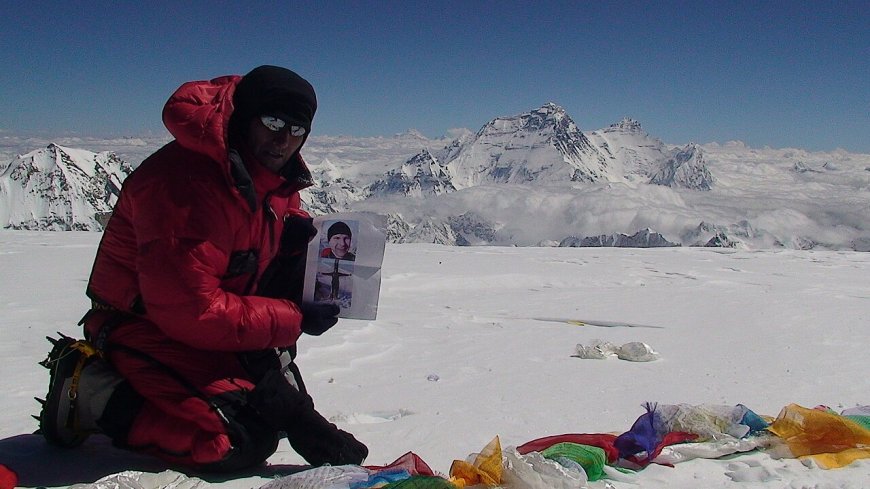
Ask what a Cho Oyu expedition costs and you will get a range so wide it stops being useful. One quote comes back as a single lump sum. Another arrives as a spreadsheet with oxygen bottles, yak loads and helicopter hours listed separately. Both are for the same eight-thousand-metre peak. That is the first thing to understand about pricing on a mountain like this: there is no market rate to look up, because what is being sold is not one product.
Operators quote on request rather than publish a price list, and the number they send reflects a string of choices made long before you emailed them, from team size to how many camps get stocked with bottled gas. So a single figure tells you almost nothing on its own. The useful question is not "how much does Cho Oyu cost" but "what is inside this quote, and what has been quietly left outside it".
Some costs barely move. Others swing wildly
A few parts of a Nepal-side expedition are close to unavoidable. The government permit and royalty sit behind every legitimate quote, paid by the operator on your behalf; because it is charged per head, it is one of the few lines that does not shrink when the team does. Rescue and medical cover belongs in the same bucket. Evacuation from remote high ground is difficult and costly, and no serious operator treats it as optional.
Then there is everything that scales. The ratio of guides and climbing Sherpas to clients is one of the biggest levers in the whole budget: a bigger team per climber means more wages, more food, more oxygen carried and staged, more rope fixed. It also means more margin for error, which is exactly what you are buying.
Oxygen is where quotes diverge fastest. Bottles, masks and regulators, plus the Sherpas who haul and cache them above base camp, scale directly with how much bottled gas the plan assumes. Ask two operators how much oxygen their Cho Oyu plan includes and you may find you are not comparing the same expedition at all.
Freight is another quiet driver. Food, fuel and equipment for the upper camps has to be weighed, packed and moved, and moving things costs money. Yaks and porters are charged by load and by animal, so the volume of stuff heading up the valley matters as much as its value. Base camp itself is a small village that has to be fed, powered and staffed, and an advanced base camp adds a second layer of the same problem at lower oxygen and higher cost.
The variables you control, and one you don't
Getting to the mountain is a line item people forget. A road transfer and a helicopter transfer do different things to your schedule and to your quote. Service level matters too: private tent, shared tent, more staff, fewer staff, a longer acclimatisation schedule or a compressed one. Season and team size interact here, since a bigger group can spread certain fixed costs but pushes up others.
The one you cannot control is weather. A summit window that never opens is a season lost, and operators price that risk into what they charge whether they say so or not. Ask what happens if the window fails. A clear answer on refunds, rollover to another season, or a written credit is worth more than a discount.
What a competent quote should itemise
You should be able to see, in writing: the peak permit and royalty, guide and climbing-Sherpa staffing, oxygen supply with mask and regulator, high-altitude food and fuel, base camp and advanced base camp logistics, yak and porter transport, transfers to the trailhead, insurance and evacuation expectations, and whatever waste-management or bond arrangements apply. If several of those categories are missing, the total is not cheaper. It is just shorter.
Questions worth sending before you compare numbers
How many climbing Sherpas per client? How much oxygen, and how much of it is carried for you? Who fixes the rope? What is excluded — tips, staff bonuses, insurance, hotels, domestic flights, helicopter? What has the operator actually guided on this peak, and in which seasons? What is the deposit and cancellation policy? A good outfitter answers these without flinching. A vague one sends a number and a payment link.
Red flags in unusually cheap quotes
A quote far below the others is not a bargain until you find out what was removed to get there. Common omissions: no allowance for climbing-Sherpa bonuses and tips, thin oxygen supply, an unstated expectation that you pay separately for helicopter evacuation, and a staffing ratio that quietly assumes everyone summits on the first try. Treat "guaranteed summit" language as a warning, not a promise, and be wary of pressure to pay a deposit before you have the itemisation in writing.
None of this hands you a figure. It hands you something more durable: the ability to read a Cho Oyu quote and see the expedition behind it, rather than a number that happens to be smaller than the one in the next email.
What's Your Reaction?