






Best Time to Visit Makalu Base Camp: Choosing Between the Post-Monsoon and Pre-Monsoon Windows
Makalu Base Camp has two workable trekking windows, not one best date. How post-monsoon and pre-monsoon compare on views, cold, haze and pace, and why monsoon and winter don't work.

There's a clean answer to when to trek to Makalu Base Camp, and it isn't a date. It's a choice. The trekking year in this corner of far-eastern Nepal offers two windows that genuinely work: the stretch after the monsoon clears, and the stretch before it comes back. Everything outside those windows is either wet, snowbound, or a gamble on whether you can even reach the trailhead.
What follows is not a calendar. It's a straight comparison of what each window asks of you, because on a route this remote the timing decision shapes the whole trip.
What makes Makalu different
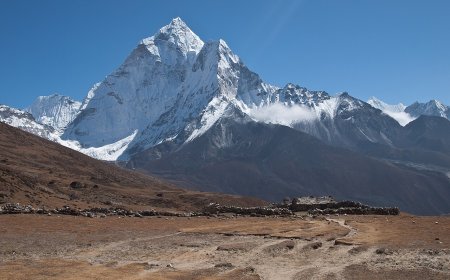
Makalu is one of the great peaks of the eastern Himalaya, and the national park wrapped around it protects the upper Barun valley and a sweep of country that runs from dense forest up to bare alpine ground. Makalu Barun National Park is not a place you pass through quickly, and that's the point.
The trail is also nothing like the lodge-to-lodge routes in the Annapurna or Khumbu regions. Settlements thin out fast, the walking is long and exposed in places, and the comfort blanket of frequent lodges simply isn't there. That remoteness is exactly why people choose Makalu Barun National Park trekking over the busier classics. It's also why a bad-weather day costs you more here than it would elsewhere. You can't always solve a problem by pushing on to the next village.
The post-monsoon window
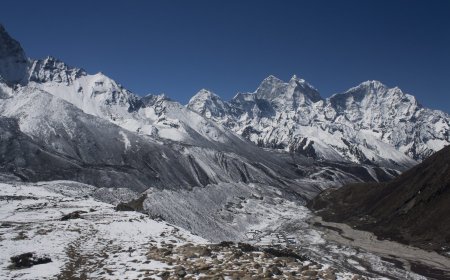
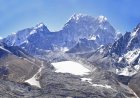
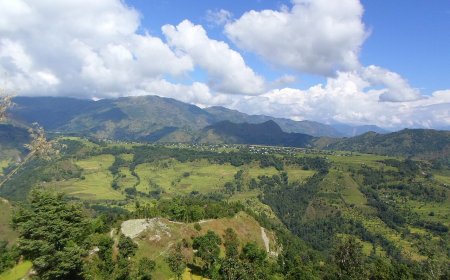
Once the monsoon withdraws, Nepal's autumn trekking season begins, and Makalu gets the benefit of it. The air clears, the ground dries out, and the forest belt is still green from the rain. Views tend to be at their sharpest in this window, which matters a lot on a trek whose entire payoff is standing below Makalu and looking up.
The trade-off sits at the edges. Go too early and you're walking trails the monsoon hasn't finished with: mud, damaged sections, streams still running high. Go too late and the cold settles in at altitude while the daylight gets shorter. The middle of the window is the comfortable part, and everyone knows it, which is also when you'll see the most people.
The pre-monsoon window
Spring trekking in Nepal has a different feel to it. Warmer days, softer light, and the forest below the alpine zone coming into flower. A lot of trekkers find this the more enjoyable walking, and the mornings are less punishing than late autumn at the same height.
What you give up is clarity. Pre-monsoon haze builds as the season advances, and this is also when the first weather systems start drifting in ahead of the main monsoon. Snow can still be sitting on the high passes early in the window. So the same rule applies in reverse: the edges are riskier than the middle.
Why monsoon and winter stay off the list
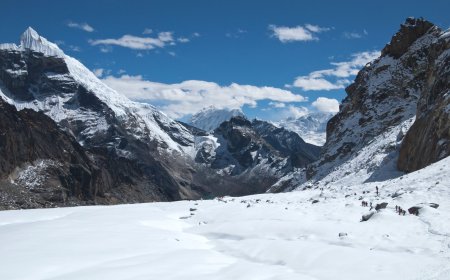
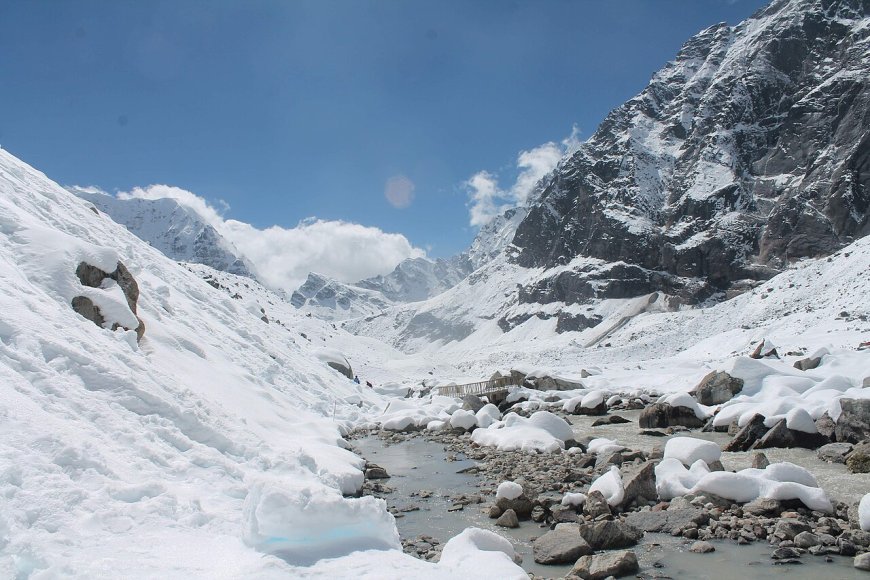
Monsoon conditions make the route genuinely hard going. Saturated slopes, washed-out sections, cloud that hides the mountain you came for, and trailhead access that can be cut for days at a time. Winter brings the opposite problem, with snow on the high ground and cold that turns a demanding trek into a serious one. Neither season is impossible for the very experienced, but neither is what most people mean when they ask about the Makalu Base Camp trek season.
That's the whole case for the shoulders: one side of the year is shaped by rain, the other by snow and access, and the windows in between are where the route is at its most workable. Before you commit, check current trail and access conditions with the park office or a licensed trekking agency. Conditions change from season to season, and a trip that made sense last time may not line up this time.
Altitude, pace, and the part people underestimate
The approach to Base Camp is a sustained gain in altitude over consecutive days rather than one big climb. A staged ascent with rest days built in is standard practice on high Himalayan treks, and here it counts for more than raw fitness. Very fit people in a hurry tend to have a worse time than moderately fit people who are content to walk short days and stop early. Fitness gets you up the hill. Pace and rest keep you there.
So which one?
Ask yourself which trade you'd rather make.
- Crisper views and colder nights, on a route where both edges of the season can bite.
- Warmer walking and a flowering forest, with haze that may soften the big view.
If seeing Makalu clearly is the reason for the trip, lean post-monsoon. If you care more about the walking itself and can live with some haze, lean pre-monsoon. If your dates are flexible, aim for the middle of whichever window you pick instead of cutting it fine at the start or the end.
For the wider picture of how Nepal's trekking seasons work across the country, our guide to trekking seasons in Nepal is a better starting point than this page. Makalu is one entry in that picture, and a demanding one. Treat the choice of window as the first real decision of the trek, because on this route, it is.
What's Your Reaction?