





Ama Dablam Expedition Cost: Why Two Quotes Differ, and What Yours Must List
An Ama Dablam quote is a list of decisions, not a single number. How to read the line items, from royalty and waste deposit to insurance and helicopter legs, and what a credible operator puts in writing.

Two operators quote you for the same mountain and the numbers land a long way apart. One is not necessarily cheating you, and the other is not necessarily padding the bill. What separates them is usually not the mountain. It is how much of the trip each quote has quietly decided not to mention.
That is the useful way to read an Ama Dablam expedition cost: as a list of decisions somebody made on your behalf, most of which stay invisible until something goes sideways above base camp.
What a technical Khumbu peak adds that a trek does not
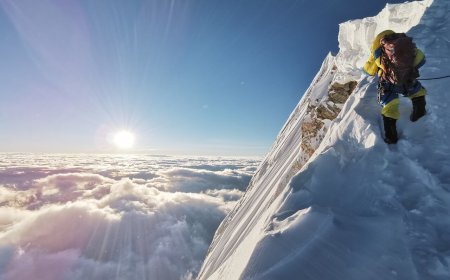
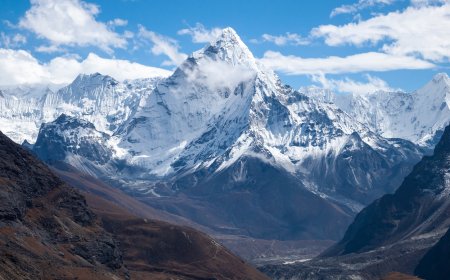
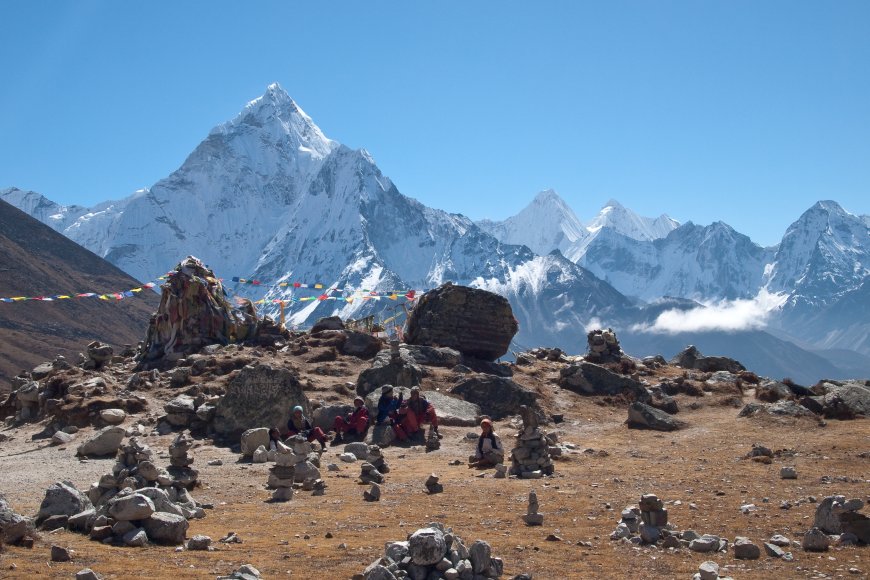
Ama Dablam sits in the Khumbu and gets climbed in two windows, pre-monsoon spring and post-monsoon autumn. It asks for rope work, fixed lines above base camp and a level of staffing a lodge trek never touches. So a quote that looks like a trek price with a permit bolted on top is a quote that has probably left something out.
The lines a technical climb brings in: the peak royalty and permit handling, the waste deposit held against what you carry down, climbing staff and the rope-fixing contribution, high-altitude cooking and base camp support, insurance actually written for climbing, and helicopter logistics at one or both ends. Weather days sit on top of everything.
Walking the line items
Royalty and permit
Ask which authority issues the permit for Ama Dablam, and ask to see the rate for the season being quoted. Royalty is set by season and the schedule is a published document, so nobody needs to paraphrase it for you. A quote that folds the permit into one lump called "government fees", with no breakdown, has handed you a number you cannot check.
The waste deposit
It is refundable, and the refund has a condition attached. Ask who holds the deposit, what exactly triggers the return, and whether it is charged on top of the package price or already inside it. Two quotes can look identical and differ entirely on whether that money is coming back to you.
Staff, and who is fixing the rope
After the permit, the climbing-Sherpa ratio is the biggest lever on price. Ask how many climbers each climbing Sherpa covers, whether the fixing team's work is included or billed as a shared cost, and who is cooking above base camp. A lean ratio is not automatically a bad trip. A lean ratio the quote never discloses is a different story.
Insurance
Trek cover and climbing cover are different products, and the difference matters most on a peak with fixed lines. Check that the policy names helicopter evacuation, sets its altitude ceiling above the summit, and does not exclude climbing or roped travel in small print. Ask for the full policy wording rather than a one-page summary. Rescue cover that stops below the top is cover you pay for and cannot use.
Helicopter legs
Most itineraries involve a flight at one end or both. Confirm what is included, what happens to that cost if weather pins you on the mountain an extra day, and whether the flight out is part of the package or assumed. Ask the operator for the helicopter company's own tariff rather than the agency's rounding of it.
The weather margin
Every credible quote holds days in reserve. Ask how many, and ask what happens to your money if the reserve runs out before the summit window opens. "We will manage it" is not an answer.
What a quote should state in writing
- Which authority issues the permit, and the royalty rate for the season quoted
- The waste deposit: amount, who holds it, what triggers the refund
- Climbing-Sherpa ratio, and who is fixing the rope
- Insurer name, policy wording, altitude limit, exclusions
- Helicopter legs included, and who pays for unscheduled extra days
- Reserve days, and the cancellation and postponement terms
- What is explicitly excluded, in plain words
Signals that a cheap quote is not cheap
Watch for the permit listed as an extra, no insurer named anywhere, a ratio left vague, a schedule with no reserve days, or a price that only holds if you pay the whole thing immediately. None of this makes the cheapest quote wrong. It makes it the one you read most carefully, because the gap between the headline number and the real trip gets settled later, on the mountain, where you have no leverage at all.
Timing, if you are aiming at spring 2027
Autumn's window has closed for this year, which puts you in the pre-season booking stretch for next spring. That is when operators finalise staff, permits and helicopter slots, and when the more experienced climbing Sherpas get committed to teams. Waiting rarely lowers the price. It narrows who is still available to take you.
The comparison worth making is not Ama Dablam against the commercial giants. It is Ama Dablam against the trekking peaks you have already stood on. This is the step where the bill stops being about beds and permits and starts being about people, rope and the days you are paying to keep in reserve.
What's Your Reaction?