








Mount Manaslu Climbing Guide: How Hard the 8,163 m Expedition Actually Is
A practical, honest look at Manaslu (8,163 m): route camps, objective hazards, timing, 2027 planning, and how its difficulty compares with Everest, Cho Oyu, and Dhaulagiri — without unsupported summit-rate or fee figures.

Mount Manaslu Climbing Guide: How Hard the 8,163 m Expedition Actually Is
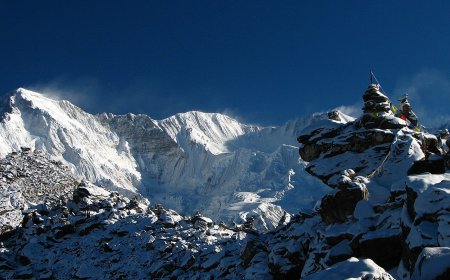
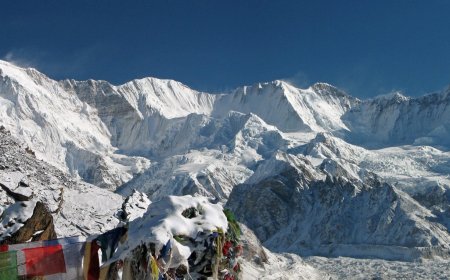
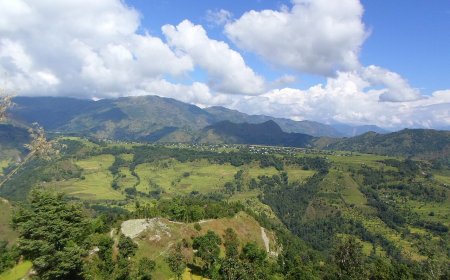
At 8,163 metres, Manaslu stands as the world's eighth-highest peak. It rises in the Mansiri Himal of central Nepal, inside Gorkha district, and draws climbers seeking an eight-thousander that feels more remote than Everest or Cho Oyu. The mountain's reputation for difficulty rests on three factors: sustained altitude, objective hazard on the standard route, and a compressed weather window that punishes hesitation.
What drives Manaslu difficulty
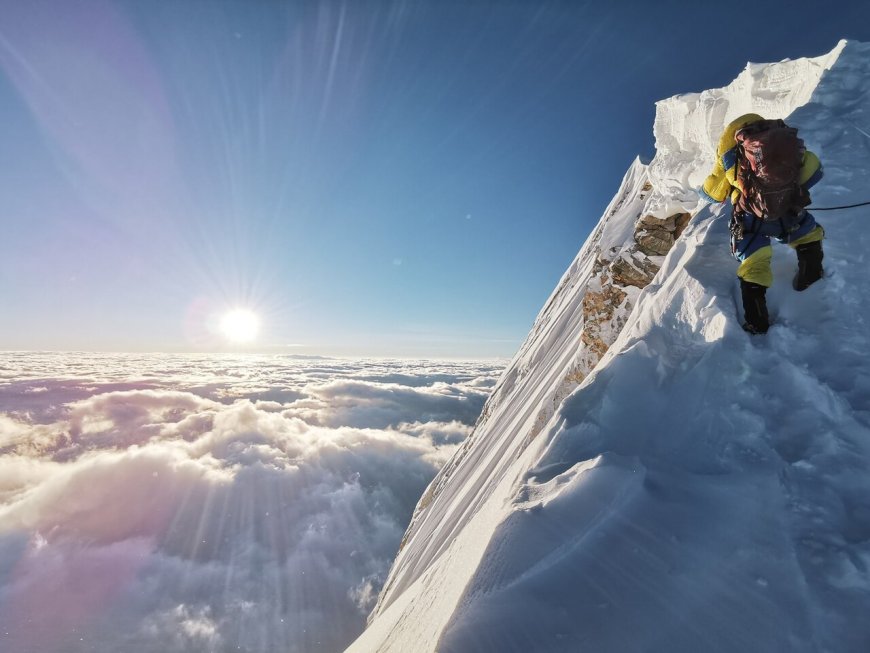
The normal route follows the northeast face from a base camp near 4,800 metres. Four camps mark the way: Camp 1 around 5,700 m on the lower glacier, Camp 2 near 6,400 m below the steep ice cliffs, Camp 3 at roughly 6,800 m on the plateau, and Camp 4 close to 7,400 m before the summit pyramid. The climb from Camp 3 to Camp 4 crosses a long, exposed slope where seracs and wind slab create persistent avalanche danger. Above Camp 4, the final ridge demands steady front-pointing on hard ice at extreme altitude — technically straightforward but physiologically brutal.
Altitude is the primary limiter. Most climbers spend weeks rotating through camps to acclimatise, yet the move from Camp 3 to Camp 4 still gains roughly 600 metres, and summit day from Camp 4 adds about 750 metres to the top. That summit day is shorter in vertical gain than the Camp 3 to Camp 4 move, but it happens higher, colder, and with descent still ahead. Oxygen systems mitigate altitude illness risk but add weight and failure points. Cold snaps in late autumn can bring extreme wind chill, increasing frostbite risk on exposed ridges.
Route hazards that shape the climb
The northeast face holds a frequently hazardous icefall between Camp 1 and Camp 2 where collapsing seracs have turned back expeditions in multiple seasons, notably during heavy snowfall years. The traverse to Camp 3 crosses a slope that avalanches after heavy snowfall or rapid warming. Fixed ropes maintained by collective Sherpa rope-fixing teams reduce exposure time, but they do not eliminate the hazard — they only shorten the window a climber spends in the danger zone.
No official summit-to-fatality ratio is published for Manaslu, and partial figures from different eras cannot be combined into a reliable statistic. What accident reports indicate is that reported serious incidents have repeatedly involved the Camp 2 to Camp 3 traverse and the summit ridge during descent, when fatigue and deteriorating weather coincide.
Timing the attempt
The pre-monsoon window (April–May) offers more stable high pressure but deeper snow on the upper face. Post-monsoon (late September–October) typically delivers colder, drier conditions with a sharper weather window. By late November the 2026 autumn season is effectively over, so teams now looking at the mountain are building plans for 2027. Early logistics — operator selection, permit applications, and Sherpa team confirmation — need to start through the 2026-27 winter to secure the best support.
Manaslu expedition planning for 2027
Teams targeting a 2027 attempt should plan for a five- to six-week itinerary including acclimatisation rotations, weather delays, and descent. Sherpa support ratios of 1:1 or 1:2 (Sherpa to climber) are common on commercial expeditions and directly affect safety margins on the upper mountain. Oxygen allocation, spare regulator availability, and a clear turnaround-time protocol are non-negotiable items in any credible plan. Climbing permits are issued through a government-registered Nepali agency rather than directly to individuals, so the agency handles the royalty payment and paperwork. Ask for the royalty line item separately from service costs before committing a deposit.
How hard is Manaslu compared with other 8,000ers
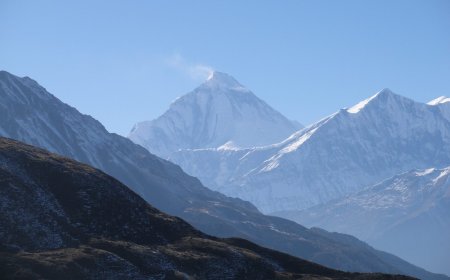
Manaslu sits in the middle of the difficulty spectrum for eight-thousanders. Everest (8,848.86 m) presents greater altitude and logistical complexity but benefits from heavier fixed-line infrastructure and more frequent weather windows. Cho Oyu (8,188 m) is generally considered the most accessible eight-thousander — its northwest ridge is shorter, less exposed to serac fall, and often climbable in a single push from Camp 2. Dhaulagiri (8,167 m) is steeper, more avalanche-prone, and sees far fewer commercial expeditions, making rescue resources scarcer. Manaslu's challenge lies in the sustained commitment: a long glacier approach, a camps chain that requires multiple rotations, and a summit day that combines roughly 750 m of ascent with persistent objective hazard and a long descent. Climbers who have done Cho Oyu often find Manaslu a noticeable step up; those coming from Everest sometimes rate the technical sections harder but the overall logistics simpler.
Frequently asked questions
How much does a Manaslu expedition cost? There is no fixed market rate. Full-service expeditions cost more because of Sherpa support, oxygen, and base-camp logistics; budget quotes often reduce rope-fixing or weather support. Ask for an itemised quote that separates government royalties, Sherpa and staff costs, oxygen, and helicopter evacuation cover.
Do I need previous 7,000 m experience? Many reputable operators look for at least one 7,000 m peak (e.g., Himlung, Baruntse) or comparable high-altitude experience on Denali or Aconcagua. Operators set their own screening standards, so ask directly what they require for a Manaslu client.
What is the success rate? No reliable public aggregate exists, and operator figures use different definitions, so treat any single percentage with caution.
Can I climb without supplemental oxygen? A small number of elite alpinists have done so. For commercial clients, oxygen is standard above Camp 3; attempting without it dramatically increases frostbite and altitude illness risk and is discouraged by most major operators.
Manaslu remains a serious eight-thousander that rewards preparation and punishes shortcuts. Its difficulty is not in a single crux move but in the accumulation of altitude, cold, and objective hazard over a prolonged commitment. Climbers who respect that accumulation — and who build flexibility into their schedule — give themselves the best chance of a safe summit and return. For more on Nepal's high peaks, see our guides to Annapurna I expedition logistics and Dhaulagiri base camp trek details.
What's Your Reaction?