







Bala Chaturdashi: The Tithi, the Pashupatinath Vigil and the Satbij Offering
Bala Chaturdashi explained through its lunar tithi in Mangsir, the overnight lamp vigil at Pashupatinath and Shleshmantak, and the satbij offering families scatter in memory of the dead.

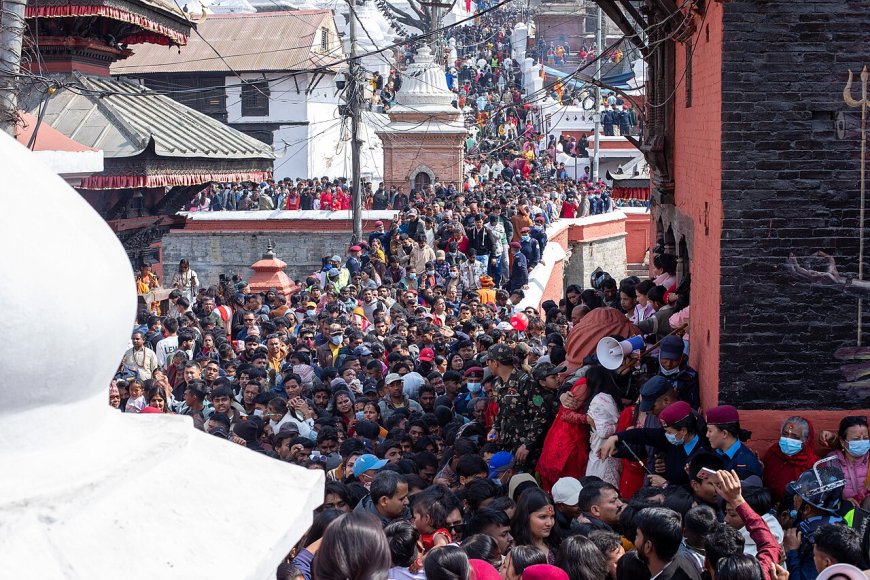
Every year, on a lunar date that drifts across the late-autumn calendar, families across Nepal gather at Pashupatinath with a small packet of mixed grain in their hands. They are there to remember someone who has died. Bala Chaturdashi is that simple and that layered at once, and most English-language write-ups get only half of it.
The tithi, and why the date keeps moving
A tithi is a lunar day, and a lunar month holds thirty of them, split into two fortnights. The waxing half is Shukla Paksha, the waning half is Krishna Paksha. Bala Chaturdashi falls on Chaturdashi, the fourteenth tithi, of the waning fortnight of Mangsir. That single sentence explains more about the observance than any countdown does.
The complication is arithmetic. A lunar month runs a little under twenty-nine and a half days, while the solar year is longer, so the tithi slides against the Gregorian calendar rather than pinning to a fixed date. Mangsir itself shifts with the solar reckoning, which is why the observance lands roughly somewhere in November or December and not on the same square of the calendar twice running.
Panchangs do not always agree on the exact moment Chaturdashi opens and closes, and those disagreements are genuine and technical. We print no boundary times here, and no best-hour advice built on top of them. The mechanism is the point: a lunar date inside a solar-shaped year, drifting a little every cycle.
The overnight vigil at Pashupatinath
The observance is commonly described as two movements. The first is a vigil through the night, kept with oil lamps in the Pashupati area and in the Shleshmantak forest on the far bank of the Bagmati. Small flames, tended rather than left to burn out. The second comes at first light, when the satbij is scattered at shrines and along the forest path.
What people carry through the night is not complicated. A lamp in someone's name, a few hours of wakefulness, a walk through trees that are still dark. The quiet is doing most of the work.
Satbij: what the name refers to and why the mix varies
The word is usually glossed as sat, seven, and bij, seed, which invites the assumption of a fixed recipe of seven ingredients. Practice does not bear that out. Satbij is commonly described as sesame (til) and rice alongside other grains and pulses, varying by household and by what is available at the time.
There is no single canonical list. Regional practice differs, family practice differs, and the packet a grandmother assembles in one district will not match the one sold in a Kathmandu shop. That is not a corruption of an original formula. It is what an agricultural offering looks like after centuries of being made by people who farm different things in different soils.
The legend, and what the ritual is actually for
More than one account of Bala circulates, and the accessible retellings do not agree on the details, including who he was and what exactly went wrong. Rather than pick a version and present it as the authoritative one, it is more honest to name the shared core. The story is told that this is an act of remembrance, with merit offered on behalf of the dead.
That framing matters because it keeps the observance where it belongs, in practice rather than doctrine. Families make the offering in the name of deceased relatives. They describe it as remembering, as something done for a parent or a grandparent or a brother, not as a transaction with an outcome attached. The article describes what people do and how they describe it. It does not prescribe who must perform the ritual, what it earns them, or what follows if they stay home.
How it is described locally, and how it arrives in English
Ask in the Kathmandu Valley and you tend to hear about a person. My father. My mother's sister. The lamp someone kept lit. Ask in English-language coverage and the same observance arrives as a festival of seeds, a night vigil, a heritage spectacle with a crowd estimate attached.
Something gets lost in that flattening. The tithi drops out, so the date reads as arbitrary. The variable mix drops out, so satbij becomes a product with a spec sheet. The remembrance drops out, so what remains is atmosphere.
None of that is hard to correct. Put the lunar fortnight back into the first paragraph. Say that the satbij measures out differently in different homes. Keep the person in the sentence. The rest of it, the lamps and the dark forest and the grain scattered at daybreak, follows naturally.
What's Your Reaction?