






Subsidised Fertiliser in Nepal 2026: Eligibility Questions to Ask
Subsidised fertiliser eligibility in Nepal is decided by seasonal administrative notices, not by fixed rules you can look up once. This guide gives you ten questions to ask in order, from the date on the notice to the land unit used, so a trip to the palika or Agriculture Knowledge Centre is not wasted.

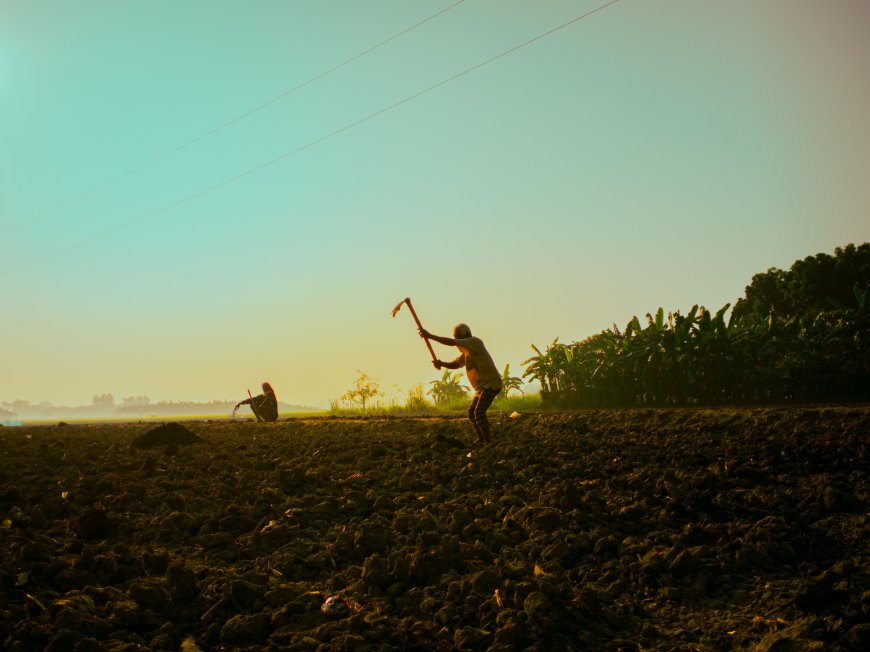
Search for the rules on Nepal fertiliser subsidy 2026 and you will find plenty of headlines and very little you can check yourself. Eligibility is decided by administrative notices, and those notices get revised between seasons, so a rule your neighbour relied on two years ago may not be the rule in the file today. This page does not print a price, a collection point or a document checklist, because we could not verify any of those against a current, dated notice. What it gives you is a sequence of questions to ask, in order, before you spend a day travelling to an office and come back with nothing. If you already have the current notice in front of you, that document beats this article every time.
One thing to pin down first: as of November 2026, the notice that matters for most farmers is normally the winter-season one, covering wheat and the other winter crops sown from late Kartik into Mangsir. Sowing dates shift a little by district and by altitude, so treat that as the starting point for your question rather than the answer.
Where the notice usually lives
Start at your palika's agriculture section, where seasonal notices tend to be pinned to the notice board or kept in a register the section staff can open. Above that, the district-level Agriculture Knowledge Centre is the office most farmers end up at, and the ministry's own website sometimes carries the circular. Cooperatives that supply seed and fertiliser often have a copy too.
Office names and reporting lines have been reorganised more than once since federalism, so confirm the current name of the office in your district before you set out rather than trusting a name you heard three years ago. Our Nepal agriculture section tracks the wider policy picture if you want context before the trip.
The questions, in order
1. Is there a written notice for this season, and what date does it carry?
Ask to see the notice itself, not a summary of it. Note the date and any reference number on it. A verbal "yes, you qualify" from a helpful official is not something you can point to later if your name is missing from a list.
2. Which office issued that notice, and is it the same office that decides my case?
Get the exact name of the issuing office and the district it sits in. If two offices give you different answers, ask both to point at the same document. One of them is working from something older.
3. How does the notice define a farmer for this purpose?
Owner-cultivator, tenant, sharecropper, landless labourer with a kitchen garden. The definition at the top of a notice quietly decides everything below it, so read it twice.
4. What proof of land does it accept, and whose name has to be on that proof?
Lots of families farm land registered to a parent, a grandparent or a brother. Ask what happens in that situation instead of assuming the answer. Also ask what is accepted for land without formal papers, if anything is.
5. What unit is the land figure in, and how does it convert?
Terai notices usually speak in bigha and kattha, hill districts in ropani and aana, and policy documents in hectares. A ceiling written as two hectares is roughly three bigha, or a little under 40 ropani. Write the figure and the unit down exactly as the notice gives them, then convert before you compare with your own land papers. A misheard unit is one of the easiest ways to be told you are ineligible.
6. Is the list drawn up per household or per plot?
Ask how the list is actually compiled, not how eligibility is described in principle. If names are entered household by household from household registration, two brothers farming separate plots but sharing one registration may end up as a single entry. Better to find that out before both of you queue up.
7. Do I need to be a member of a group, or listed on a register somewhere?
If yes, ask which register, who maintains it, and how long adding a name takes. If no, ask them to confirm that plainly so you are not sent away to join something unnecessary.
8. What identity or registration documents are accepted, and what is the fallback if I lack one?
Ask before you travel, not at the counter. Citizenship papers, land receipts and household registration documents are not held by everyone in the same form, and offices sometimes have a workaround they will only mention if asked.
9. What is the deadline, and a deadline for what exactly?
Submitting an application and collecting an allocation can have different dates. Write down both, and ask what happens to applications that arrive after the cut-off.
10. If my name is missing or spelled wrong, who do I complain to?
The question most people skip. Ask for the office, the designation of the person who handles corrections, and how long a correction usually takes. Getting it into your notes now saves an argument later.
Ask for the Nepali sentence, not just the explanation
Public notices on farm inputs are usually issued in Nepali, and the English you hear at a counter is somebody's paraphrase. Ask the official to show you the operative Nepali line and to point at which line covers your case. Then write the Nepali sentence and your English understanding side by side, and read it back for confirmation.
This is not distrust. A translated summary passed between three people loses conditions, and conditions are what subsidised fertiliser eligibility actually turns on.
Keep a small paper trail
For each answer, note the date, the office, the name or designation of whoever told you, and their exact wording. If the notice is pinned to a board, photograph it. When a different answer turns up a fortnight later, you will have something concrete to compare instead of a memory of a conversation.
What this page leaves out about Nepal fertiliser subsidy 2026
No price table, no list of collection points, no document checklist presented as fact. Each of those depends on a specific, dated notice, and printing them from memory or from secondary coverage is how people end up making a wasted trip. For background on how fertiliser reaches districts in the first place, see our page on fertiliser in Nepal.
The point of asking these questions is not to be difficult. A scheme this size runs on lists, and lists get corrected when somebody politely asks who decided, on what date, and in which sentence. That is the most reliable thing anyone can tell you about Nepal fertiliser subsidy 2026: the paperwork is the policy, and the paperwork has to be read as issued.
What's Your Reaction?