

Helicopter Rescue in Nepal: Who Actually Authorises the Flight?
A practical walk through the chain that has to line up before a trekker gets airlifted in Nepal: who assesses, who authorises, who pays, and which policy clauses decide the outcome.

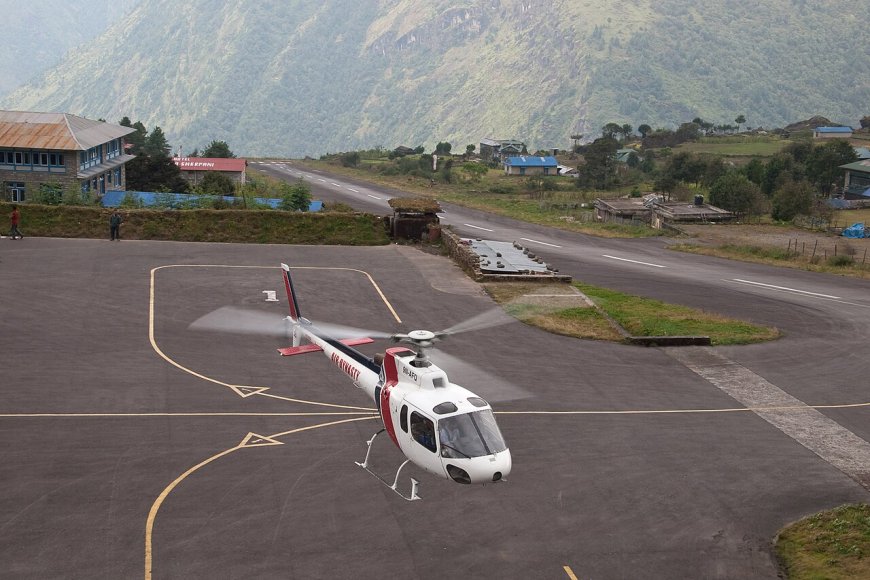
The question shows up in trekking groups every season, usually from someone already on the trail: if I get sick up here, does my insurance send a helicopter? The short answer is that a helicopter is the last link in a chain, and the earlier links are where evacuations actually succeed or fall apart. Knowing the order helps when your head is pounding and your guide is shouting into a phone on a ridge.
The chain, roughly in the order it happens
Someone notices you are not right. A guide, a lodge owner, a porter. Then a clinician looks at you, whether that is a doctor at a seasonal aid post, a small clinic in a trekking village, or a hospital in Kathmandu. Somebody calls your insurer's 24-hour assistance line. The assistance company decides whether the evacuation is covered and issues an authorisation. Only then does an operator schedule a flight, and only if the weather and daylight allow it.
Notice what is not in that list: your own opinion that you need a helicopter. Medical necessity is the trigger, and it is judged by a clinician and then by the insurer's medical team, not by how miserable you feel (though you probably feel awful).
The call before the flight matters more than the flight
Pre-authorisation is the single most common place where claims go wrong. Most policies expect you, or someone with you, to contact the assistance line before treatment or evacuation wherever it is practical to do so. In the mountains it is not always practical, and insurers generally understand that. What they struggle with is silence followed by a large invoice.
So put the number somewhere other than your phone. Phones die, lose signal, get wet. Write the policy number and the assistance number on a card, keep one copy in your wallet and give one to your guide at the start of the trek. If the guide knows who to call while you are being carried down, you have already saved yourself an argument.
Read the altitude line before you buy
Plenty of trekking policies carry a maximum altitude for cover. Where that ceiling sits varies enormously between insurers, and some will sell you an add-on to raise it. The wording is usually specific: trekking up to a stated elevation, with climbing above it treated as a different activity altogether.
This is where a cheap policy can turn out to be no policy at all. If your route crosses a high pass and your document does not cover you at that height, an evacuation near the top is your bill, not theirs. Check the number against the highest point of your actual itinerary, not the average height of the trek. And check whether the policy treats peak climbing, mountaineering or even a guided climb of a trekking peak as excluded.
What the assistance desk will ask
Get these ready before you dial, or hand the phone to your guide with them written down: your name, age, policy number, exact location and altitude, symptoms, what the clinician suspects, and where the nearest place a helicopter could land is. If someone has taken blood pressure or oxygen saturation readings, pass those on. One clear call can save hours of back and forth.
Ask for the authorisation reference and write it down. That reference is the thing an operator and a hospital will want to see.
Weather does not read your policy
Mountain flying in Nepal happens under visual rules. Cloud sitting on a ridge, or the afternoon wind that builds on most popular routes, can shut the window even when your evacuation has been approved and paid for. A delay of a day is normal and it is not the insurer being difficult. This is one reason evacuation cover exists alongside travel delay cover, and one reason guides build slack into itineraries.
Keep the paper trail
Ask the treating clinician for a written note: date, place, what they found, what they recommended. Keep the evacuation invoice, the hospital bills, receipts for anything you paid in cash, and your boarding passes if you flew out. Keep your permits and trekking card too. They are not claim documents on their own, but they help show where you were and when, which is sometimes the only proof available.
Photograph all of it before you leave Nepal. Paper disappears.
Things that quietly shrink a claim
Alcohol or drugs involved in the incident. Ignoring medical advice, including discharging yourself against it. An undeclared pre-existing condition. A trek or climb the policy excludes. Calling a helicopter for a missed flight, a closed pass, or because the walk back to Lukla looks tedious. None of that is rescue, and insurers treat it accordingly.
Helicopter flights in Nepal have also attracted official scrutiny over the years, with concerns raised about unnecessary or inflated evacuations. Expect paperwork and expect questions. A clean medical record and a clinician's note answer most of them.
What this page is not
It is not insurance advice, and it is not a substitute for the wording of your own policy, which is the only document that decides your claim. Wordings, altitude limits and pre-authorisation conditions change, and they differ between insurers and between the policies one insurer sells. Read yours before you fly, and if something is unclear, ask the insurer in writing and keep the reply.
Questions worth putting to an insurer before you pay
- What is the maximum altitude covered, and does my route stay under it?
- Is helicopter evacuation included, or is it a separate benefit with its own limit?
- Do I need to call before treatment, and what happens if I cannot get a signal?
- Are guided climbs of trekking peaks covered, or excluded as mountaineering?
- Who actually handles the evacuation, your own office or a separate assistance company?
- Does the policy pay the operator directly, or do I pay and claim it back?
- What documents will you need with the claim?
Ask those seven things and you will know more about your cover than most people on the trail. Which is a small comfort when the cloud comes in, but a real one when the invoice arrives.
What's Your Reaction?