



Hiring a Guide or Porter in Nepal: What to Verify Before You Pay a Deposit
Guide and porter costs in Nepal vary by agency and itinerary, so the useful work is verification: how to read an itemised quote, what permits and credentials to confirm in writing, and what to ask about crew insurance, load limits and tipping before paying a deposit.

Two quotes for the same Everest Base Camp or Annapurna itinerary can look almost identical on a screenshot and be nothing alike underneath. One price may cover the crew's insurance and food. The other may leave the porter to buy his own boots and pay for his own flight home.
We set out to publish a rate table with it, using live quotes from named agencies captured in October 2026. We couldn't assemble the evidence that a table like that needs, which is at least three dated, screenshotted quotes for the same party size, season and itinerary. Rather than smooth a few numbers into a "typical" figure, here is the part that actually protects you before you book: how to read a quote line by line, what to request in writing, and how to check the crew welfare claims on the brochure.
What a quote should actually contain
Guide and porter pay in Nepal is set by the agency, not by a published national tariff, and it moves with the route, the season, group size, crew experience and, above all, what the price includes. That is why a single number posted by one company tells you very little about what another will charge you.
A quote worth comparing should itemise, at minimum:
- crew wages and daily allowance, separated from the agency's service fee
- crew insurance and evacuation cover
- permits, area fees and entry fees for your exact route
- crew food and lodging on the trail
- crew transport to the trailhead and back
- equipment the agency provides, and equipment the crew is expected to own
- VAT and local taxes
- what happens if weather or a road closure forces a change of plan
If any of those lines are missing, ask for them in writing before you compare. Two quotes are only comparable when they cover the same list.
Comparing prices when currencies differ
Ask for the figure in Nepali rupees even if you are paying in dollars. When you set two quotes side by side, record the Nepal Rastra Bank reference rate on the day you do it, print that rate and its date, and note that conversions move. A quote converted at a rate you half-remember from last year is not a comparison, it is a guess.
Guide credentials: ask a specific question
Rather than asking whether your guide is "licensed", ask which licence or certification they hold, who issued it, and when it was last renewed. Licence categories for trekking guides and for high-altitude or mountain guides have changed over the years, and we could not confirm the current categories or the issuing body at the time of writing, so treat this as a question to put to the agency rather than something to look up online. If they cannot name the document and the authority, that is your answer.
Also keep two things separate: an agency's trekking licence and its membership of an industry association are not the same credential. A membership number proves membership. It does not prove the agency is licensed, so ask for both if the agency advertises both.
Guide requirements vary by area, not by country
There is no single rule that covers every trek in Nepal. Restricted and controlled trekking areas, national parks and conservation areas each work under their own permits and conditions, and some routes cannot be arranged the same way as a standard tea-house trek.
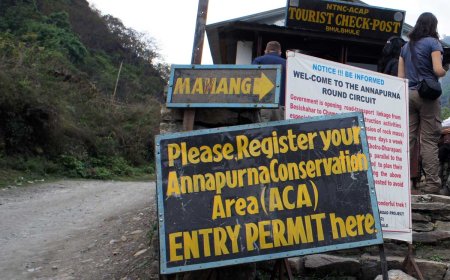
Before you book, ask the agency three questions about your specific route: which permit is required, which body issues it, and whether it can be issued to you as an individual or only through a registered agency. Confirm the answer with the issuing body itself, whether that is the Nepal Tourism Board, the Department of National Parks and Wildlife Conservation, or another authority. Get the permit name in writing.
Porter load: ask, don't assume
Rules and guidelines on how much a porter may be asked to carry have changed over the years, and documents do not always count the load the same way. One figure may describe the cargo a porter is hired to carry. Another may describe the porter's total load, which includes their own gear and shared group equipment. We are not printing a kilogram figure here, because we could not confirm at the time of writing which instrument or guideline is in force and exactly what it covers.
What you can do is ask the agency, in writing, for the maximum load it will ask a porter to carry, whether that number includes the porter's personal gear and group equipment, and which government instrument or guideline it follows. The International Porter Protection Group publishes its own guidance on porter load and welfare. Read it on IPPG's site rather than a secondhand summary, note the clause you are relying on, and ask whether your agency follows it. If the answers don't line up, that is worth knowing before you pay, not after.
Insurance and rescue cover
Ask whether crew insurance is included in the price, whether the policy names the porters or only the guide, whether it covers helicopter evacuation at the altitudes on your route, and who pays upfront if an evacuation happens. Then ask to see the certificate, and ask whether the cover is written into your trip contract. Advice on what to check is worth more here than any claim about how common the problem is.
Tipping: a convention, not a rule
Guides, porters and, on camping treks, the cook crew are the usual recipients. Whether tips are pooled varies by crew, and some agencies say a crew welfare component is already built into the price. Any percentage you read online is a traveller convention rather than an official standard, so decide as a group near the end of the trek, ask the guide how the crew prefers to receive it, and hand it over directly rather than through a middleman. There is no obligation to tip per day or per kilogram of load.
If something goes wrong on the trail
Start with agency management, in writing, and keep dated records, photographs and names. If that gets nowhere, escalate to whichever regulator or association the agency answers to, and then to the appropriate labour authority. This is general information, not legal advice, and it does not replace guidance from the relevant authority or a lawyer.
Before you pay the deposit
Get the itemised quote, the permit name and issuing body for your route, the guide's credential details and renewal date, the crew insurance certificate, and the written load limit. Keep every email. The treks that go smoothly and the treks that turn into a dispute often start from the same brochure, and the difference is what was written down before the money moved.
What's Your Reaction?