








How to Verify a Trek, Route or Highway Is Open in Nepal Before You Pay a Deposit: A Step-by-Step Checking Method
A step-by-step method to verify trekking routes, highways and mountain flights are open in Nepal before paying a deposit — covering official sources, cross-checks, agency licensing and refund leverage.

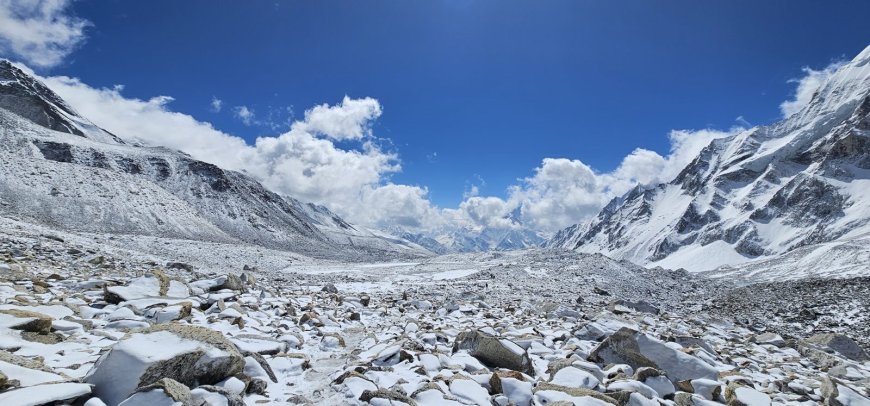
You have booked the time off. The flights are priced. A trekking agency has sent an invoice and asked for a deposit. The only thing missing is proof that the trail, the road to the trailhead, or the mountain flight you need will actually be running when you arrive. After the August–September 2026 monsoon floods, that proof is not optional — it is the difference between a trip that happens and money you cannot get back.
Start with the principle: no single source owns the truth
Nepal does not publish one live dashboard that covers every highway, feeder road, domestic runway and trekking permit checkpoint. The Department of Roads (DoR) manages strategic highways. Divisional road offices manage district roads. The Civil Aviation Authority of Nepal (CAAN) and individual airlines control Lukla and other mountain airstrips. The Trekking Agencies' Association of Nepal (TAAN) and the Nepal Mountaineering Association (NMA) license agencies, not trails. Local municipalities and ward offices often know about a washed-out bridge before Kathmandu does. A reliable check means querying each relevant authority and cross-referencing the answers.
Step 1 — Identify every choke point on your itinerary
Write out the full chain: international arrival airport, domestic flight or highway segment, roadhead to trailhead, each permit checkpoint, and the exit route. Mark every point where a single landslide, flooded river or cancelled flight could stop you. For a Langtang trek, that chain might be Kathmandu–Trishuli highway, Trishuli–Dhunche road, Dhunche–Syabrubesi road, Langtang National Park entry, and the return. For Everest, it is Kathmandu–Lukla flight, Lukla–Phakding trail, Sagarmatha National Park entry, and the return flight. If any link is unverified, the whole chain is unverified.
Step 2 — Check the highway authority that actually manages each road segment
Strategic highways (Mahendra, Prithvi, Araniko, BP, etc.) fall under DoR. Visit the DoR website and look for the "Road Condition" or "Notice" section. If the notice is older than 48 hours, treat it as stale. For district and feeder roads, find the relevant divisional road office — each district typically has one. Their Facebook pages often post updates faster than the central site. Save screenshots with timestamps. If a divisional office has no online presence, call the number listed on the DoR directory and ask for the "road status register" for your date of travel. Write down the name, designation and time of the person who answers.
Step 3 — Verify mountain flights with the airline, not the airport
CAAN publishes a daily flight status board, but it reflects scheduled slots, not real-time go/no-go decisions. The airline operating your sector (Tara, Summit, Sita, etc.) makes the actual call each morning based on weather at Lukla, Phaplu, Ramechhap or the destination strip. Call the airline's operations desk — not the booking counter — the afternoon before and the morning of travel. Ask for the "operational decision time" and the "weather minima" they use. Get the name of the duty officer. If the airline cannot confirm a decision window, treat the flight as unconfirmed.
Step 4 — Confirm the trekking agency holds a current licence
As of the October 2026 check, TAAN's website does not publish a searchable public register of member agencies. NMA's site similarly lacks a downloadable list. The escalation path: email TAAN at info@taan.org.np with the agency's exact name and registration number (if you have it) and request written confirmation of active membership. For NMA, email info@nma.org.np. Keep the reply. If an agency refuses to share its TAAN or NMA number, do not pay a deposit.
Step 5 — Cross-check with a local contact at the last roadhead
A lodge owner, a jeep association secretary, or a ward chairperson at the last motorable point often knows the real-time status of the trail beyond. Ask your agency for a direct phone number (not a WhatsApp group) for someone at the trailhead. Call them yourself. Ask: "Is the trail from [point A] to [point B] passable for a loaded porter today? Has any section been washed out since [date]?" Record the answer, the person's role, and the time.
Step 6 — Build a written evidence pack before you transfer money
Collect: (a) dated DoR or divisional road office notice for each highway segment, (b) airline operations desk confirmation with duty officer name, (c) TAAN or NMA email confirmation of agency licence, (d) trailhead contact statement with name and role, (e) your travel insurance policy clause covering flood-related cancellation. If any piece is missing, delay the deposit. A legitimate agency will understand; a pressed one may not.
Step 7 — Know your refund leverage
Nepal's Tourism Act and the standard TAAN agency agreement require refunds if the agency cannot deliver the contracted service due to force majeure — but only if you have not been negligent in verifying access. Your evidence pack proves you did the work. Without it, the agency can argue you accepted the risk. Attach the pack to your deposit email with a line: "This deposit is conditional on the route remaining open per the attached verification dated [today]. If any segment is closed on my arrival dates, the deposit is refundable in full." Save the sent email.
When the check returns "unknown" — your fallback chain
If a divisional road office does not answer, try the district police control room (they log road blockages). If the airline operations desk is unreachable, check the airline's official Facebook page for the morning "flight status" post — but treat it as secondary to a voice confirmation. If TAAN and NMA do not reply within 24 hours, escalate to the Ministry of Tourism's grievance desk (tourism@motca.gov.np). Document every attempt with timestamps. The chain is not about speed; it is about creating a paper trail that proves you tried every official channel before you paid.
What's Your Reaction?