



Shah Dynasty Nepal: Timeline, Succession & Key Turning Points (1559–2008)
A sourced timeline of Nepal's Shah dynasty (1559–2008) with a 14-row event table, a 20-row succession list where every reign carries its own citation, a clarification block separating the 2001 massacre, the 2006 restoration of parliament, and the 2008 abolition, plus a confusions section correcting the six most common misconceptions about the Shah line.

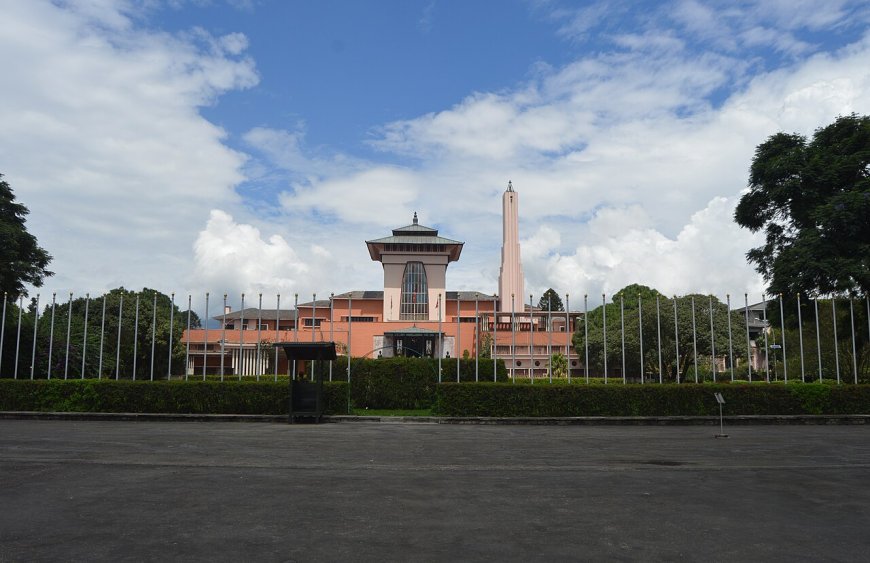
The Shah dynasty ruled Nepal for nearly two and a half centuries, from the founding of the Gorkha principality in 1559 to the abolition of the monarchy in 2008. What follows is a dated event table drawn from the standard historiography — Regmi, Whelpton, Stiller, and the Rajpatra record — followed by a reign-by-reign succession list where every row carries its own citation. A short clarification block separates the three dates (2001, 2006, 2008) that readers most often conflate, and a final section clears up the confusions that keep reappearing in comment threads and school essays alike.
Event timeline: 1559–2008
| Date | Event | Source |
|---|---|---|
| 1559 | Drabya Shah establishes the Shah line in Gorkha after winning the annual footrace for the throne | [1, pp. 23–24] |
| 1768–1769 | Prithvi Narayan Shah conquers Kathmandu Valley; unification of Nepal begins | [2, ch. 3] |
| 1775 | Prithvi Narayan Shah dies; Pratap Singh Shah succeeds (minority regency until 1777) | [1, p. 89] |
| 1806 | Bhimsen Thapa becomes mukhtiyar after the Bhandarkhal massacre; Shah kings become figureheads | [3, pp. 112–115] |
| 1846, Sep 14 | Kot massacre: Jung Bahadur Rana seizes power; hereditary Rana prime ministership begins | [2, ch. 5] |
| 1856 | Jung Bahadur takes title Maharaja of Lamjung and Kaski; Shah king confined to ceremonial role | [3, p. 148] |
| 1951, Feb 18 | Delhi Agreement ends Rana rule; King Tribhuvan restored, multiparty cabinet formed | [4, pp. 45–47] |
| 1960, Dec 15 | King Mahendra dismisses elected government, imprisons cabinet, introduces partyless panchayat system | [2, ch. 9] |
| 1990, Apr 9 | People's Movement (Jana Andolan I) forces King Birendra to lift ban on parties; constitutional monarchy established | [4, pp. 189–192] |
| 2001, Jun 1 | Royal palace massacre: King Birendra, Queen Aishwarya, and seven others killed; Dipendra proclaimed king while comatose | [5, pp. 1–3] |
| 2001, Jun 4 | Dipendra dies; Gyanendra becomes king | [5, p. 4] |
| 2005, Feb 1 | King Gyanendra dismisses Deuba government, assumes direct rule, cuts communications | [4, pp. 267–269] |
| 2006, Apr 24 | Jana Andolan II forces Gyanendra to reinstate parliament; monarchy stripped of executive power | [4, pp. 281–284] |
| 2007, Dec 28 | Interim parliament declares Nepal a federal democratic republic (effective at first CA meeting) | [6, Art. 159] |
| 2008, May 28 | First Constituent Assembly votes 560–4 to abolish monarchy; Gyanendra given 15 days to leave Narayanhiti | [7, p. 1] |
Succession list (Gorkha rajas → Kings of Nepal)
| Reign | Name | Notes | Source |
|---|---|---|---|
| 1559–1570 | Drabya Shah | Founder of Gorkha line | [1, p. 24] |
| 1570–1605 | Purandar Shah | Son of Drabya | [1, p. 25] |
| 1605–1633 | Chatra Shah | Brother of Purandar | [1, p. 26] |
| 1633–1645 | Ram Shah | Known for legal reforms | [1, pp. 27–28] |
| 1645–1661 | Dambar Shah | Son of Ram Shah | [1, p. 29] |
| 1661–1673 | Krishna Shah | Son of Dambar | [1, p. 30] |
| 1673–1716 | Prithvipati Shah | Long reign; Gorkha expands west | [1, pp. 31–33] |
| 1716–1743 | Nara Bhupal Shah | Father of Prithvi Narayan | [1, p. 34] |
| 1743–1775 | Prithvi Narayan Shah | Unifier of Nepal | [2, ch. 3] |
| 1775–1777 | Pratap Singh Shah | Died at 24; regent Queen Rajendra Laxmi | [1, p. 89] |
| 1777–1799 | Rana Bahadur Shah | Abdicates 1799, returns 1804, assassinated 1806 | [1, pp. 95–102] |
| 1799–1816 | Girvan Yuddha Bikram Shah | Minor; Bhimsen Thapa de facto ruler | [3, p. 112] |
| 1816–1847 | Rajendra Bikram Shah | Deposed after Kot; exiled to Benares | [2, ch. 5] |
| 1847–1881 | Surendra Bikram Shah | Son of Rajendra; virtual prisoner under Ranas | [3, p. 148] |
| 1881–1911 | Prithvi Bir Bikram Shah | Grandson of Surendra; died young | [3, p. 176] |
| 1911–1955 | Tribhuvan Bir Bikram Shah | Fled to India 1950; restored 1951 | [4, pp. 45–47] |
| 1955–1972 | Mahendra Bir Bikram Shah | Introduced panchayat 1960 | [2, ch. 9] |
| 1972–2001 | Birendra Bir Bikram Shah | Constitutional monarch after 1990 | [4, pp. 189–192] |
| Jun 1–4, 2001 | Dipendra Bir Bikram Shah | Comatose throughout reign | [5, pp. 1–4] |
| 2001–2008 | Gyanendra Bir Bikram Shah | Last Shah king; left Narayanhiti 2008 | [7, p. 1] |
2001, 2006, 2008 — what each date actually marks
Three separate events, each a clean break:
- 1 June 2001 — the palace massacre. Birendra and the core royal family are killed. Dipendra, the heir, is proclaimed king while on life support; he never regains consciousness. The probe commission (High-Level Investigation Committee on the Royal Palace Incident, report submitted 14 June 2001) concluded Dipendra was the sole shooter, but the report was never publicly released in full [5].
- 24 April 2006 — Jana Andolan II forces Gyanendra to reinstate the dissolved House of Representatives. The proclamation strips the king of all executive authority, military command, and immunity. He becomes a ceremonial head of state pending a constituent assembly [4, pp. 281–284].
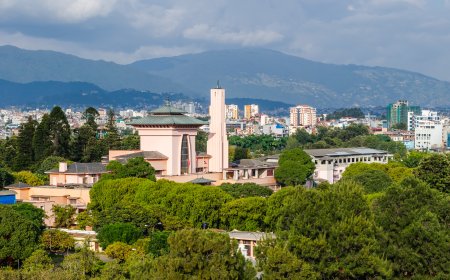
- 28 May 2008 — the first meeting of the Constituent Assembly votes to abolish the monarchy. Gyanendra is given 15 days to vacate Narayanhiti Palace, which reopens as a museum under the Department of Archaeology (still the operating body as of October 2026) [7, p. 1; Department of Archaeology notice 2008/09].
Conflating these three turns a sequence into a single blur. They are not the same day, the same act, or the same legal instrument.
Confusions that keep coming back
- "Prithvi Narayan Shah founded the Shah dynasty." He founded the unified Kingdom of Nepal. The Shah line in Gorkha begins with Drabya Shah in 1559 — 209 years earlier [1].
- "The Ranas were a dynasty." They were a hereditary prime ministerial family (Shamsher Ranas). The Shah king remained the sovereign, however constrained [3].
- "Birendra was an absolute monarch until 1990." He inherited the panchayat system in 1972. The 1960 coup was his father Mahendra's doing [2, ch. 9].
- "Gyanendra's 2005 takeover was the first royal coup." Mahendra did it in 1960. Gyanendra's was the second, and it lasted 15 months [4].
- "The monarchy ended in 2006." It lost executive power in 2006. It was legally abolished by the Constituent Assembly in 2008 [6; 7].
- "Narayanhiti is run by the Royal Palace Department." That body was dissolved in 2008. The palace museum has been under the Department of Archaeology, Ministry of Culture, Tourism and Civil Aviation since reopening in 2009 [Department of Archaeology annual report 2076/77].
References
- Regmi, D.R. (1971). Modern Nepal, Vol. 1. Calcutta: Firma K.L. Mukhopadhyay.
- Whelpton, J. (2005). A History of Nepal. Cambridge University Press.
- Stiller, L.F. (1973). The Rise of the House of Gorkha. Patna: Ratna Pustak Bhandar.
- Brown, T.L. (2002). The Challenge to Democracy in Nepal: A Political History. London: Routledge.
- High-Level Investigation Committee on the Royal Palace Incident (2001). Report submitted to His Majesty's Government, 14 June 2001 (summary in The Kathmandu Post, 15 Jun 2001).
- Interim Constitution of Nepal, 2007 (2063), Article 159.
- Constituent Assembly Secretariat (2008). Proceedings of the First Meeting, 28 May 2008 (2065 Jestha 14).
What's Your Reaction?