






Dhaulagiri Circuit Trek: Is It Right for You?
An honest look at the Dhaulagiri Circuit Trek: 18-21 days, a 5,360 m high point, camping, permits and how it compares with Annapurna.

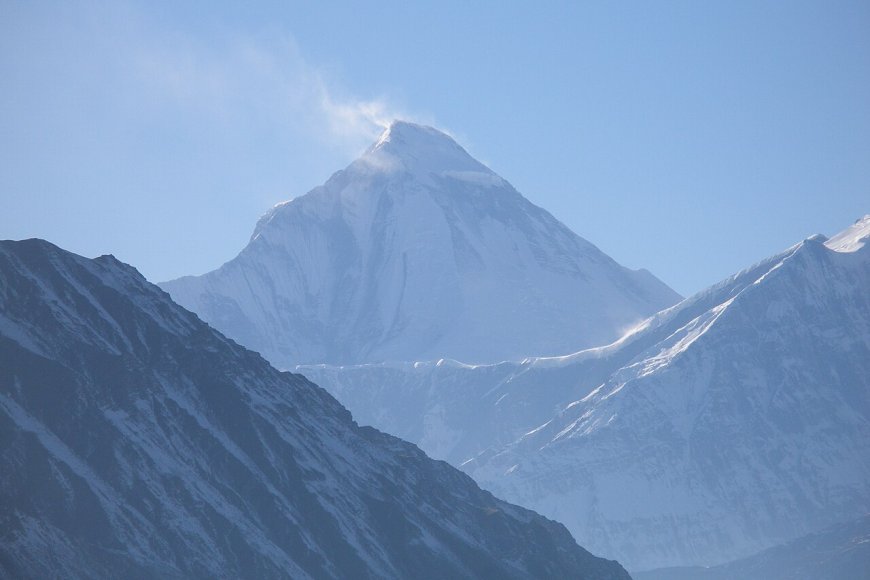
Most people who search for the Dhaulagiri Circuit Trek are not really looking for a route description. They are trying to settle a quieter question: is this the trek I actually want, or would the Annapurna Circuit or Manaslu give me a better version of it? This piece stays on that question. It is a decision aid, not a guidebook.
Two numbers frame everything else. Most itineraries run somewhere between 18 and 21 days, and the high point is French Pass at roughly 5,360 m, with a night or two spent camped above 5,000 m in Hidden Valley. If those numbers sit badly with your available time or your experience, the rest of this will not change that.
The kind of walk it is
Dhaulagiri is not a trek that passes through villages on its way to a viewpoint. The circuit wraps around the mountain, and for long stretches the walking stays high and open, crossing pass terrain where the last settlement is a long way behind you. That single fact shapes everything else: how hard the days feel, what you eat, where you sleep, and who you need around you.
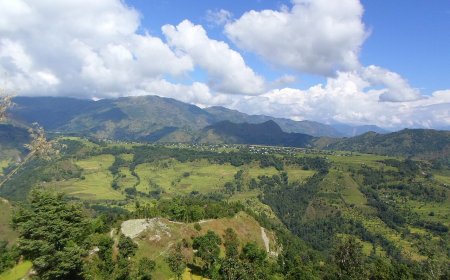
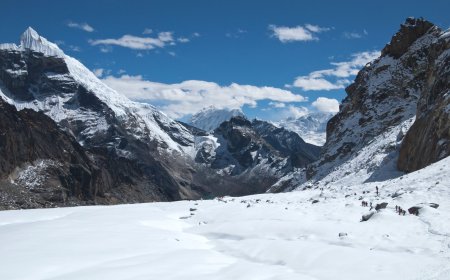
The shape of it goes like this. You start from the road around Beni and Darbang in the Myagdi valley, climb through forest and villages to Dobang and then Italian Base Camp at about 3,660 m. From there it stops being a village walk. Glacier Camp, Dhaulagiri Base Camp, French Pass, Hidden Valley, Dhampus Pass, and then the long descent to Marpha and Jomsom.
Where the Annapurna Circuit moves you from teahouse to teahouse and back towards a road, this route asks you to stay out. The scenery is the reward. The routine is the test.
Difficulty, described honestly
Three things make the Dhaulagiri Circuit harder than its daily walking distances might suggest.
Time at altitude. You spend long enough high up for the thin air to stop being a novelty and start being a factor in how you sleep, how you eat and how quickly you recover. The stretch that surprises people is Italian Base Camp to Glacier Camp. It is not a long day on paper, but the trail picks its way along moraine and old glacier ground, and in most seasons there is at least one section of fixed rope or careful scrambling where a rope and a guide's judgement earn their place. You finish tired in a way that has nothing to do with distance.
Terrain. Pass crossings, moraine, glacier edges and loose ground underfoot. Some of it is slow, careful walking rather than hard walking, and slow walking in cold air is its own kind of tiring.
The absence of an easy exit. There is no lodge an hour away when the weather turns. The real exit from the upper circuit is a helicopter, and roads only become useful again down the Myagdi valley or on the Jomsom side. Weather can pin a group down, and on a camping route that means sitting it out in a tent rather than in a dining hall.
Fitness gets you up the hill. Patience and routine get you around the mountain. In practice, the people who struggle on camping treks are often not the least fit. They are the ones who find the daily camp admin grinding.
Camping, and what self-sufficiency actually costs you
The Dhaulagiri Circuit is conventionally a camping trek: tents, a kitchen setup, and everything the group needs carried along for the whole trek. What follows is general guidance about camping-dependent high routes, not a statement of current rules or fees.
On a route like this the day does not end when the walking does. Someone pitches, someone cooks, someone sorts water and fuel, and the whole camp has to be struck and moved again the next morning. You are carrying and organising your own version of a home for the length of the trek.
Hidden Valley is where this stops being theory. If a snow day lands there, it is not a delayed start. The pass above camp is out of the question, the group stays put, and you spend the day melting water and eating into food and fuel you had budgeted for the days ahead. Nobody is going anywhere until the weather agrees. Some people remember that day as the best of the trek. Others remember the ceiling of a tent.
If you have only trekked teahouse routes, the thing worth testing is not your leg strength. It is whether a cold tent, a shared toilet tent and a dinner cooked by your own group sounds like part of the adventure, or an inconvenience you would resent by the second week.
Guides, permits and paperwork
This is the part most trip-planning blog posts leave out. Since April 2023, Nepal has required foreign trekkers to walk with a licensed guide on trekking routes, and enforcement has tightened at checkpoints in recent years even though it is not identical in every region. So "independent" on the Dhaulagiri Circuit now means you arrange the logistics yourself rather than that you walk alone. You still hire a licensed guide. The difference is whose name is on the food, the fuel and the camp.
Paperwork is the usual pair: an ACAP entry permit and a TIMS card, arranged through your agency and checked at points along the route. Fees change, so check the current rates before you budget rather than working from an old blog post. More detail on how that side of things works is in our Nepal trekking permits overview.
Organised, you buy logistics: camp setup, food, fuel, load carrying, and somebody else's judgement on the weather. That last part matters more than people expect. A guide who has crossed Dhampus Pass in bad visibility reads the sky differently from you.
Arranged yourself, you keep the flexibility and you keep the decisions, both the good ones and the bad ones. On a route this remote, that means solving food, fuel and contingency planning before you leave, not on the trail.
Neither choice is nobler. A first high-altitude camping trek is a difficult place to learn camp craft and weather judgement at the same time, and plenty of experienced trekkers choose full support for exactly that reason.
Season, in plain terms
Autumn, once the monsoon clears, and spring, before it arrives, are the conventional trekking windows across the Nepal Himalaya. Autumn usually brings clearer skies and more settled weather. Spring is warmer lower down but in many years carries more snow on the high ground, which matters when you are crossing a pass at 5,360 m.
Winter on an exposed circuit is a serious proposition. Snow sits on the passes, days are short and cold, and the margin for a slow day shrinks. Monsoon brings cloud, rain and poor visibility in exactly the places where you least want it. On a route where you camp and stay out, a bad weather window is not an inconvenience. It is the whole plan changing.
Dhaulagiri against Annapurna and Manaslu
The useful comparison here is one of character rather than logistics.
The Annapurna Circuit is a village-to-village walk. Teahouses, room to move, company on the trail, and a familiar rhythm of walking, eating and sleeping indoors. Its challenge is altitude and length, not self-sufficiency.
Manaslu sits somewhere in between. Quieter than Annapurna, with real settlement and lodge life for much of the way, but with a remoter feel and a high section that asks more of you than the busier route does.
Dhaulagiri takes the far end of that spectrum. Less traffic, more exposure, more camping, and a much larger share of the day handed to you or your team rather than to the next teahouse. If you want big mountain scenery without the self-sufficiency, Annapurna gives you more of what you are after. If you want quiet but still want a roof, Manaslu is the middle option. If the tent and the remoteness are the point, Dhaulagiri is the one.
Who it suits
Good fit: you have trekked in Nepal before, you are comfortable being cold and dirty for days at a time, you like the camp routine or at least don't mind it, and you would rather have a quiet mountain than a comfortable evening.
Poor fit: this would be your first Himalayan trek, you need the freedom to get out quickly, you want a warm room and a menu at the end of the day, or your available time is short and fixed.
If you are on the fence, the honest test is simple. Picture a week of cold mornings, a tent, and a pass you cannot see yet. If that reads as the reason to go rather than the price of going, stop reading comparisons and start looking at dates. If it reads as the price, book Annapurna instead and enjoy it.
What's Your Reaction?