



















Electric Vehicle Running Costs in Nepal: How to Build Your Own Numbers
Rather than quoting a single cost-per-kilometre figure, this guide shows you how to build your own running cost model for an electric car in Nepal. It explains why no national number exists that stays true for long, which cost lines are fixed and which scale with distance, where each figure should come from, and why depreciation and battery warranty terms usually decide the answer.


Search for what an electric car costs to run in Nepal and you will find plenty of confident numbers. Most of them come from a document that has since been revised, or from nowhere in particular. Neither is much use when you are deciding whether to buy.
So this is not a price list. It is the framework: the order the cost lines stack up in, which ones behave differently from the others, and the questions you have to answer yourself before any of it turns into a figure you can defend.
The shape of the answer
Running costs split into two groups. The purchase side happens once and disappears into the price of the car: import duty, excise, VAT, registration, the first insurance policy. The ownership side repeats: charging, servicing, tyres and consumables, insurance renewals, the annual vehicle tax, and depreciation, which is the line people leave out.
Then there is a distinction that decides most of the rest. Some lines are fixed in time and some move with distance. Insurance renewal and annual vehicle tax cost the same whether you drive a great deal or hardly at all. Charging, tyres and most consumables scale with how far you go.
That has a consequence worth sitting with. Cost per kilometre falls as annual distance rises, because the fixed lines get spread over more driving. So two people comparing running costs are often answering different questions without realising it. One drives a lot and reports a low figure per kilometre. One drives little and reports a high one. Both are correct.
Why no single national figure exists
The inputs to the model sit in documents held by different institutions, none of which coordinate with the others. The tax treatment of imported vehicles is settled in the budget and finance act cycle. Registration fees and the annual vehicle tax are provincial, so two identical cars registered in different provinces can carry different bills. The rate you pay for electricity comes out of the regulator's tariff determinations, which the utility then bills on. Insurance is quoted insurer by insurer, vehicle by vehicle. And the warranty terms that decide your worst-case battery cost are printed in the booklet that came with your own car.
Any single number you find online is therefore true only as of a date and a place. That does not make the exercise pointless. It just means the useful output is a model you can update, not a figure you can repeat.
The purchase side, and why it belongs in the model
An imported electric vehicle is assessed at the customs point, with excise and VAT layered on top of duty. In recent years the schedule has banded electric vehicles by motor output rather than engine capacity, for the obvious reason that there is no engine. Both the band edges and the amounts sitting inside them are rewritten in the budget cycle, so check the schedule in force rather than a figure you remember from last year.
Because the tax treatment is baked into the purchase price, the on-road price is an input to your running cost model, not a footnote to it. Depreciation is calculated from what you actually paid, including everything you paid to get the car on the road.
Registration and the annual vehicle tax come next, and they are provincial. The practical move is simple: ask your transport office for the receipt showing what you were charged and the rate it was calculated from, and keep a copy. A provincial finance act is a dated primary source, and a correct figure with the wrong date on it is worse than a blank line. If you are unsure which office covers you, our notes on vehicle registration in Nepal explain how the offices are organised.
Insurance is comparatively straightforward. Collect written quotations, note the sum insured and the date on each one, and carry the premium as a fixed line.
Where each line's number should come from
| Cost line | Fixed or distance-based | Where the number comes from | How often it changes |
|---|---|---|---|
| Import duty, excise and VAT | One-off | The schedule in force, via the customs point or your dealer's cost breakup | Each budget cycle |
| Registration | One-off | Your provincial transport office receipt | When your province changes its rules |
| Annual vehicle tax | Fixed in time | The same office, the same kind of receipt | When your province changes its rules |
| Insurance | Fixed in time | Written quotations you collected yourself | At each renewal |
| Home charging | Distance-based | Your own bill, and the tariff category you are billed under | When a new determination takes effect |
| Public charging | Distance-based | The rate displayed by the operator | Without much notice, in practice |
| Servicing and consumables | Mostly distance-based | The dealer's published schedule for your exact model | With model year and parts pricing |
| Battery replacement | Unpredictable | Whoever imports your brand, if they will answer | Not published |
| Depreciation | Depends on how long you keep the car | Resale listings for your model, plus a pessimistic assumption of your own | As the used market moves |
Charging at home, and away from home
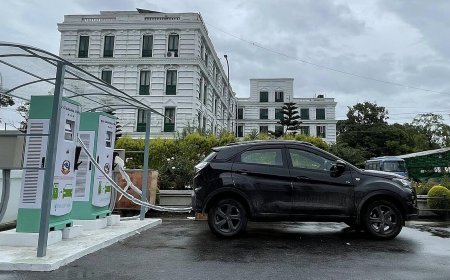
Home charging sounds like the simple option and often is not. The real question is whether the household connection can carry a car charger at all, or whether you need a dedicated meter and a load upgrade, and what the utility charges for the extension. That is a cost line with a genuine number attached, and it is easy to forget when you are comparing an electric car against a petrol one on fuel alone.
Then there is the rate itself. What applies to you is whatever the tariff determination in force says for your category. A determination sets out the consumer categories, the energy charge, and whether a demand charge applies on top. It also settles whether a public charging station has its own category or is billed under a commercial or industrial one, which is part of why home and public charging can differ so much. Some categories carry a different rate at different times of day, so charging overnight may not cost the same as charging during the evening peak. Check whether yours does.
Category names matter more than people expect, because billing systems key on them. A rate copied from the wrong row of the right document is worse than a blank. Our page on Nepal's electricity tariff structure explains how the categories work, and the public charging network page covers where the stations are.
One modelling note. If you assume every kilometre is charged at home, you are modelling a best case. Public charging costs what it costs, and how often you need it depends on your route and whether you can charge where you park. Put a share of your distance on the public rate and label that share as a guess.
Servicing and consumables
An electric drivetrain removes a lot of routine work. No engine oil, no oil filter, no timing belt, no exhaust. What remains is modest but real: brake fluid, coolant, cabin filter, tyres, wipers, and the periodic inspection. Regenerative braking means friction brakes wear more slowly than on a petrol car, but the fluid still ages and the inspection still happens on schedule.
Tyres deserve a second look. Electric cars tend to be heavier and to deliver their torque instantly, and that combination can wear tyres faster than you would expect from a similar petrol model. Use the dealer's published schedule for your exact car, and check whether the first services are bundled into the purchase price.
Owner accounts in forums and Facebook groups are genuinely useful for finding out what actually breaks, and just as genuinely unreliable when someone quotes a monthly cost. Read them for patterns, not for prices.
The battery: warranty terms, degradation, replacement exposure
This is the largest unpriced risk in the whole exercise, and the one most buyers never write down at all.
Start with the warranty, because your cover is defined by terms rather than by your feel for the pack's health. The time limit is straightforward. The distance limit is too. The third term is the one people misread: the capacity threshold, meaning the point at which the pack counts as failed rather than merely degraded. A pack can lose enough usable range to change how you use the car and still sit comfortably above that threshold. Until you know the threshold, you do not know what you are covered for.
Warranty terms differ by brand and by model year, and the booklet that came with your car is the only version that binds anyone. Write the terms down with the date you read them, because a claim later gets judged against the wording that applies to your car. If you are buying used, check whether the warranty transfers to you at all, and what a claim actually results in. Some brands replace individual modules, others replace the whole pack, and that difference only matters if you plan to keep the car long enough to use it.
Degradation itself is normal and gradual. A pack loses usable capacity over its life, usually fastest early on and more slowly after that. Heat accelerates it, and so does leaving the car sitting for long stretches at a very low or very high state of charge. Kathmandu's mild climate is kinder to batteries than a Terai summer. Since most owners here cover modest annual distances, age will often matter more than mileage in an older car.
Replacement exposure is the part with no public answer. There is no national price list for a replacement pack, no standard labour rate, and no agreed value for the old one. Some importers will quote on request. Some will only replace modules. Some will not answer the question at all, and that silence is itself information about what ownership out of warranty is going to feel like.
So write the blank down, note who you asked and when, and if you need a figure to complete the model, pick a deliberately pessimistic one and label it as your assumption. The purpose of the line is not precision. It is to stop you buying on the assumption that the battery will never become a bill.
Depreciation is the line that decides the answer
Over the years you own a car, depreciation usually costs more than everything else combined. That is true of petrol cars and it is true of electric ones. What changes with an electric car is the uncertainty around it. Resale value depends on battery condition, on whether the warranty transfers, and on how the next buyer feels about a used pack they cannot easily test. Assume a weak resale rather than a strong one, and treat anything better as a bonus.
This is also where the fixed-versus-distance distinction bites hardest. Spread the loss in value over a large number of kilometres and it shrinks per kilometre. Spread it over a small number and it grows. Low annual mileage makes any car expensive to run per kilometre, and electrification does not change that. It only changes which lines are large.
Why a single cost-per-kilometre figure should not be trusted
Almost every confident figure you read online arrives without its assumptions, so you cannot tell whether it includes depreciation, whether the electricity is priced at a domestic or a commercial rate, whether servicing follows the dealer's schedule or someone's guess, and whether the tax line is blank or borrowed from a neighbouring province. Any one of those choices can move the answer more than the choice between petrol and electric does.
One judgement worth keeping: in most versions of this model, the electricity rate is not what decides the outcome. It is how long you keep the car and how much value it holds when you sell. Anyone insisting that the running cost of an electric car turns entirely on the power tariff is selling something.
When to re-check your numbers
Certain events should send you back through the affected lines: the annual budget, which resets the duties and taxes on imported vehicles; a new tariff determination from the regulator; and any mid-year tax or fuel price change, which can move the resale picture around without warning.
There is a private trigger too, and people forget it. A change in your own circumstances, such as a longer commute or a move to a flat without parking, can change which lines are relevant to you at all.
If a trigger fires and you cannot get hold of the document, leave the line blank. Carrying last year's figure forward with this year's date stamped on it is the one mistake that makes the whole model worse than useless.
What to do with the number you end up with
Report it as a range, keep the assumptions attached, and date every figure in it. The useful output of this exercise is not one number. It is a short list of lines whose value you know, and a shorter list of lines you know are still open. The second list is the one that should shape the decision.
What's Your Reaction?